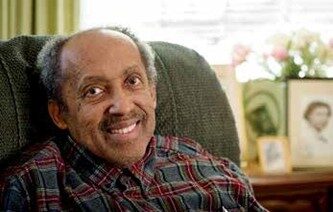
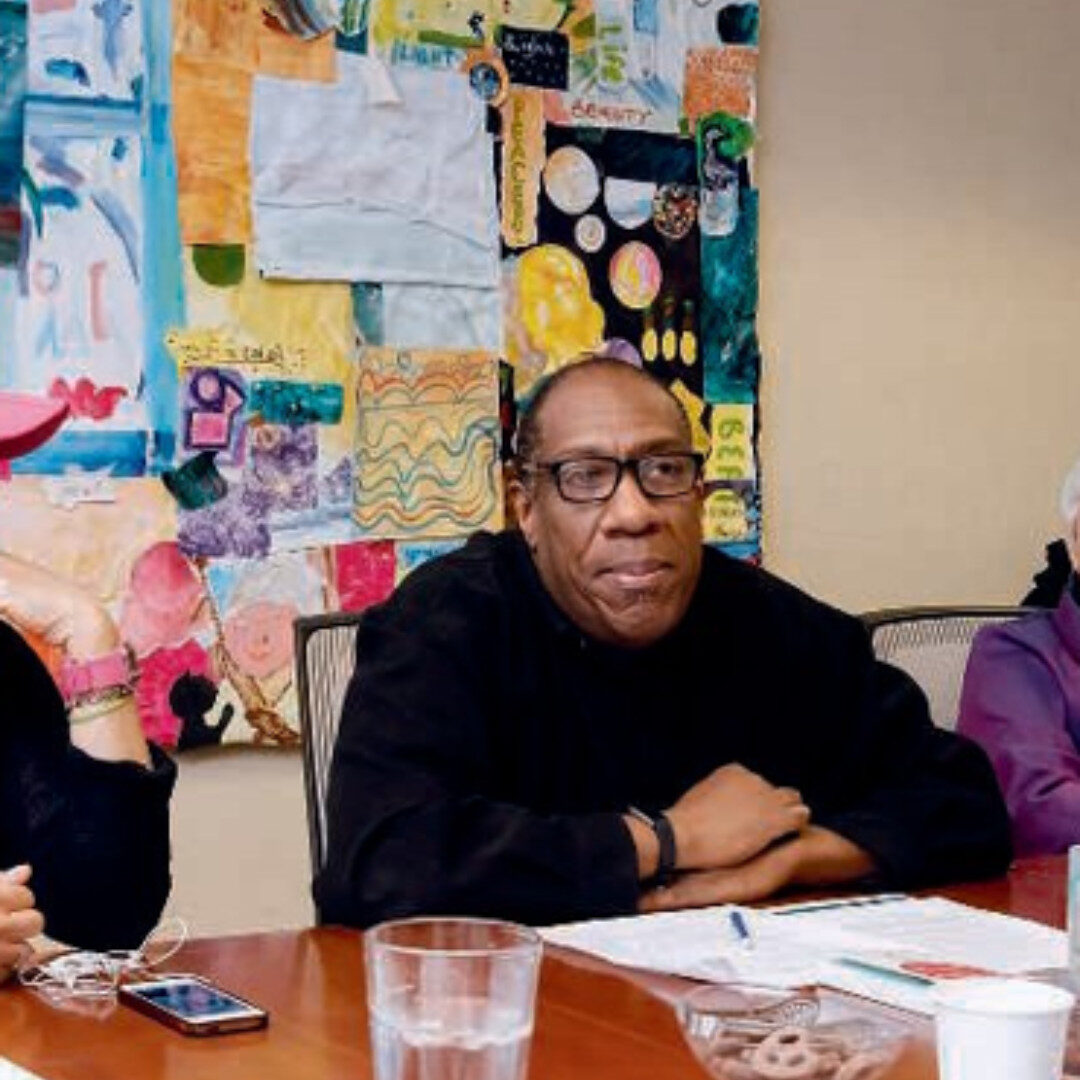
Donald’s Story

Donald Burch III is among the many older adults who lack the support system traditionally provided by family. He’s single, has never had children, and is the last living member of his family. “I’m the very definition of aging solo,” says Donald.

So when he learned about Iona’s six-week education program of the same name, Donald jumped at the chance to focus on planning for the future.

Part of Iona’s Take Charge/Age Well™ Academy, “Aging Solo” covers the practical aspects of planning for your aging when you’re on your own. Sessions include important topics on writing a will (or locating an existing one, which is an issue for many people), designating a durable power of attorney, strengthening or building a support network, and managing or disposing of clutter, including family memorabilia, among other key issues.

For Donald, a retired social worker, the group provides accountability. At 59, Donald had already begun the process of “getting his affairs in order.” But, he points out, it’s a dynamic and lengthy process, and life frequently gets in the way. An avid volunteer with LGBTQ organizations, AARP, and local theaters, Donald said he needed reminders to keep him motivated. “The ‘Aging Solo’ group provides that role,” he says.

Because of the class, he has given a copy of his healthcare power of attorney to his physician and is figuring out who should have a copy of all his passwords. Donald’s also making sure that his bank has the updated information it needs using the bank’s current forms. He’s even made a list of emergency contacts that he’s posted on his refrigerator and keeps in his wallet.

“Whether you are gay or straight, as we get older we all have fewer loved ones in our lives,” Donald says. “The people you have depended on may not be there anymore. Relationships change, people get divorced, people die. It’s comforting to know others are in similar situations.” As a social worker, Donald enjoys being able to share his wisdom with the group, just as he benefits from the wisdom of others.

As soon as the series ended, Donald signed up to join its new alumni group, called “Aging Solo Action Support Group,” which allows participants to continue the discussions and friendships they formed. In addition, he feels passionate about spreading the word about “Aging Solo” to his friends and contacts who may not have taken steps to prepare for the next stage of life, may feel overwhelmed, or may be isolated. “I went into this expecting to learn about aging solo,” he says. “I came out with a larger community.”

Gregory & Carlton’s Story

Carl “Gregory” Everett and Carlton Washington met at Forest Haven when they were just eight years old. Both are blind and have intellectual disabilities. While they aren’t related by blood, the two men are known by family and friends as “the twins.” In their mid-sixties, they are the same height, but Carlton is a little heavier. Gregory holds onto Carlton’s  shoulders to steady himself when he walks. They live together in a Ft. Totten apartment that is part of supportive housing provided by the Department of Disability Services which allows them to live in the community but does not provide any services or programming during the day. Gregory has a photographic memory and can recite dates with remarkable recollection. Both are passionate about music.

That’s why Gregory’s sister, Karen Everett-Bivins, enrolled them in an arts-oriented day program in Northeast Washington a few years ago. But one day, when Karen made an unexpected visit, she found them alone in a corner with only a simple toy to engage them. “It was heartbreaking,” she says. They never went back. Instead, for more than a year “the twins” have been attending Iona’s Wellness & Arts Center five days a week. Or, as Gregory says: “since October 29, 2015.”

At Iona, “everyone is happy,” he says. “We  do so many different things. We do art. We paint.“ When they arrived at Iona, Carlton didn’t speak. “Something must have happened, or someone in the past told him not to speak; Gregory has always been his voice,” says Karen. But in the past year, in the safety and warmth of Iona, Carlton found his voice. It started with a whispered word or two. But now, in the company of people he’s comfortable with – such as the Wellness & Arts Center staff – his thoughts pour out in sentences. While talking about the Bureau of Engraving and Printing one day, Carlton told Karen: “That’s where they make money.”

Gregory is blossoming at Iona as well. He recently won a game of “Name That Tune” – not surprising, given his memory. (The winning answer: the Beach Boys.) Another day, he told his sister that a visitor came to the Center and “played the guitar just like Elvis.” “I didn’t even know he knew about Elvis,” she says. And she had no idea he is interested in history. Yet, one day when he came home from the Center, he told her: “Martin Luther King had a dream. He said, ‘free at last, free at last.’ ”“A whole world is opening up for them,” adds Karen. Carlton likes to mold shapes with dough, make ceramics, and bake. Gregory likes participating in conversations about current events and history discussions on topics researched by the Iona staff. At the Center, they also got to pet visiting dogs, cats, and birds — for the first time ever. After holding a puppy, Carlton exclaimed to Karen, “They have hair all over their bodies!”

“There are so many things we take for granted,” adds Karen. “Iona has provided them new experiences and new opportunities. It has revealed their hidden talents.”

Mary Beth’s Story

Mary Beth’s  involvement with Iona began with  a simple desire to see her mother-in-law, Susan, thrive. After moving to Washington, DC to live with her son, Susan found joy in the vibrant community fostered by Iona. It wasn’t long before Mary Beth and her husband noticed a remarkable transformation in Susan—a blossoming of her personality, drawn out by the music, socialization, and engaging environment at Iona’s Wellness & Arts Center. Mary Beth explains, “Iona creates an inviting space that makes Susan feel welcome. The stimulating environment sparks her sense of humor and allows her natural social intelligence to shine.”

Curious about the magic behind Iona’s success, Mary Beth couldn’t help but ask, “What’s the secret sauce?” What she discovered was a testament to the power of community and inclusivity. “I see a lot of people — participants and staff — asking themselves, ‘How can I support this community,’” Mary Beth shares. At Iona, she experiences a palpable sense of egalitarianism between staff, participants, and volunteers.

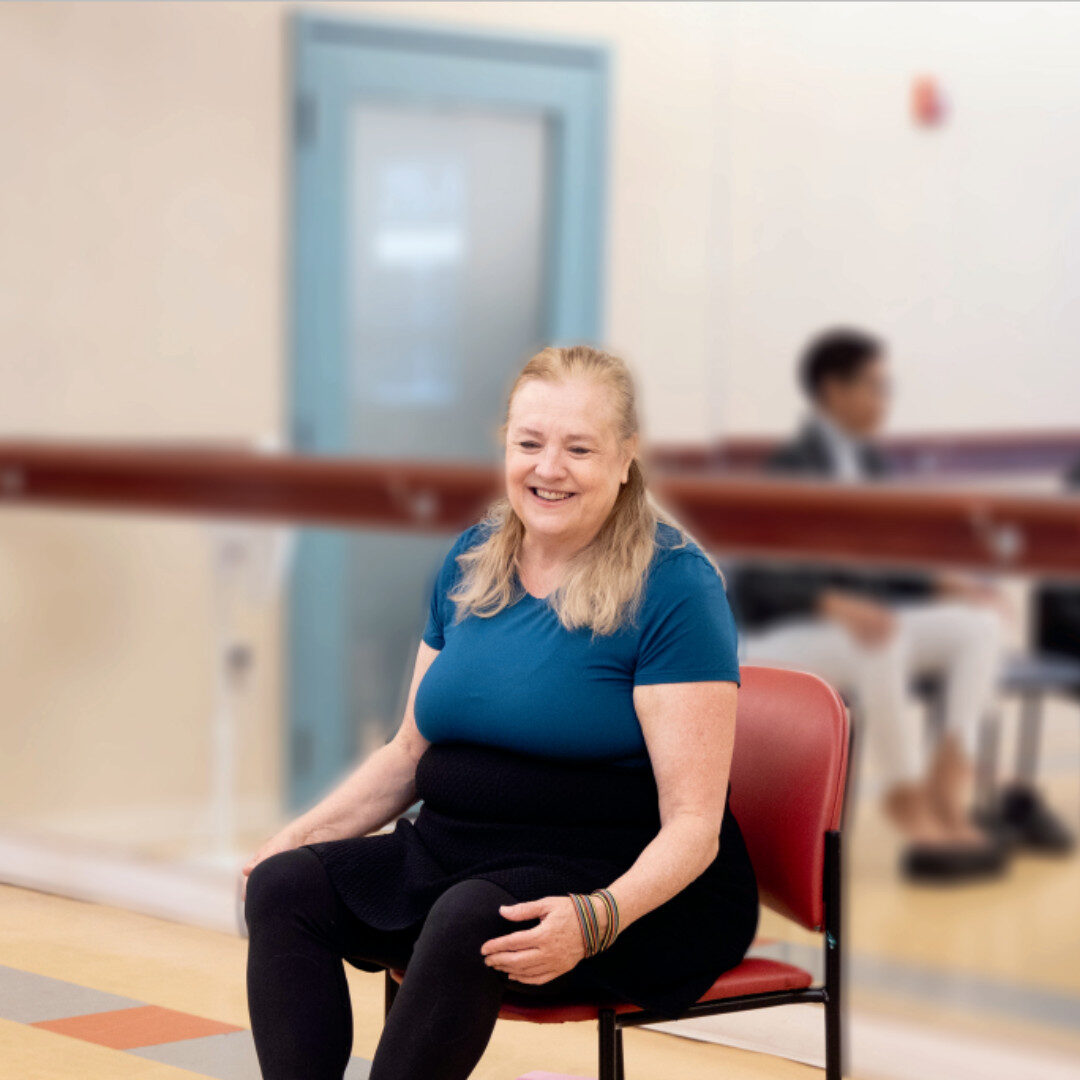
Inspired by this spirit of generosity, Mary Beth felt grateful for the opportunity to give back to the Iona community. Offering to teach Pilates classes at the Wellness & Arts Center was her way of enhancing the well-being of the participants and fostering deeper connections with those whom Susan interacts with daily. Starting in July 2023, Mary Beth eagerly took on the role of Pilates instructor, leading classes twice a week.

For Mary Beth, teaching Pilates at Iona has been a source of fulfillment and a meaningful extension of her life’s work. Witnessing the dedication and hard work of the participants fills her with a profound sense of respect and inspiration. “I’m honored that people participate regularly and work as hard as they do.” Even if they can’t recall the name of an exercise, the muscle memory of the movements from her Pilates classes remains ingrained in their bodies—a testament to the impact she’s making, one session at a time. “It’s really heartwarming and gratifying,” says Mary Beth.

Through her teaching, Mary Beth feels blessed to be part of such a supportive and nurturing community. The connections she forges, and the moments of shared accomplishment are a constant reminder of the power of the Iona family. Teaching at Iona isn’t just about Pilates; it’s about building relationships, fostering growth, and making a difference in the lives of those we serve.

Reflecting on her own family’s experience with Iona, Mary Beth says, “Iona is our MVP, our most valuable player, because it not only gives us peace of mind during the day, but it creates a sense of community — a place to belong. Iona has changed our family life dramatically and I honestly can’t imagine our lives without the teamwork we have with Iona.”

Marie & Classie’s Story

When Marie’s uncle passed away from COVID-19, her 81-year-old mother, Classie, who had been living with her brother, was now left alone in New York State, while dealing with Alzheimer’s disease. The situation was unsustainable, and Marie made the difficult decision to move her mother to Washington, D.C. and into her home.

“I was working from home for over a year with my mother just there, wandering around. I removed her from her comfort zone, so she had some major setbacks. But I was also experiencing a lot of frustration because it was just too much  to have to work and caregive at the same time without any outlets because of COVID.”

Marie called local organizations for help and got connected with Iona, where she learned about our adult day health services at the Washington Home Center in the Congress Heights neighborhood in Southeast D.C. After visiting the program with her mother, she says, “I was very impressed with Iona and the level of care and  the  energy  of  their facility and  the  people  there.  The  programming  is  one  thing  on  paper,  but  [in-person]  the  energy and the care  that  these  individuals provided was very impressive.”

Classie also enjoyed her visit. Marie explains, “There was an immediate connection. We set up everything and basically it changed our whole life.” Classie now attends the adult day health services program Monday through Friday every week, connecting with her peers and engaging in enriching activities in a safe environment with compassionate professional care.

But Iona offers more than just services and support for older adults. We also provide support to family caregivers to help prevent the burnout that so often comes with caring for a loved one.

In 2022, Phyllis Barge, the social worker at the Iona Washington Home Center, launched a Caregiver Support Group to address the ongoing needs of caregivers, like Marie, who found the day-in and day-out caring for someone with memory loss to be challenging and isolating.

Between work and caregiving, Marie rarely had a moment to herself. Phyllis connected her with respite care and encouraged her to attend the Washington Home Center Caregiver Support Group, which meets every second Tuesday of the month. The group does various activities together, including sharing conversation and fellowship.

“When they come in, it’s on  their  faces  that they are tired and  weary.  They  have  a  lot going on because they have  their  own  lives and issues they are dealing with,” Phyllis shares.

But at the end of the support group meetings, it’s a different story. “Sometimes the group doesn’t end for an hour after I stop the conversation because they are still talking and engaging with each other.”

Marie says she looks forward to every support group meeting. “I learn something valuable at each meeting, and I never miss them.”

Reflecting on her whole experience with us, she adds, “I can’t say enough about what Iona has done and what they are doing for our population.”

Brandon & Tina’s Story

Brandon, like so many caregivers today, is part of the sandwich generation—juggling the demands of his personal life while also caring for his aging mother, Tina.  

Tina, now 83, began showing signs of dementia after the passing of her husband in 2019. She was later diagnosed with vascular dementia. For Brandon, this was an incredibly difficult time, filled with confusion, frustration, and stress.  

Tina was still living on her own, and the desire for independence led her to continue driving, sometimes getting lost. With Brandon working full-time, it was impossible for him to support his mother during the day. Their lives felt chaotic and out of control.  

“Finding [Iona] changed everything.”  

Five days a week Tina now attends the Adult Day Health Program at Iona’s Washington Home Center in Congress Heights. This program has brought structure and safety to Tina’s life, while giving Brandon the peace of mind he desperately needed.  

Tina is no longer home alone or wandering in search of something to do. Instead, she spends her days engaged in meaningful activities, socializing, and receiving the specialized care she requires.  

For Brandon, Iona has been more than a place for his mom to go. It has been a lifeline. “Iona has been so helpful and beneficial.” 

Support on the Caregiving Journey 
Iona staff referred Brandon to the Savvy Caregiver® Program, a training program that provides the tools and support needed to be an effective and confident caregiver. With this newfound support, Brandon can focus on his needs and career while knowing his mom is in safe hands.  

This is just one example of the countless families we serve. Many caregivers, especially those in the sandwich generation, are struggling under the immense pressure of caring for both their children and aging parents. Iona is here, offering not just care for their loved ones, but also programs that strengthen their ability to cope and thrive. 

Peter’s Story

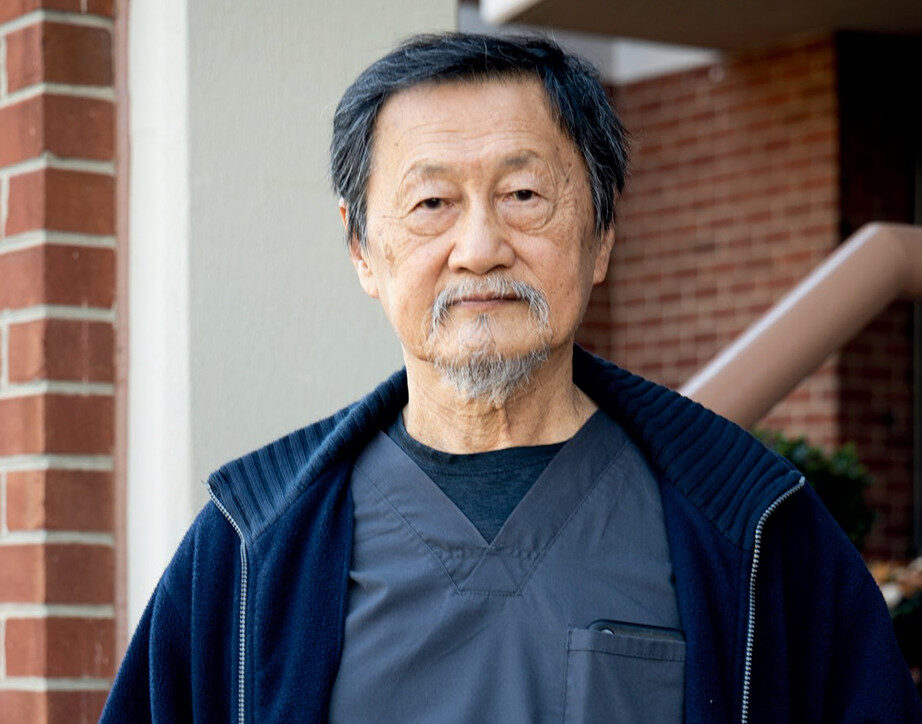
Caring for a loved one after an illness or injury is challenging under any circumstances. For Peter Kou, caring for his beloved wife Maybelle after she had a stroke and developed dementia—all while navigating the pandemic and living on a fixed income—led to his breaking point. Thankfully, Iona has eased the couple’s burdens in multiple ways.

Natives of Hong Kong, the Kous, both 80, had impressive careers in architecture and clinical research that took them to Great Britain and the U.S. But life changed for both of them when Maybelle suffered a stroke.

Up to that point, “we were completely independent,” Peter says. As his wife’s physical and cognitive challenges worsened, caregiving became increasingly difficult.

Peter had a home health aide and physical therapist to help take care of Maybelle, but at the height of the pandemic, he let them go out of precaution, taking on all caregiving duties himself.

Reflecting on that time, he remembers, “I don’t know how I managed.”

At his lowest point, exhausted and dehydrated, Peter ended up in the emergency room.

Like many caregivers, Peter wasn’t used to asking for help and was unfamiliar with what supports were available to the couple. When Maybelle was discharged from the hospital, someone handed Peter a list of telephone numbers, but “they didn’t tell me what to ask or what services were available,” he says.

Referrals from a friend and another social service organization led him to Iona—and much-needed support.

“Peter was valiantly providing all of Maybelle’s care,” says Senior Nutrition Program Manager Rose Clifford. “He is so devoted to her, and, as a result, was not caring for himself.”

First, Iona arranged for home-delivered meals for the couple so Peter didn’t have to do all the cooking. Rose also provided nutritional counseling and supplements for Maybelle, who, like many people with dementia, has trouble swallowing. Since then, Maybelle has gained weight and her appetite has improved.

Rose calls regularly to check on the Kous. Peter tells her about Maybelle’s health and confides in her about how he is feeling —“both the ups and the downs.” Peter says it gives him a great sense of comfort knowing he has someone to talk to.

“Iona is helping to ensure Maybelle is comfortable and has her dignity as I say my long goodbye,” says Peter, who hopes in the future to be able to give back to the organization. “I’d like to show my appreciation to the compassionate staff and friendly volunteers by someday volunteering to help another family in their moment of need.”

Noreen & Murray’s Story

Murray Howder has lived in his two-story, prairie-style house off Connecticut Avenue since 1966. Now 89 and living with Parkinson’s disease, mild dementia, and a heart condition, he has one remaining wish: to die in his beloved home. Iona Care Manager Randy Smith and Murray’s niece, Noreen Holcomb, have partnered over the last three years to make sure that his wish comes true.

Noreen, 59, hasn’t had an easy time as a caregiver. Not only is she the primary caregiver for Murray —whom she calls “Uncle Moo”— she also takes care of her 86-year-old mother, who has had five strokes, and her 36-year-old daughter, who is blind and has a neuromuscular disease.

Through all this, Randy Smith has stood by Noreen’s side every step of the way, providing guidance, information, and support as she cares for her uncle. He describes Murray’s situation as one of the toughest he has seen in more than a decade at Iona. “Murray did everything right during his life,” Randy says. But as Murray got older, his health failed, his expenses went up, and he watched his bank account dwindle. Living out his remaining days in his home seemed like less and less of a possibility.

At the same time, Noreen often found her caregiving responsibilities draining and exhausting.

“Sometimes I don’t know how I do it,” said Noreen. “God has given me a generous and supportive husband. I have fantastic friends. And I have Randy — who does things I couldn’t possibly do.”

Randy helped Murray access Senior MedEXpress, which provides free taxi rides to medical appointments. He arranged for home-delivered meals, shopped for essentials such as toiletries and food, and coordinated visitor parking passes for Murray’s round-the-clock nurses and home health aides. He also visited Murray during times when it was hard for Noreen to leave her other family members.

About a year ago, Randy addressed Murray’s financial challenges and desire to age in his home by suggesting Noreen obtain a reverse mortgage to help finance her uncle’s 24-hour home care, which costs about $100,000 a year. Since then, the solution has allowed Murray to continue receiving the care he needs at home.

Meanwhile, Noreen has peace of mind knowing that she always has someone to lean on. “It would be difficult — perhaps impossible — for me to take care of Uncle Moo without the help of Iona,” she says. “Iona has given me an incredible gift by supporting my uncle’s desire to live, and die, at home.”

Deborah & Quentin’s Story

When Deborah Dougherty and Quentin Looney retired, they saw it as a chance to pursue their passions. For Quentin, that meant teaching cooking classes, while Deborah led weekly fitness classes illustrating the relationship between exercise and bone health.

“About 10 years ago, I taught a workshop at Iona,” Deborah, 77, remembers. “Our Cleveland Park friends talked very highly about Iona.”

It was around that same time that Quentin, 81,  began  exhibiting signs of dementia. “There was loss of executive functioning,” Deborah says. Ultimately, Quentin was diagnosed with Alzheimer’s disease, which affects his balance, sensory perception, and memory. A year ago, Deborah began looking for an adult day health program for Quentin and landed at Iona’s Wellness & Arts Center. “Quentin loves being around people,” Deborah says. “He enjoys the exercise and dancing, anything that gets him moving.”

Today, Quentin attends the center three days a week, giving Deborah much-needed time for herself. “It gives me a break to maintain our home and spend time with friends,” she says. She’s also active in Iona’s Around Town DC classes, including improv and Monday night movies.

“Iona’s staff are amazing,” Deborah says. “I appreciate the way they support each other and my husband.”

“Care groups are absolutely critical,” she says. “You have to have somebody who understands what you’re going through.”

When she first began her caregiver journey, Deborah was surprised at the lack of resources and information available about dementia. “It’s random if you  hit a doctor who understands,” she observes. “There are not enough resources or support for managing the rest of your life with somebody who has dementia or memory loss.”

“Caregiving is about the toughest job I’ve ever had,” Deborah adds. “I think Iona is uniquely placed to develop more comprehensive supports for caregivers at the local and national level.”

William’s Story

Back in 1976, when William Reid and his mother bought a three-bedroom house in the District’s leafy Chevy Chase neighborhood, he imagined living there with his future wife and children— maybe even a son who would carry on the family name. But that was not to be.

Instead, 41 years later, William lives alone. After a long career as a regional economist at the U.S. Department of Commerce, he took early retirement because of health challenges. His mom, who for many years cooked his favorite dishes—like pork and beans, sautéed liver, and homemade cakes and pies—passed away 20 years ago.

His debilitating psoriatic arthritis (the same thing professional golfer Phil Mickelson has) makes shopping and cooking difficult, if not impossible. He’s had both knees and both hips replaced and lived with club feet since birth.

Having given up driving a year ago, William’s world is shrinking. On a good day, the 74-year-old moves from his living room to the adjacent porch to use his computer, which serves as a lifeline to the outside world. He rarely leaves the house.

“I should have learned to cook,” he admits. “But I was an only child and my mother spoiled me.” Immediately after her death, William resorted to eating breakfast at McDonalds, going to the local food court, and ordering take-out Chinese food or pizza. He taught himself to use the microwave to heat up frozen meals. As a result, he gained weight, developed diabetes, and blood clots. That was a low point.

The high point was learning he was eligible to receive home-delivered meals through Iona. In partnership with the DC Office on Aging, Iona arranges for the delivery of 10 nutritious meals to his door every other Friday. (William supplements that with food delivered by a local grocery store.)

Older adults are particularly vulnerable to the effects of poor nutrition, hunger, and food insecurity. Last year, 220 older adults received 47,292 meals through Iona. Like William, many of the recipients live alone.

“The meals are healthy, there’s good variety and, most importantly, they taste good,” William says. His favorites include the apple-walnut oatmeal

breakfast and the home-style meatloaf dinner. In addition, every Saturday an Iona volunteer delivers a hot meal ready to eat and a cold meal for later in the weekend. “Sometimes parents bring their children to the door: he says. “It’s wonderful to see a cheerful face on a Saturday morning! I don’t think they have ever missed a Saturday.”

Zelda’s Story

Zelda Kapner, 85, never found her soul mate, but she did find Iona. As a regular participant in Iona’s Active Wellness Program at St. Alban’s, she has made friends; gets a daily dose of exercise, current events or culture; and enjoys a midday meal.

She’s not alone. Each weekday, 35 or more men and women gather for conversation, an activity, and a meal. Her lunch table is a mix of new and returning participants. There’s Sarah, who’s been coming for five months. Recently “retired,” she works two days a week for a former ambassador. Alec is a retired psychotherapist. And Sherry, who has been coming for nine years, is an artist. “I belong to a gym,” she says, “but—in contrast to Iona’s program—I find it lonely going there because I don’t know anyone. Iona is an entirely different experience.”

Zelda agrees. A native of New York, she came to the District in 1973 to work at a national women’s organization. She found a rent- controlled apartment in Foggy Bottom, where she’s been ever since. “I know a good thing when I see it,” Zelda says.

She could just as easily be referring to Iona.

When Zelda retired at age 67, she recalls the words of a dear friend: “Make sure you have something to do every day.”

At Iona’s Active Wellness Program, “you meet the most interesting people who have the most interesting lives,” says Zelda. “Iona broadens your universe.” Beyond the participants are the many high school students who volunteer their time, young people who “give you faith in the future,” says Zelda.

While Iona enlivens Zelda’s social life, “it also has my back,” she says. Zelda has instructed her niece—who is executor of her will—that the first call she should make in the event of a crisis is to Iona.

“I had a friend living in a group house where the landlady was taking advantage of her,” recalls Zelda. “I referred her to an Iona social worker who helped her find new housing. Iona saved her life.”

Of her own experience, Zelda says: “If I wake up and think, ‘another boring breakfast,’ all I have to do is head to Iona, which makes me smile.” Zelda and other participants credit program manager Courtney Tolbert, who, in Zelda’s words, is not only a creative and effective leader “but has a big heart.”

Feedback for Iona