Brenda Moseley

Figuring Out What is Right for Mom
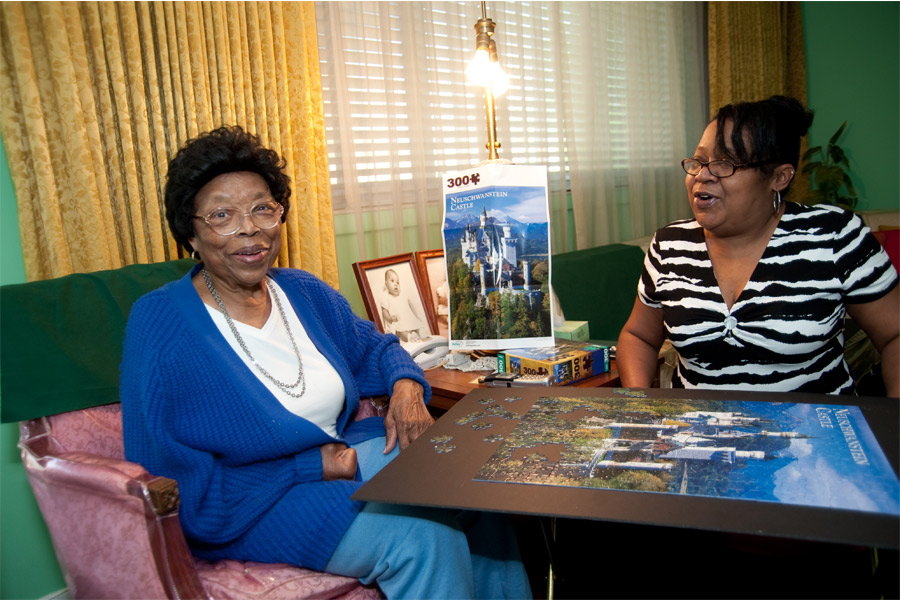
Brenda-and-MaryBrenda Moseley (right) has been a caregiver most of her adult life. She received a Masters degree in Special Education and taught in Richmond before her mother, Mary, had a stroke fifteen years ago. Since she is an only child, Brenda became Mary’s long-distance caregiver, driving up to the city every two weeks to ensure that her mother was doing well. After about five years, Brenda was coming every weekend.

A life-long learner, Brenda turned to higher education as a coping mechanism, starting another Masters in Gerontology at Virginia Commonwealth University to learn more about her mother’s issues and ways that she could become a better caregiver. Then a year ago, Mary fell while they were on vacation in Buckingham, VA. After her broken bones healed, it was obvious that Mary’s dementia had worsened.

Brenda tried assisted living in Richmond but determined that it wasn’t a good fit for her mother. Mary, who had been the Chief of Biometrics at Walter Reed Medical Center, was dismayed at the “elderspeak” which Brenda describes as a form of baby talk that the staff used with the residents of the home. Mary insisted that the staff thought she was stupid and she began to spiral into depression. “I had to become a much more proactive advocate,” Brenda says.

Since Mary wanted to return home and there was no medical reason not to have her return to her beloved house in northeast Washington, Brenda made the decision to move back to the city to care for her mother. Upon returning home, one of the first places she called was Iona. After she called the Helpline, she received information about all sorts of assistance, including the Wellness & Arts Center at Iona.

Now a regular in the Center, Mary comes home happy every evening talking about all the activities she did that day. Brenda was granted permission to do her last two credits towards her Masters degree through volunteer work for Iona. Today, holding a brand new diploma in Gerontology, Brenda is networking and looking for a job helping elders in the community and the people who care for them. “I don’t know what I would have done without Iona. You all are a godsend.”

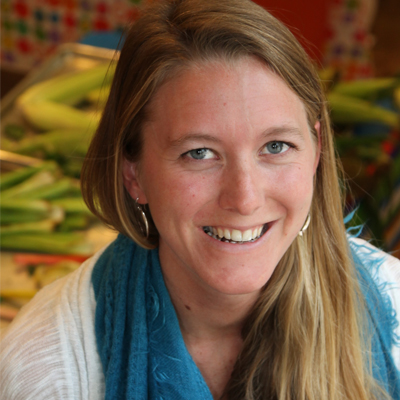
Caroline Scully

Two of us can’t do what Iona does

Photo courtesy of Gerlach Graphic

It’s hard enough taking care of one parent with a serious illness. Imagine taking care of two — while living in a different city. Caroline Scully was living in Massachusetts. Her parents were living in the District’s Glover Park neighborhood, next door to her brother. Then things began to unravel. Her mom, Bernice, was diagnosed with a rare neurological condition. At the same time, her dad, Richard, was developing memory problems.

Still in Massachusetts, Caroline began managing their medical care and overseeing their finances, along with her brother. “It became so stressful going back and forth, I decided it was better to be with them,” she said.

She left her home and partner in New England to move in with her parents. “My brother and I were focused on making sure our mother was comfortable and getting the best possible care and that our father was taking his medications and getting out.”

Looking back, Caroline realizes she didn’t understand the health care system. “It’s not set up for people to understand,” she says. “I thought my parents needed to move into assisted living. Iona’s staff convinced me they could get good care at home.”

Caroline hired Iona’s care managers to conduct a comprehensive in-home assessment and tailor solutions specific to her parents’ strengths and preferences, as well as their challenges and risks.

“Iona has been a hub of resources and services for us,” says Caroline who also has benefited from Iona’s social workers and support groups, and has participated in its advocacy efforts. After her mother passed away at home in October 2014, Caroline enrolled her father in the Wellness & Arts Center, Iona’s adult day health program for older adults with chronic health issues.

When Caroline picks up her father, she finds him having a conversation with a staff member, engaged in a small group activity, or in art therapy. His artwork has been displayed in several Iona exhibits. In addition, experienced nurses and nursing assistants monitor his health. Is his blood pressure high? Is he losing weight?

If he needs physical therapy, it’s available at Iona. “Team meetings are remarkable,” she adds. “My father gets wonderful feedback from the staff. They all have thoughtful things to say.”

At the end of the day, he’s energized — in contrast to when he’s home all day and tired. “That’s because two of us can’t do what Iona does,” says Caroline.

“Our family’s relationship with Iona started small with me calling every once in a while and not really understanding all that the organization has to offer,” she adds. Having tapped into most of its services and expertise, she has nothing but gratitude. So does her father who, at a recent team meeting told the staff: “As you go through life you don’t often find people interested in you. You all seem to have a secret training ground for compassion.”

Written by Janice Kaplan

Ashlea Steiner

Farm to Table

Farm to Table Coordinator Ashlea Steiner
Photo courtesy of Gerlach Graphic

Twenty women and men are lined up with reusable bags waiting for the free Fresh Market to open at Iona’s Active Wellness Program at St. Alban’s. Today’s produce includes corn, snap peas, Swiss chard, and tomatoes.

Next to children, older adults are most vulnerable to hunger. Immobility makes certain life tasks — such as shopping for groceries — more difficult. Malnourished older adults suffer from a variety of physical and mental health issues.

Iona’s nutrition program manager, Rose Clifford, understands this well. So does Ashlea Steiner, who joined Iona’s staff earlier this year as coordinator of the new Farm to Table Program, which provides produce from local markets to older adults who participate in the Active Wellness Program at St. Alban’s. (This program provides opportunities for socializing, life-long learning, and fitness, as well as a nutritious lunch.)

Ashlea says Iona’s new program developed out of a need to provide older adults with better access to nutritious fresh food. The DC area is home to a growing number of farmers’ markets — but for older adults, outdoor markets can be hard to reach and difficult to navigate because of the crowds and the summer heat. A grant from the Aetna Foundation allowed Iona to develop the Fresh Market, which takes place every Monday. Produce is collected by Ashlea and a team of helpers on Sundays from the Dupont Circle FRESHFARM Market, where they glean up to 400 pounds of vegetables and fruit donated by the growers. Iona has partnerships with other markets as well and with the K Street Farm at Walker Jones, which is managed by DC Greens, a DC nonprofit connecting communities to healthy food. (In partnership with DC Greens, Iona recently brought its expertise — and produce — to low-income residents in Ward 1). The Iona market would not be possible without the help of volunteers and others who not only glean but weigh, count, wash, sort, and bag produce. Thanks to donors, Iona has two refrigerators large enough to store the perishable food.

“I encourage the St. Alban’s participants to clear me out,” says Ashlea. Any produce that remains is delivered to the nonprofit Friendship Place and to the residents of Friendship Terrace. Since opening the market, “our participants’ perspective on how to incorporate fresh produce into their diet has shifted,” says Ashlea, who also organizes cooking demonstrations. Because St. Alban’s is located in one of the DC’s higher-income neighborhoods, some may not recognize how great the need is. But for older adults on a fixed income — no matter where they live — fresh produce may be a true luxury.

“One woman always has the same story,” Ashlea says. “She tells us: ‘We worked hard our whole lives and now we don’t have the means to get around to these markets or afford vegetables at the store. We are glad this is here for us in our time of need.’ She gets teary every time.”

Written by Janice Kaplan

Dr. Lorna Hahn

Recession leads to perfect storm

Photo courtesy of Gerlach Graphic

It was “a perfect storm,” says Dr. Lorna Hahn. She is referring to three events that conspired to turn her life upside down between 2008 and 2011. A political scientist who taught international relations at American, Catholic, Georgetown, and Howard Universities, Dr. Hahn is known for her research and books relating to Africa. John F. Kennedy, who was a U.S. senator at the time, wrote the forward to her first book, North Africa: Nationalism to Nationhood. More recently, her research has focused on the Arab Spring.

But in 2008 her attention was elsewhere. That is when the Great Recession hit. “The stock market crashed and took my savings with it,” she says. Like many others in our region and around the country, Dr. Hahn suffered a major financial setback. As if the recession weren’t enough, she came to the end of a research contract, which was not renewed. Then, in January of 2011, she was rushed to the hospital with bleeding ulcers. Several blood transfusions later, she found herself back home — behind in her bills and at risk of eviction.

A friend suggested she contact Iona. That’s when the petite Dr. Hahn met Iona’s nurse care manager, Fiona Druy. Fiona jumped into action — addressing Dr. Hahn’s health challenges by arranging for healthy home-delivered meals and a nutritional supplement.

To deal with her financial issues, Fiona connected Dr. Hahn with the nonprofit Legal Counsel for the Elderly and coordinated the services of three lawyers with expertise in different areas. The attorneys addressed issues with her landlord, including overdue repairs to her apartment and late rent payments. They discovered she was eligible to file for her Schedule H rent rebate for the previous three years and that she qualified for an increase in monthly Social Security payments.

“At my low point,” she says, “I told Fiona, ‘I shouldn’t have gotten into this mess.’ Her response made me feel better. She said: ‘This could have happened to my own mother.’ In fact, during stock market crashes, grown men have thrown themselves out of windows because they couldn’t cope with their circumstances.” Iona’s staff “knows what they are doing,” said Dr. Hahn.

“They have access to competent people in many areas, such as the law. Because of my circumstances, I got thousands of dollars of free legal advice.” Dr. Hahn still receives nutritious food through Iona and support from the Legal Counsel for the Elderly. Grateful that her health and finances are at a better place, she remains active with her research and writing.

Thinking back on the past few years, Dr. Hahn says, “I never thought I’d have to tap into the services of a local social services organization. But I did. I appreciate Iona more than I can say. By sharing my story I hope to help someone else.”

Written by Janice Kaplan

Gilbert Lavine

Embracing a new phase of life

Photo courtesy of Gerlach Graphic

Gilbert Lavine didn’t plan to retire at 61. A native Washingtonian, Gilbert was working as a treasurer at a major company that underwent an acquisition. He stayed on for a year after the acquisition before retiring in 2012, much earlier than he had anticipated.

“My career was cut short,” he says. “I was in shock. Sixty-five seemed like the right time to retire, yet here I was in my early 60s without a plan and no idea how I was going to spend my time.”

But not for long. His 88-year-old mother-in-law’s health was failing, so the family decided to move her to the Washington area. “She became my project,” says Gilbert. “Getting her to doctors, socializing with her — that was my new phase of life, one I had not contemplated.”

Feeling overwhelmed, he contacted Iona, where he learned about its new Take Charge/Age Well Academy for retirees or those who are thinking about retiring. He became part of the very first group. “By listening and learning, I really began to address my retirement,” Gilbert says. “I hadn’t stopped to do that because I was going from crisis to crisis.”

The series touches upon such issues as nutrition and exercise – which Gilbert had been neglecting for years. He took up running and completed several 5K races.

One of the Academy’s themes is how to take care of your body. “What worked in the past may not work as you age,” says Gilbert, who has learned to eat small meals throughout the day instead of several large ones.

“Most importantly, Take Charge/Age Well provided me with an hour or two a week to focus on myself,” he says. “When you’re taking care of a family member, the last person you take care of is yourself.” After the series ended, he continued to meet with — and lean on — other Baby Boomers in the group.

The Academy also inspired Gilbert to volunteer. He used his skills as a treasurer for a statewide non-profit organization. Just prior to his mother-in-law passing away in 2014, he signed up to volunteer two days a week at Cashell Elementary School in Rockville, Maryland, helping students with math and reading. “I hadn’t been around little kids in a long time,” he said. “I love seeing all that energy.” So much so that he’s happily signed on for a second year in the classroom. Says Gilbert, “It’s what Lylie Fisher (who leads Take Charge/Age Well), calls an ‘encore career.’ It’s very enriching.”

“The day I wandered into Iona was a good day for me,” he says. “It helped me stop the day-to-day running around and begin to understand the next stage of my life.”

Written by Janice Kaplan

Gavin Lawrence

A Light in the Midst of Darkness

Caregiver Gavin LawrenceIn February 2015, Gavin Lawrence’s 78-year-old mother — who has dementia — disappeared from her DC condo. Gavin — who lives in Chicago — credits Iona nurse practitioner Fiona Druy and social worker Catherine Paitz with getting him through that crisis and many other challenges.

“Mom was a trailblazer,” says Gavin. A native of Guyana, she was the first in her family to come to the U.S. where she earned her PhD, raised Gavin on her own, and taught literature and AfricanAmerican history at Howard University. “She’s always been independent,” he says.

That became more challenging when she had heart surgery in 1995, a minor stroke in 2000, and, over time, developed dementia. In 2008, she took early retirement from Howard.

At the same time, Gavin was struggling to care for her from his home in Chicago, where he also was raising two children. In addition, his work as a stage actor takes him all over the country. (You may have seen him in “Ma Rainey’s Black Bottom” at Arena Stage).

In November, Gavin and several relatives decided it would be best for his mother to return to Guyana, where her sister and a live-in nurse could care for her. That turned out to be “miserable for everyone,” says Gavin. His mother stopped eating and lost weight. She was unhappy, frustrated, and angry. “She thought she had been kidnapped,” Gavin says.

So the family moved her back to DC and, with Iona’s help, began looking for safe housing options. Still, that conversation always ended with her saying she wasn’t moving.

Then came the call every family member who has a loved one with dementia fears. His mother was missing. After a frantic search, relatives found her near American University, disoriented and alone.

In the weeks that followed, Gavin was plagued by questions such as: “Do I want her happy — or safe” and feelings of guilt that grew out of the fact that, in his culture, most elders live with their adult children until they die.

Throughout the experience, it was Iona’s staff that helped him to navigate these emotional and practical issues. “They have been nothing short of angels,” he says. “They spoke directly and frankly with my mother about the benefits of assisted living in a way that reinforced what I needed to do,” says Gavin, who moved his mother into a senior living community in June. “Until the move, Catherine and Fiona visited my mother in her condo twice a week. They were professional and personal, compassionate, and honest. They were the one little light in the midst of a lot of darkness.”

If you or someone you know needs help navigating eldercare issues, call Iona at (202) 895-9448, and ask for our Helpline.

Written by Janice Kaplan

Michele McNally

From Apples to Ice Cream: Friendship Blossoms in Unlikely Place

Mr. Shelly Martin and volunteer Michele McNally grocery shop together every other week.

It’s 1:45 pm on a Thursday afternoon and Mr. Shelly Martin, 79, is patiently sitting in the warm lobby of Friendship Terrace, a senior living community in Northwest, DC that he’s called home for almost 20 years.

After a few minutes, in walks his visitor. They greet each other like old friends and immediately pick up a conversation. It’s obvious the two have a practiced rhythm and routine, as they catch up and chat about anything and everything from family stories to the Power Ball lottery. From an outsider’s perspective, you’d never guess the visitor is Michele McNally, an Iona volunteer, and that she and Mr. Martin have known each other for just over a year.

Michele has been a volunteer for Iona on-and-off for nearly 10 years. Through the years, she’s helped clean older adults’ homes and even do laundry. Currently, she assists Iona’s nutrition team by providing administrative support to our home-delivered meals program. And, every other week, Michele goes grocery shopping with Mr. Martin.

Time Flies By

Talking as they navigate the seemingly endless store, it’s easy to see the care and genuine interest between Michele and Mr. Martin. For both of them, it’s much more than groceries. “Sometimes, we might just have two things on our shopping lists,” says Michele. “But, we spend most of the time chatting. He’s very easy to talk to.”

That becomes obvious as Mr. Martin, a true conversationalist, shares tales of his days growing up in New York. He speaks slowly — but deliberately — with a slight, Brooklyn accent, and Michele learns that he used to play the trumpet. He was an insurance salesman. He helped his father with photography. It’s easy to get lost in the conversation and forget all about their main task. In fact, practically two hours fly by as the duo weave in and out through aisles of colorful packaging and frozen meals, occasionally stopping to grab something from their list.

A Way to Connect

For Michele, the errand serves as a way to give back and connect with a new community. “We’re all going to age,” she says. “And, I think there can be a lot of loneliness and isolation that comes with that.”

Being able to support an older population is also important because her own family is back in Minnesota. Visiting Mr. Martin, then, “is a little bit of a way to connect to that family aspect,” Michele explains.

As they part ways, it’s easy to see the outing is important to Mr. Martin, too. With a twinkle in his blue eyes, he says goodbye. Like always, Michele replies, “Until next time, Mr. Martin.”

Jean Johnson

Avid Volunteer Jean Johnson Embraces Iona’s Mission and Shares Her Skills

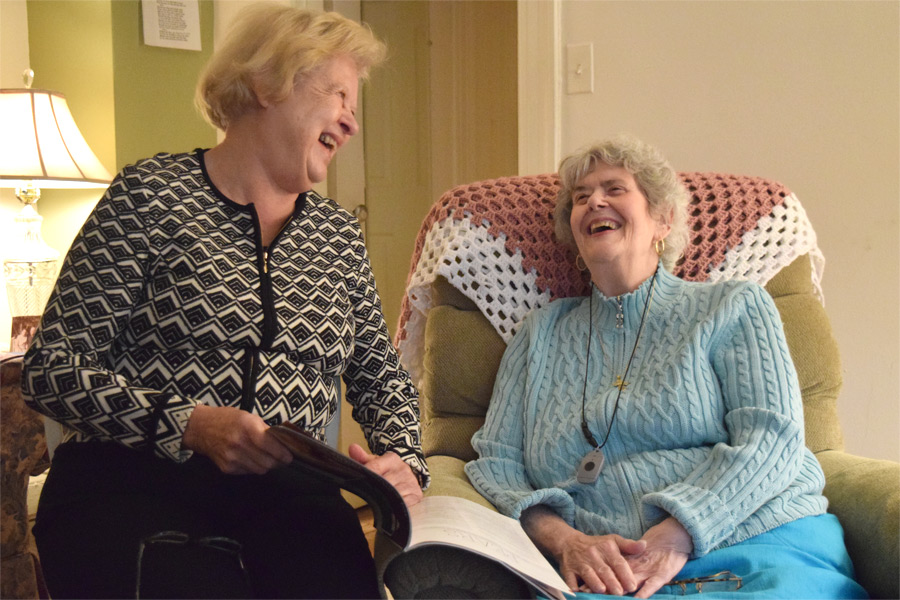
Our volunteer Jean Johnson (left), otherwise known as "The Amazing Jean," does everything from home visits to wellness presentations. Here, she shares a laugh with client Shirley Conover.
Our volunteer Jean Johnson (left), otherwise known as “The Amazing Jean,” does everything from home visits to wellness presentations. Here, she shares a laugh with client Shirley Conover.

Jean Johnson, 80, has always been an active community member.

In her first job, she worked with Puerto Rican families in need at St. Vincent’s Hospital in New York’s Greenwich Village. She then worked in three hospitals for communicable diseases on Welfare Island, now Roosevelt Island, before moving on to Johns Hopkins. In Jamaica, where Jean lived in 1982, she volunteered at the University of the West Indies and worked with the social services and nutrition program there. She has trained individuals on cholesterol health with the National Institutes of Health and organized a wellness program for 600 inner-city children. Jean has also taught classes at the University of the District of Columbia.

And now, Jean volunteers with Iona.

“The love of my life has always been to do good. To help people in the community,” Jean says. And with Iona, she is able to do just that. As a volunteer, Jean draws from her prior professional expertise as a dietitian to assess individuals’ physical and cognitive capabilities, or share information about good health practices.

At our Active Wellness Program at St. Alban’s, for instance, Jean has presented on geriatric nutrition. Coming from someone who can relate personally to aging challenges makes the information Jean shares that much more valuable.

“One lady told me it was so nice to hear the information from somebody her age who could identify from her problems,” Jean says. As the need for nutrition and food services continues to grow in older populations, Iona has relied even more on Jean’s invaluable expertise and time. She’s done everything from home-visits and supplement deliveries to check-in phone calls and client assessments. “Jean is a big part of our team,” says Rose Clifford, Iona’s Nutrition Program Manager. “She makes food fun.”

So at age 80, what keeps Jean coming back to Iona? “It’s selfish,” she says, with a smile. “It’s very selfish. You’re needed. You can use whatever the Supreme Being has given you. Volunteering keeps you alert. And the staff here is fantastic. I have never seen a staff that is so caring and giving.”

“So many of these people are lonely and dependent,” she adds. “Just by visiting them, Iona staff can actually give them a boost.”

Angie Whitehurst

Scholarship Recipient Shares Her Experience

Angie WhitehurstAngie Whitehurst is a fighter. Every day she manages the challenges of her fibromyalgia, a chronic pain disorder. She is a stroke survivor. She is currently unemployed and has no source of income. She is a caregiver for her aging parents, who are both in their 80s. And, at 62, Angie worries about how to age successfully.
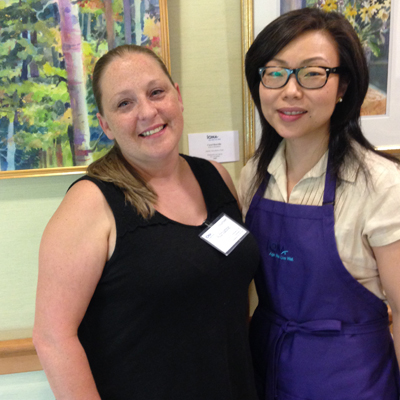
But, Angie doesn’t see these challenges as obstacles. “Obstacle is a bad word,” Angie says. “Obstacle, when you say it, it’s like a wall. A stop sign. A red light. So, instead, I say it’s just another thing I have to dance around because that means movement.”

And now, thanks to your generosity, Angie has the tools to keep on dancing.

Angie is a scholarship recipient for the Health, Wellness, and Aging series in Iona’s Take Charge/ Age Well Academy. Now in its second year, Iona’s innovative educational program offers “younger older” adults a robust curriculum of workshops and seminars. It includes aging-in-community specialists who share expert advice, wellness coaching, guidance on critical decision-making, and information on planning for the future through a supportive and open environment.

For Angie, the course has been a saving-grace, offering her vital information and explanation when it comes to navigating the medical system, providing a welcoming community of peers, and reminding her that it’s OK to take a break from her own life stresses.

“It’s therapeutic,” says Angie. “I feel like I’m around people I’m connected to because their experiences can benefit me, and my sharing can benefit them too. It’s uplifting.”

Like many other caregivers, Angie used to become discouraged or frustrated when trying to find resources and often she did not even know where to begin. After Take Charge/Age Well ℠, however, Angie feels confident. “This program has helped me learn who to go to and who to talk to,” she says.

Angie hopes she will be able to continue to benefit from your generosity and enjoy Iona’s breadth of resources and knowledge. “Iona is a unique environment,” she says. “It’s welcoming; it’s warming. I want to keep coming here!”

Adrianne Doyle

“It really and truly was the best week.”

Iona-Volunteer-Adrianne-DoyleAdrianne Doyle (left) had always had a special relationship with her Uncle Bert. To her, he was the best kind of teacher — intelligent, articulate, but with a fun side too. “He was one of the smartest people I had ever known,” says Adrianne.

After he passed away, Adrianne knew she had to do something to honor him. Volunteering in Iona’s Wellness & Arts Center, where he was a participant for about two and a half years, seemed like the perfect way.

“When Uncle Bert got sick, he was a different person — which was hard for us,” says Adrianne. “But, once he started going to Iona, it stimulated him so much that we were able to have a little bit of him for a lot longer than we expected. The interactions with the staff and with his peers, the art, the music, the dog visits — all of that kept him going.”

So as a way to show her gratitude, Adrianne traveled from North Carolina to share her time with participants and staff members for a full week. The experience, says Adrianne, was inspiring. From oneon-one talks to vibrant dance parties, Adrianne jumped head first into our robust daily programming. “By the end of my first day, I was sweaty and exhausted,” she says. “But, I loved it.”

Interestingly, as a certified nursing assistant by profession, Adrianne knows many of the challenges facing older adults and their family caregivers firsthand. But it wasn’t until visiting our Center that she realized how valuable adult day services could be — for both participants and their family members.

“Iona just takes the caregiving weight off,” she says. “It provides all of the structure and stimulation that family members don’t think about doing or maybe can’t do because they’re tired or sad. I’ve never seen a place like Iona. I don’t know why there aren’t a million of them.”

Since saying goodbye and heading back to North Carolina, Iona’s Wellness & Arts Center has nonetheless remained in Adrianne’s mind. In fact, because of her volunteer experience, Adrianne has started nursing school! And, of course, though she’s now back home, Adrianne knows it is not goodbye forever: “When I left, I promised there will not be another time I come to DC and don’t say hi. I will certainly, certainly volunteer again.”

Feedback for Iona