Whether an artwork has moved you to tears or lifted your spirits, it’s clear that art has the power to change us and to inspire our hearts.
Below, read from Iona Special Guest Artist Lauren Kingsland on how art and quilt-making inspires her daily.
The many-colored quilts of my childhood were made by my father’s mother. How exciting it was to find scraps from my own cotton dresses in Grandma’s quilts. When I was in my thirties, I was asked to make a quilt for a client from his special collection of T-shirts. The garments were different, but the desire to use them to make quilts was familiar. This commission started me on a path of creating, teaching, and writing about making quilts using treasured garments as a way of telling a life story.
It is an honor to share quilts made over the course of my career with the Iona community, as the next featured Special Guest Artist in the Lois & Richard England Gallery at Iona. Additionally, in 2016, an individual artist grant enabled me to create a series called “Quilted Mementos” that honor the influences on my life work as a quilt artist. These pieces will hang in the atrium at Iona during the show from Feb. 6 – May 24, 2017.
Below, I share more information on my lecture series, and tips for how you can inspire your heart through a favorite item of clothing.
A repurposed garment can be the creative starting point for a quilt, or pillow, or whatever you imagine. The old skirt gets a new life as a tote bag or the souvenir sweatshirt becomes a comfy cushion. Take an up-cycled art break, for yourself or as a gift! Art can be about making something beautiful out of what is at hand. It doesn’t have to be fancy to feed your soul.
Choosing garments to re-use can be part of simplifying your wardrobe and your life. The box of T-shirts too precious to throw away becomes the new throw on the couch. The transformation of a loved one’s old clothing into a quilt that provides warmth and comfort connects the past to the present in a positive way.
Your memories of the garments become part of the new project. The new table runner made of old plaid shirts becomes a focal point to share the stories of the original garments with loved ones around the table. Write the story on the back, with names and dates, and anecdotes.
It is so satisfying to work with your hands. A mind-body-spirit connection happens when your creative vision guides your hands to transform something ordinary into a beautiful new thing. As we spend increasingly more time on our electronic devices, working with our hands to shape the material world is more important than ever to help us remain balanced.
Do you use art to tell stories? Let us know in the comments!
By Lauren Kingsland
Lauren Kingsland has been making quilts professionally since 1988. Her work has been exhibited in galleries and shows and is in public and private collections throughout the country. She is dedicated to quiltmaking as a medium for storytelling, for building community and for healing and wellness. Visit her website www.laurenkingsland.com for additional information.
As you grow older, social connection matters. Meaningful relationships improve the quality of your life. And if you have health problems and need care, you may need someone to help you with day-to-day life, and with navigating the healthcare system.
This growing care gap presents challenges because as people grow older, health changes may make it difficult for them to live alone without supports. So how do folks who are aging solo get the care they need? And who will serve as an advocate if there is a need to make decisions about health care or living arrangements?
Staying in charge when aging solo requires being proactive and creative. It’s about taking action now to piece together the support you may need in the future. Here are some issues to consider:
Quality of life: Is your current living situation one where you can easily access transportation, shops, medical care, and companionship? If not, you may need to think about making a move while you are healthy and active. You could choose to relocate to a continuing care retirement community, but there are other housing options like co-housing, or sharing a home with a group of other people.
Health care decision-making: It’s important to look at your social network, both local and long distance, and think about who you might trust to make health care decisions for you. While it’s ideal to have a local advocate, even if your trusted decision-maker is across the country, it still makes sense to get that person involved and supplement their help with local support. Wherever your health care decision-maker lives, it’s important to complete an advance directive, including a health care power of attorney, and make sure your decision-maker has a copy and knows what your preferences are.
Navigating in a health crisis: Can you and a local friend make an agreement to be on call for each other in the event of a hospitalization? Additionally, some people choose to hire a care manager to be on call. Iona offers this service through Iona Care Partners.
Supportive services: Many people are able to remain in their own homes as they age through a range of supportive services through the aging services network, and neighborhood Villages. Investigate those services in advance so you know what’s available in your community.
By Deb Rubenstein, MSW, LICSW
Deb Rubenstein, MSW, LICSW has been on staff at Iona for over 20 years. She has worked as a care manager, psychotherapist and support group facilitator, and has served as Director of Iona’s Consultation, Care Management and Counseling Services since 2005. In her current role, she oversees a staff of social workers and nurses who provide direct support to older adults and their families. Deb also leads workshops in a variety of settings, including workplaces, for the public, and professionals on a wide range of topics from “How to Help an Older Adult Who Doesn’t Want Your Help” to “Legal and Financial Planning for Retirees and Caregivers.”
Inauguration day is here, and what a ride it’s been. No matter your party affiliation, this election may have inspired you to get more involved in the political process. And why shouldn’t you? Like it or not, the federal government directly impacts each of our lives through programs as diverse as education to veterans’ benefits.
Federal laws dictate what Medicare covers, how much Social Security pays us, and what we pay in taxes. US states, on average, obtain a third of their revenue (for state services) from the federal government. The incoming congress, and the president-elect already have suggested big changes to the Affordable Care Act (aka “Obamacare) and to Medicare — programs that impact one in five Americans (for more information, click here and here). In addition, in the coming years, our elected officials also will decide on funding levels for the National Family Caregiver Support Program, the national Elder Justice Initiative (elder abuse prevention), Alzheimer’s research, senior employment assistance, and senior housing.
How does an average American influence national policy? Voting for our candidates of choice is one way. The framers of our constitution, however, also gave us opportunities to influence lawmakers in between elections. They created a government where “we the people” can advocate at any time with our elected officials to create or change laws that affect us.
How You Fit Into the Lawmaking Process
Before considering how to advocate, it’s first necessary to have a basic understanding of our legislative process, and where you might fit in. Generally speaking, lawmaking starts at Congress, and ends at the President. Any senator or representative, from either government “chamber” (i.e. the senate or the House of Representatives), may draft legislation (a.k.a. a “bill”).
In drafting a bill, legislators may use their own ideas, and/or ideas they receive from others…like us. The bill’s author (its “sponsor”) introduces the bill, which then goes to committee where lawmakers refine the bill’s language, often incorporating feedback from others…like us. After committee, the members of the chamber (where the bill was introduced) vote on the bill. In deciding how to vote, they may be persuaded by others…like us. If approved, the bill goes to the other chamber, where the process is repeated. When both chambers agree on the bill’s language, they send it to the President, who may approve or veto it, often after reflecting on input from others…like us.
Basic Advocacy
How we advocate with (or persuade) our elected officials is similar to the way we persuade anyone else. For example, imagine you want to convince a friend to donate to a charity you support. You might invite your friend to meet, or you might write a letter. In your conversation, you likely will introduce the charity and the problem it hopes to solve; and explain to your friend who the problem impacts, what the charity is doing to solve the problem, and how your friend’s donation can help. To make your case more convincing, you might describe how the charity’s work relates to your friend’s hobbies or values, mention mutual friends who already have donated, or share a personal story about how the charity’s work impacts you. If your friend donates (or even if he/she doesn’t), you might send a “thank you” note for your friend’s time.
Advocating with our legislators is not much different, although the means by which we connect might be. Because we may not personally know our elected officials, we might first participate in a town hall meeting with an official, write a letter to the local newspaper to get their attention, schedule a meeting through their staff, or first meet with their staff. Because the government intensely examines incoming mail (to check for dangerous substances) — a process that may take up to a month — we also may choose to phone or to send an email, rather than mailing a letter.
Whichever method you choose to contact your elected officials, here are some guidelines to consider:
Be brief. Your lawmakers and their staff rarely have more than 30 minutes to devote to individuals. At a town hall meeting, you may have less than 10 minutes to get to your point; and in a letter or email, you may want to limit yourself to 100-150 words.
Be organized. Because your time is brief, you will want to deliver your message efficiently. State the problem or issue. If you’re contacting your lawmaker about a particular bill, indicate the bill’s title or number (see Logistics). Explain specifically how the problem/issue affects you, your legislator, and/or your legislator’s constituents. If possible, provide evidence from independent sources, and show how the problem/issue relates to your elected official’s values, voting record, or campaign promises. Most importantly, identify what you want your lawmaker to do: be it drafting legislation, revising language in a bill, or voting on a bill.
Be courteous. Like you, your elected officials and their staff want to make a difference; and like you, they may have time conflicts, competing responsibilities, or bad days.
Leave something behind. If you meet with your elected official or your official’s staff, consider leaving literature about the issue and the position you want your legislator to take. You might leave your contact information, and offer to answer future questions. Whether you wrote to your lawmaker, or met with them in person, send a thank you note for their time; be sure to include a reminder of the issue, and what you want your lawmaker to do.
Easy Advocacy
If you’re short on time — or just seek an easier way to advocate — consider signing up for action alerts from an organization that fights for issues important to you. Typically these organizations will notify you about issues on which you can act, instruct you on how to contact relevant decision-makers, and provide sample language for your use.
Leland Kiang, LICSW is manager of Iona’s Information & Referral Help Line, whose staff answers questions about senior services throughout the DC metro area. Leland also has written articles for BIFOCAL, Unite Virginia, and the National Resource Center on LGBT Aging.
The holiday season is just about over and sometimes the blues come “out-of-the-blue” to fill the void. Different from depression, the blues:
Are a normal part of life due to stress and losses (depression isn’t);
Are temporary, normally lasting less than two weeks (depression lasts at least two weeks, and often longer);
Generally don’t affect your functioning and activities (depression does); and
Usually dissipate without professional intervention (depression usually doesn’t without professional help).
Nonetheless, the blues need to be taken seriously since they can turn into depression if you’re not careful.
What are the signs you may have the post-holiday blues? You may be:
Less happy
More anxious
More irritable
Less sociable
Less energized
What can contribute to the post-holiday blues?
As the song goes, “the party’s over,” and you may feel let down after the holiday activities have ended
Missing family and friends who aren’t nearby anymore or who have died
Having a smaller group of family and friends than in the past; maybe even having spent the holidays alone
Unmet expectations about the holidays, family members, and friends
Family conflicts that may have flared up during the holidays
Feeling sad about the passing of time and changes that go with that
Feeling tired from the stress of holiday shopping, get-togethers, and not sleeping as much as usual
Financial concerns accentuated by holiday spending
Health and mobility issues affecting your ability to attend such things as social gatherings and religious services
Less exercise and less healthy eating during the holidays
A cluttered living space
There may be others, but do these sound familiar?
If so, what are some things you can do to overcome the post-holiday blues?
Get out of the house if you can; a change of scenery and activity are good for your mood
Make a schedule to give your day structure with built-in activities
Re-start activities that may have gotten sidelined by the holidays and try new ones if you like
Make of list of realistic resolutions for 2017
Stay in contact with family and friends throughout the year, not just during the holidays
Remember there’s more to the year than just the span of Thanksgiving to New Years
Make a budget to get back on track financially if your holiday expenses were higher than expected
Spring clean your space a few months early
Do things that make you feel useful and helpful to others
Treat yourself (in moderation)
Reminisce about positive memories
Know your limits
Eat right, exercise, and get enough sleep
If you’re concerned about having the blues or if the symptoms mentioned above persist, you may want to talk with your doctor and/or contact Iona at (202) 895-9448 to learn more about our individual counseling services.
In the meantime, I wish you a happy and healthy 2017!
By Bill Amt, LICSW
Bill Amt, LICSW, is a licensed clinical social worker and is the Mental Health Program Manager at Iona Senior Services. As a psychotherapist he works with older adults and caregivers who are coping with the emotional challenges of aging, and he also leads support groups for caregivers and people diagnosed with early-stage dementia. He has a Master of Social Work degree from The Catholic University of America.
Personally, I have been a big fan of the KonMari method since I first read about it in The Life-Changing Magic of Tidying Up last year.
In its essence, the KonMari method helps you to declutter your home with one simple method:
You gather everything of one type together (starting with clothes, then books, and then papers, and on through the miscellanea we all have crammed into junk drawers.)
You pick up every single item (every pair of socks or pants, every blouse, every hat, every tee shirt), one a time, and you ask yourself one simple question: “Does this spark joy in me?”
If the answer is no, you discard it and if the answer is yes, you keep it.
Joy. Not a word most of us associate with the seemingly-endless task of keeping a home (of any size) free from clutter.
Those who swear by her method, as I do, know that this simple question, “Does this spark joy?” is incredibly powerful. It provides an immediate gut check that provides clarity. I held up an almost brand-new jacket my mother had given me and although I liked the color, I also remembered immediately that it’s itchy and too tight. Bam; into the donation pile it went. Later, when going through my books, I found tomes I had kept for years because they had been given to me by an ex. Holding them reminded me of the sadness of our breakup. Out they went. And so on.
What’s important to you today?
The life-changing magic claim is harder to discern immediately, but Kondo’s theory is that by decluttering – literally getting rid of the weight of the past and unlikely dreams for the future – we can truly focus on what is most important to us right now.
Naysayers like to disparage the KonMari method and poke fun at some of her zanier ideas (thank your socks for doing the hard work of keeping your feet comfortable; empty out your purse every night.) But the truth at the base of her method is that the more stuff we have to buy, store, maintain, organize, replace, and obsess over, the less time we have to figure out and do what is most essential.
How to get started
Getting started with her method can feel overwhelming, but I found it to be the exact opposite. I started with my clothes, as is her suggestion, but only by room. First I did my bedroom, then the front hall closet, then the basement storage area. Then I did my books, again by room (first the basement with most of the bookshelves, and then the bedroom, and finally the living room. Weeks later, I remembered the kitchen and the cookbooks! Eventually it all got done.
Next, I tackled “papers,” as she suggests. This took more than one shot, as I had papers in a variety of places, but it felt fantastic to shred pounds of unnecessary clutter! I still need to organize my photos (what to do with two dozen years of photo albums and 15 years of digital photos?!). And the junk drawer in the kitchen still has too much stuff, but the end is in sight. And just as Marie Kondo promises, there was some magic involved. I found a beloved and long-lost shirt, discovered stashes of money, AND, as she promised, others in my house have started following the method, inspired by me!
By Susan A. Messina
Susan is Iona’s Director of Development and Communications. She holds three master’s degrees, including two from Bryn Mawr’s Graduate School of Social Work and Social Research, and is a Certified Fund Raising Executive.



 Whether an artwork has moved you to tears or lifted your spirits, it’s clear that art has the power to change us and to inspire our hearts.
 Whether an artwork has moved you to tears or lifted your spirits, it’s clear that art has the power to change us and to inspire our hearts.



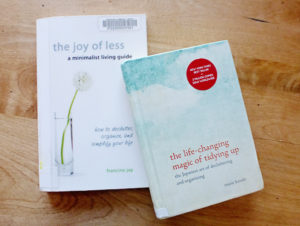 Seems everyone is talking about