Resources to Support Unhoused Older Adults

Homelessness in the U.S. is at a record high, with older adults the fastest-growing group affected. In the D.C. region, nearly half of all unhoused individuals are over 55. At Iona’s Oasis Senior Center, we work every day to connect older adults to safe, stable housing and critical services — and the need is greater than ever. If you or someone you know is experiencing homelessness, help is available. Below are local and national resources that can offer support right now.

Iona Resources

Oasis Senior Center: Provides a safe space for unhoused older adults to find nutritious meals during the day, while also receiving supportive services and a community that welcomes them.

John Wesley AME Zion Church 

1615 14th St. NW, Washington, DC 20009 | 8 a.m. – 3 p.m. | (202) 895-9448 

(Enter on Corcoran Street next to ramp – program located on basement level) 

Community Dining Sites: Iona’s Community Dining Sites offer in-person programs for DC residents aged 60+ Monday–Friday, 10:00 a.m.–2:00 p.m., at various locations throughout Wards 2, 3, and 4. Enjoy coffee hour, a nutritious lunch, wellness activities, and the chance to connect with the community. 

Ward 2 Locations: 

  • Asbury Dwelling Place – 1616 Marion St NW, Washington, DC 20001 
  • Asian and Pacific Islander Senior Service Center – 1739 9th St NW, Washington, DC 20001 (The New Bethel Baptist Church) 
  • Claridge Towers – 1221 M St NW, Washington, DC 20009 
  • James Apartments – 1425 N St NW, Washington, DC 20005 
  • Oasis Senior Center for the Homeless – 1615 14th St NW, Washington, DC 20009 
  • St. Mary’s Court – 725 24th St NW, Washington, DC 20037 

Ward 3 Locations: 

  • Active Wellness Program at St. Alban’s – 3001 Wisconsin Ave NW, Washington, DC 20016 
  • Regency House – 5201 Connecticut Ave NW, Washington, DC 20015 

Ward 4 Locations: 

  • Colony House – 930 Farragut St NW, Washington, DC 20011 
  • Fort Stevens Recreation Center – 1327 Van Buren St NW, Washington, DC 20012 
  • Hattie Holmes Senior Wellness Center – 324 Kennedy St NW, Washington, DC 20011 
  • Lamond Recreation Center – 20 Tuckerman St NE, Washington, DC 20011 

Helpline: Iona’s Helpline is available Monday to Friday from 9:00 AM – 5:00 PM. Staffed by licensed clinical social workers, our Helpline specialists listen to concerns, answer questions, and connect callers with the resources they need. Dial (202) 895-9448 to get connected. 

Mental Health Support: Iona’s team of compassionate licensed clinical social workers are available to help you address any challenges, connect you to support systems, and learn ways to communicate your emotions in a healthy and positive way. Please contact our Helpline at (202) 895-9448 for assistance or additional information. 

Food Resources

Ward 2 Food Resources

Ward 3 Food Resources

Ward 4 Food Resources

Ward 8 Food Resources

Bread for the City: Food Pantry and Free Farmers Market open Monday-Thursday 9 a.m. – 12 p.m. and 1-3 p.m. Current DC identification OR proof of DC residency (within 3 months) is required. Free Farmers Markets: Free, fresh, and seasonal produce. Fridays from 9 a.m. – 11:45 a.m. or until food runs out, whichever comes first.

Northwest Food Pantry: 1525 7th St NW, Washington, DC 20001 

Southeast Food Pantry: 1700 Marion Barry Ave SE, Washington, DC 20020 

Capital Area Food Bank: To reach the Hunger Lifeline, call (202) 644-9807 or e-mail hungerlifeline@capitalareafoodbank.org. To utilize their interactive map to locate food resources in your area visit https://www.capitalareafoodbank.org/find-food-assistance/

Friendship Place: Non-profit that assists individuals and families experiencing or at risk of homelessness secure stable housing, supportive employment, and comprehensive case-management services. It also operates drop-in centers, clinics, outreach programs, and specialized housing. 

4713 Wisconsin Ave NW, Washington, DC 20016 | Phone: (202) 364-1419 

Martha’s Table: Non-profit organization that provides quality family support programs, alongside no-cost healthy food markets, mobile meal delivery, and affordable clothing services. Martha’s Table Markets are open Monday – Friday from 11 a.m. – 4 p.m. 

Northwest Market: 1474 Columbia Rd, NW  Washington, DC 20009 

Southeast Market: 2375 Elvans Road, SE  Washington, DC 20020 

Phone: (202) 328-6608 

NW Community Food: Non-profit organization dedicated to supporting individuals and families in DC with fresh produce, shelf-stable foods, household and personal hygiene items. Provides resource links to DC residents (Legal services, Immigrant Advocacy, WIC, Crisis intervention, Mutual Aid, Clothing). Open Sundays 1 p.m. – 3 p.m. 

4340 Connecticut Avenue NW, Washington, DC 20008

St. Paul’s Weekly Lunches: Prime Time Center at St. Paul’s Senior ministry gathers on Wednesday for seated exercise followed by pre-plated lunch and entertainment. Welcome to those 50+ and vaccinated. Pre-registration is required. Please notify Joy Belew by 11 a.m. on the Friday prior to each week’s program to participate. Wednesdays, 11 a.m. -2 p.m. 

4900 Connecticut Ave., NW, Washington, DC 20008 | Phone: (202) 966-5489  

Email: joyb@stpaulslutherandc.com 

Woodley House Food Pantry: Provides food staples, frozen meat, and fresh produce to Woodley House residents and community neighbors in need. Tuesdays 1 p.m. – 2:30 p.m. Open to all DC residents. Must provide proof of residency with current photo ID, passport, or utility bill, etc. 

Valenti House – 2711 Connecticut Ave., NW, Washington, DC 20008 |  Phone: 202-830-3508 

Shelter Resources

If you or someone you know needs emergency shelter, please contact the Homeless Services Hotline at (202) 399-7093 or dial 311. The Homeless Services Hotline is open every day from 8 AM – 12 AM. During hypothermia season (November 1 – April 15), the Homeless Services Hotline is open 24 hours a day. Transportation to the shelter is available 24 hours a day, 7 days a week during hypothermia season. 

Everyone Home DC Drop-in Day Center (Shirley’s Place): Everyone Home DC’s drop-in Day Center is open Monday, Tuesday, and Wednesday, 8:00 a.m. to 3:00 p.m., and Thursday and Friday from 8:00 a.m. to 12:00 p.m.

1338 G Street, SE, Washington, DC, 20003 | Phone: 202-544-3150  

Additional Resources & Important Numbers

Healthcare Resources

Legal Assistance

Substance Abuse Treatment and Rehabilitation

Help With Paying Bills

Warming Centers

Find a list of locations that are open when DC Government activates the Cold Emergency Plan: https://snow.dc.gov/service/warming-centers-and-facilities 

Mental Health Crisis

The Community Response Team (CRT) can provide immediate assistance to individuals experiencing emotional, psychiatric or substance use challenges. Call 202-673-6495 to request an on-the-spot assessment and linkage to mental or behavioral health services or visit https://dbh.dc.gov/service/community-response-team.

Additional Support

For other resources available for older adults in the District, call the DC Department of Aging and Community Living at 202-724-5626 or visit https://dacl.dc.gov/ 

If you suspect an older adult is being abused, neglected, or exploited contact Adult Protective Services at 202-541-3950 or visit https://dacl.dc.gov/service/adult-protective-services-0 

Resources in Montgomery County: Contact the Aging and Disabilities Resource Unit at (240) 777-3000 or visit https://www.montgomerycountymd.gov/senior/.   

Resources in Other Locations:  The Eldercare Locator can provide information on aging services anywhere in the United States. Call 1-800-677-1116 or visit https://eldercare.acl.gov/Public/Index.aspx 

Let’s Do Lunch!

Lunch is an important meal, providing the opportunity for an enjoyable midday break to re-fuel and recharge for the rest of your day.

With a bit of planning, lunch offers the opportunity to take a break and savor a tasty meal at home or on the go. Healthy lunchtime choices set you up for success with an overall plant-forward Mediterranean dietary pattern, so you can skip fast food restaurants or other less healthy, last-minute options.

So, what’s for lunch? Follow this simple “food group” formula and you will be on your way to more flavorful and healthful midday meals. Components can be assembled ahead of time and put together to take along or enjoy at home:

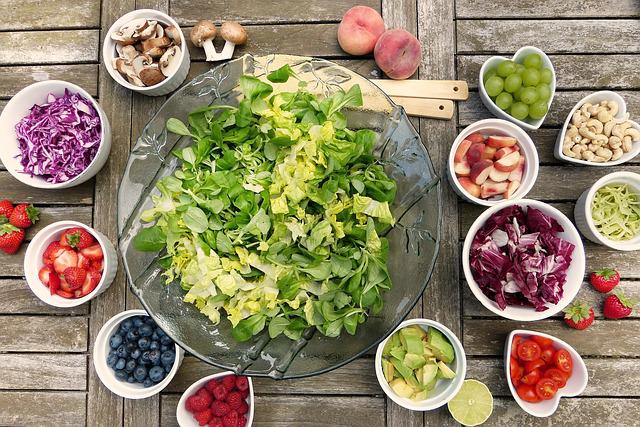
Step 1: Build a colorful vegetable base using salad greens and other raw or leftover cooked or roasted vegetables. Fruit adds nutrition and a touch of sweetness to salad. Dried cranberries, canned mandarin oranges, or fresh blueberries and other fruits all work.

Step 2: Add some whole grains, such as cooked brown rice, barley, or leftover whole grain pasta. Or, use a starchy vegetable, like cooked corn or cubed sweet potatoes, for healthy complex carbohydrate and fiber.

Step 3: Protein is important at all meals. Add cooked or canned fish (salmon and tuna), chicken, cottage cheese, or sliced hard-boiled eggs. A few scoops of canned beans or legumes are an excellent source of both protein and fiber – and they are filling! Go light on any cheese toppings – just a sprinkle of strongly flavored shredded cheese or feta crumbles adds a lot of flavor. Top with toasted nuts or seeds for additional protein and fiber as well as crunch.

Step 4: Use healthy fats, such as olive or avocado oil, and a dash of any vinegar or citrus juice or a couple of tablespoons of your favorite creamy salad dressing to top it all off.

I like to make a grain or bean/grain/lentil salad at the weekend to enjoy for lunch throughout the week, such as this favorite Lentil and Pecan Salad.

Tasty lunches are not limited to grain or salad bowls. Here are some other favorite lunch ideas:

  • Plain Greek yogurt bowls with a drizzle of honey and topped with fresh fruit, granola, and pecans or your favorite nuts
  • Dinner leftovers!
  • Avocado toast with a fried egg on top
  • Homemade or canned soup (add extra vegetables) & whole grain toast with melted cheese
  • “Food group” snack plates – hummus drizzled with olive oil (black pepper and a pinch of paprika), cucumber slices, red pepper pieces, cherry tomatoes, cheese cubes, sliced apple, and whole grain crackers
  • Egg scramble and vegetable wraps

Part of my lunch routine is to end with a cup of decaffeinated or herbal tea and a small piece of dark chocolate or another sweet treat. What’s on your lunch menu? :)

-Rose Clifford, RDN, MBA

It’s Not the Mayo! Food Safety Myths and Summertime Food

Safe food is essential to good health and well-being, especially for older adults. Yet we often take it for granted that the food we choose to eat and that others serve to us is safe. When food is safe, we can fully enjoy the nutritional, social, and emotional benefits of enjoying a solo meal or sharing a meal with others.

One food that takes unfair blame for causing foodborne illness is mayonnaise (especially during the summer). However, mayo is not the culprit in making people at picnics sick. Commercial mayo, along with about 250 other foods, has a strict Standard of Identity (SOI) established by the FDA in 1939 to prevent food fraud. Some other foods with SOIs include milk, chocolate, and ketchup.

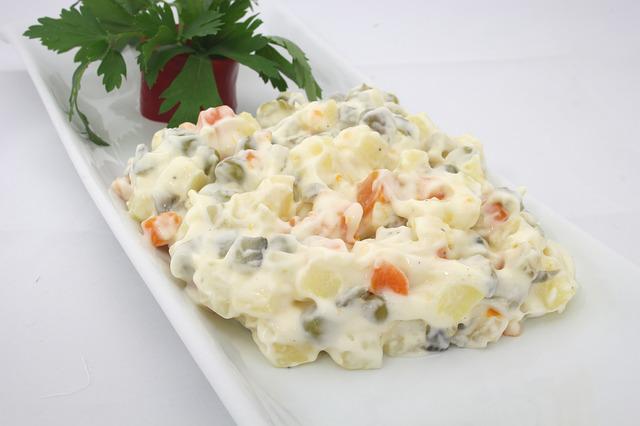
Commercial mayo is acidified with vinegar or lemon juice and made with pasteurized eggs to make it safe. In most mayo-based food salads, such as potato, chicken, pasta, or hard-boiled egg, low-acid foods offset the acidity of the mayo, creating an environment where bacteria can thrive given other conditions. In addition, it’s usually other factors which increase the risk of foodborne illness.

Here are seven tips to help you keep food safe (not just in the summer, but year-round):

  • WASH HANDS thoroughly with soap and water!!
  • Keep raw food separate from cooked food to avoid cross contamination
  • Marinate food in the fridge, not on the counter
  • Cook food thoroughly: hamburgers to 160 degrees and chicken to 165 degrees (worth investing in a food thermometer)
  • Refrigerate and freeze food promptly. Never leave food out for more than one hour when the temperature is above 90 degrees, or two hours if less than 90 degrees
  • Keep hot food at or above 140 degrees
  • Keep cold food at or below 40 degrees

One of my favorite ways to use mayo is in a chicken salad. Click this link for a Curried Chicken Salad recipe by The Real Food Dietitians. You can make this salad a bit lighter by swapping out half of the mayo for plain Greek yogurt.

Additional swaps to make it your own might include using lemon juice instead of lime juice, halved grapes instead of diced apple, dried cranberries instead of raisins, chopped walnuts or pecans instead of cashews, and fresh mint instead of cilantro. It’s your salad – have fun making it your own and have a safe-food summer!

Interested in a non-mayo sandwich recipe? Try our lemon vinaigrette hummus wrap. 

~Rose Clifford, Senior Nutrition Program Manager

Nutrition Corner: Summer Salads

June is the perfect time to turn off your oven and let salad take center stage in your meals. A salad is more than just lettuce, croutons, and a little dressing — add nuts or seeds, cooked grains, fresh or canned fruits, raw or cooked vegetables to jazz up your daily salad.

Including protein from canned beans, hard cooked eggs, canned tuna, or salmon, cheese, or cooked chicken is a great way to easily upgrade your salad into a filling and nutritious meal. Be adventurous and try different salad greens or salad mixes – shredded cabbage, broccoli, or Brussels sprouts pair well with other more tender greens such as Spring mix, leaf lettuce, crispy lettuce, arugula, or baby spinach. A salad meal also provides a way to use up leftover roasted or cooked vegetables.

Crunch is another important salad element – try diced celery, apple, toasted nuts, or crumbled pita chips. Remember to include a healthy fat, such as avocado, hummus, nuts, seeds, and healthy oils.

For dressing, drizzle over your favorite bottled or just extra virgin olive oil and a vinegar or lemon juice. If you have fresh herbs on hand – mint, basil, parsley, chives – toss them in your salad as well. Make your salad meals your own creative creations – there really are no rules!

And now a special recipe from Rose Clifford, Senior Manager of Nutrition Programs, and Nina Austin, Director of Administration:

Rose & Nina’s Favorite Salad (a “no-recipe” recipe)

Toss the following ingredients together:  arugula (or your favorite salad green), mandarin orange segments (canned & drained or fresh), crumbled feta or goat cheese, chopped pecans, dried cranberries, a light drizzle of olive oil and balsamic vinegar, salt & pepper to taste. Tuna is our favorite protein to add to this salad.

May is International Mediterranean Diet Month!

The Mediterranean Diet reflects a way of eating that is common in the countries surrounding the Mediterranean Sea. It is also considered to be a Traditional Diet, which is a pattern of eating inspired by the rich cultural and culinary history and traditions of people around the world.

U.S. News & World Report selected the Mediterranean Diet as the best overall diet for the last 5 years in a row! The Mediterranean Diet Pyramid was created in 1993 by Oldways in partnership with the Harvard School of Public Health and celebrates its 25th anniversary this year. Oldways is a food and nutrition nonprofit that helps people live healthier, happier lives.

Traditional eating patterns emphasize healthy fats, whole grains, fruits and vegetables, beans, nuts, and seeds. Here are six suggestions from Oldways to help you make your meals more Mediterranean:

  • Core foods to enjoy daily: whole grains, fruits, vegetables, beans, herbs, spices, nuts, and healthy fats such as olive oil.
  • Aim for twice weekly servings of seafood.
  • Eat moderate portions of dairy foods, eggs, and poultry.
  • Choose servings of red meat and sweets infrequently.
  • Exercise regularly, choosing activities you enjoy.
  • Enjoy meals with others as often as you can.

Click here to view a graphic about the Mediterranean Diet. 

Put Your Best Fork Forward with Iona’s Nutritionists!

Healthy aging encompasses a lifelong love of good food and positive food experiences. Every March since 1980, the Academy for Nutrition and Dietetics leads a month-long celebration, National Nutrition Month®, dedicated to the role food and nutrition play in living a healthy lifestyle.

The theme for 2022 is “Celebrate a World of Flavors.” The overall theme embraces global cultures, cuisines, and inclusivity and reinforces the message that the best diet isn’t restrictive, and that meaningful, small changes over time add up to better overall physical and emotional health and wellness.

Here are simple ways you can shift your eating habits and lifestyle and put a new spin on aging:

  • Think positively about your relationship with food and your body
  • Be active—physically, socially, emotionally
  • Focus on your overall dietary pattern, not specific “superfoods” or trendy restrictive diets
  • As author, professor, and food activist Michael Pollan says: “Eat food, not too much, mostly plants,” as advised by a Mediterranean diet pattern
  • Get cooking!
  • Eat less added sugar, desserts, sodas, and juice drinks, refined grains, sodium/salt, fatty meats, and highly processed or junk food
  • Eat more dried beans and legumes, whole grains, leafy greens, vegetables, fruits, nuts and seeds, and healthy oils such as olive oil
  • Address age-specific nutrient concerns
  • Try to eat seafood—fish or shellfish—twice a week to help get enough omega-3 fats
  • Stay hydrated
  • Explore new foods and flavors

Try this healthy recipe!

To help get you started on your healthy eating journey, get cooking in your kitchen with one of our favorite recipes from Around Town DC’s virtual chef Susan Barocas: Sweet and Savory Twice Baked Sweet Potatoes. This vegan dish is delicious, hearty, colorful, packs a lot of nutrition, and is sure to become a regular in your dinner rotation.

Looking for additional food and nutrition supports?

Iona’s critical food and nutrition programs include:

  • Weekday community lunches at Around Town DC at St. Alban’s
  • A Food Pantry Plus program to provide shelf-stable food, household essentials, toiletries, and nutritional supplements to food-insecure Iona clients
  • Liquid nutrition supplements for our most vulnerable, frail clients
  • Assistance with benefit programs such as SNAP (formerly food stamps)
  • Enrollment in Iona’s Home Delivered Grocery Plus program, in partnership with the Capital Area Food Bank
  • Enrollment in Iona’s SHARE food network monthly “grocery basket” program, in partnership with Blessed Sacrament Church and DC Department of Aging and Community Living (DACL)
  • Healthy food demonstrations at the monthly St. Alban’s Farm Market and virtual cooking programs and nutrition education sessions though Around Town DC
  • Referrals to DACL Home Delivered Meals
  • Home delivered holiday meals on Thanksgiving and Christmas
  • Personalized nutrition assessments for Iona’s highest nutrition-risk clients
  • Advocacy efforts on behalf of reducing senior hunger and malnutrition in DC

Learn more about Iona’s Nutrition team and their credentials

  • In 2008, the Academy for Nutrition and Dietetics designated the second Wednesday in March as Registered Dietitian Nutritionist (RDN) Day to commemorate the dedication of RDNs as food and nutrition experts and advocates, and to increase awareness among the public and the media that RDNs are trusted sources of science-based food and nutrition information. This years’ RDN day is March 9, 2022.
  • Registered Dietitian Nutritionists are licensed health professionals with specific science-based dietetic/nutrition degrees from accredited colleges and universities. They have a Master’s degree and complete highly-competitive 1000-hour post-graduate internships with supervised practice and pass a national exam.
  • There are several academic pathways to becoming a Licensed Nutritionist (LN). Iona’s LN, Chris Brentin, has a Master’s Degree in Human Nutrition, 1000 hours of supervised clinical practice, and passed the national exam to become a Certified Nutrition Specialist (CNS).
  • Dietitians and Nutritionists use their training and expertise to help individuals and groups make meaningful, personalized, and positive lifestyle changes to maximize their food and nutrition situation.
  • Dietitians and Nutritionists work in varied environments such as public relations/communications, the food industry, health care, universities, research, public health, community settings, government, or private practice. They must be licensed to practice in the state where they work and maintain approved continuing education.

Now, it’s time to put your best fork forward and commit to making these small changes for a healthier future.

By Rose Clifford, RDN, MBA & Chris Brentin, CNS, MS

Rose Clifford, RDN, MBA has practiced as a registered dietitian nutritionist in the Washington, DC area for over 30 years. Her current primary work as the Senior Nutrition Program Manager for Iona Senior Services focuses on helping older adults maximize their nutritional health so they can live active, full lives in their own homes.

Chris Brentin, MS, LDN, CNS is a licensed nutritionist in Maryland and DC and a Certified Nutrition Specialist. She has spent the past 6 years working with older adults in DC improve their health through nutrition and increased access to healthy food. Chris is the Nutrition Program Manager at Iona Senior Services and manages the Food Security Program.

Malnutrition: A Silent Danger for Seniors

Malnutrition is a condition that affects many older adults—but it’s not as simple as whether someone eats enough calories every day. Individuals are also at risk if they don’t eat enough of the right things (such as protein, fiber, fluids, vitamins, and minerals) or aren’t able to prepare or eat adequate meals from the food they already have.  

 What causes malnutrition? 

In reality, malnutrition is complex and has multiple causes. The physical effects of aging certainly play a role. Reduced appetite, poor oral health, and sensory changes all affect older adults’ ability to eat and enjoy food. In addition, while muscle mass and strength gradually reduce with age, the need for vitamins, minerals, and protein does not.  

Cognitive, psychological, social, and economic factors also impact whether older people are sufficiently nourished. Individuals with dementia often lose interest in solid food and may forget how to chew or swallow. Depression can cause reduced appetite, while social isolation and a limited support network may change seniors’ eating habits or limit their access to nutritious food. Meanwhile, limited income and lack of transportation significantly impact nutrition and food security.     

 “You have to be a detective,” says Rose Clifford, a Registered Dietitian Nutritionist (RDN) and Senior Nutrition Program Manager for Iona. “As a community dietitian, when I’m doing an assessment, I have to look at a variety of factors. Where do they live, what are their abilities, what exactly do they need or want, who’s their support system?” she says. “I’m trying to find out the best way to maximize this person’s food and nutrition situation.” 

 Iona’s Nutrition Team 

Clifford and Chris Brentin, a Clinical Nutrition Specialist (CNS) at Iona,  support a caseload of approximately 75-105 individuals each year with complex medical nutritional situations who are failing to thrive and need extra support from a licensed health professional. These clients experience unintentional weight loss, physical frailty, food insecurity, or poor appetite and may require multiple interventions to help them become stable.
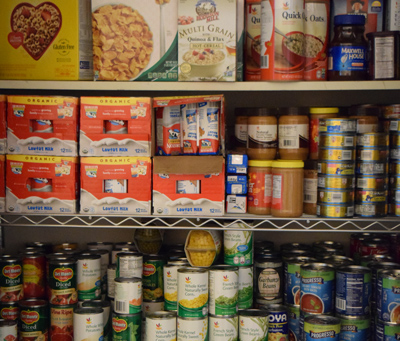
That’s when Iona’s Nutrition team calls in other Iona staff to actionAfter receiving referrals from external sources, Iona’s Helpline, and Iona case managers, the Nutrition team works with program staff and volunteers to connect vulnerable individuals to critical services such as nutritional counseling, nutritional supplements, Iona’s Food Pantry Plus, home delivered meals, and case management services. Nutrition clients receive monthly check-ins and home-delivered nutritional supplements, in addition to meals and groceries as needed.  

 Malnutrition and COVID-19 

In a recent emergency referral, a new client, 81, was connected to Iona’s Nutrition team after a COVID-19 contact tracer called Iona’s Helpline. Although the woman was asymptomatic, she was stuck at home in quarantine with only two days of food left. She was employed full-time at a local grocery store but had no money for her January rent because she wasn’t able to leave the house to go to work. In addition, English wasn’t the woman’s first language, so she needed help completing online COVID-19 leave forms that could provide her with financial relief.  

Iona’s Nutrition team and staff immediately went to work by:

  • Enrolling the client in emergency frozen meals
  • Sending an off-hours Food Pantry Plus delivery with groceries, cleaning supplies, and a case of Boost Glucose Control for extra calories (client is diabetic)
  • Coordinating touchless delivery of meals and groceries so client wouldn’t have to leave her apartment
  • Researching rent assistance to help her with January rent (Iona case manager)

Thanks to their passion and dedication, Iona’s Nutrition team and staff play an essential role in ensuring that at-risk older adults receive the supports and resources they need in order to stay safe.  

 By Lauren Stephenson 

Set the Covid Table for Seniors

I’m often asked what I do in my role as Iona’s licensed dietitian nutritionist.  Many think I spend my days telling people to eat this, but not that.  “Not quite,” I say.  Although I am Iona’s Nutrition Program Manager, I primarily work as a senior hunger advocate – a warrior in the tireless fight against senior food insecurity and malnutrition.

While no one should go hungry or lack access to sufficient healthy food, all older adults are particularly vulnerable to the effects of food insecurity, especially now during this public health crisis. Pre Covid-19, the District had the highest food insecurity rate among seniors in the country (14.3%).  This rate has risen steadily in recent years, from 9.6% in 2016 and 11.1% in 2018.  DC is ranked #1 in terms of the worst in the United States for the threat of senior hunger.  Imagine that.

On March 16, 2020, all the Community Dining sites for seniors city-wide shut down and all in-person social, fitness, and wellness activities were suspended through the end of September 2021.  Many seniors are still afraid or unable to go out and shop or have their usual home health aides come into their homes to assist them with shopping, cooking, cleaning, or personal care.  This and other Covid-19 related factors have made it even harder for older adults to feed, nourish, or care for themselves adequately.

I know what you’re thinking: “But, what about Ward 3? There can’t possibly be hungry, isolated seniors in our tidy, mostly well-off Ward 3 neighborhoods?!?!” My response? This is a problem that affects all of DC. In fact, my team and I spend our days tirelessly fighting on the front lines of senior hunger right here in Ward 3.  Covid-19 has increased the number of seniors needing food and nutrition assistance from Iona by over 250%.   City-wide, there are about 6,600 seniors receiving home delivered meals with over 1.2 million meals served since mid-March.

Iona currently serves 399 home delivered meals clients, up from an average of 175 pre-Covid.  Our little pre-Covid food pantry “closet” has expanded into a “mini-mart” of shelf-stable food, cleaning, and hygiene supplies that fills our former fitness studio at Iona.  Under the able daily coordination by Tania Sechriest, our new Food Pantry Plus program has made 652 total deliveries to 227 clients across all 8 wards, including delivery of 510 cases of nutrition supplements.

Who is a typical nutrition client served by Iona? Take for example, a current longtime client who is an 81-year-old male.  He was initially referred to me because he experienced an unintentional 63-pound weight loss over 6 months.  He looked haggard, weak, and underweight.  He’d had all kinds of sophisticated, invasive, and costly medical tests and procedures to rule out everything from an undiagnosed malignancy to gastrointestinal disease.  All of the testing was inconclusive and provided no cause for his unintentional weight loss.  Imagine his anxiety level and distress, just trying to survive each day in this weakened state.  I wish this was an unusual situation or referral, but in Iona’s work, it’s common.

Did anyone think to investigate his nutritional situation or ask this man if he had enough food to eat before thousands of dollars were spent on medical tests?  Such a simple, basic human need and right – to have sufficient good-quality food to eat in order to maintain health and a good quality of functioning and life.  Yet, here is an older adult who recently had only $7.00 left of his monthly income to last him the 10 days before he would get another social security check deposit in his bank account.  In fact, he was so low on funds that he literally did not have enough money to buy food after the middle of the month.

Senior malnutrition is often a “hidden secret” with devastating individual suffering and societal consequences.  The estimated annual cost of disease-associated malnutrition in older adults in the US is $51.3 Billion.  Food and nutrition issues are so important to good health and life quality for older adults, but are often poorly understood or go unrecognized.

But, back to my client. Today, he has a steady weight, a better sense of well-being, a community of friends, and a good level of energy and functioning.  How did Iona step up to the plate to help him?  First, he was enrolled in our home delivered meals program, and receives 10 fresh Mom’s Meals delivered every two weeks.  He also participates in our Covid-19 Emergency Meals Program, receiving 7 frozen meals weekly, a program well-liked by most of our clients.  He receives several cases of a high calorie/high protein Boost Glucose Control liquid nutrition supplements and deliveries of additional shelf stable food and supplies through the Food Pantry Plus program monthly, delivered by Iona volunteers.  He is also enrolled in and receives a monthly SHARE Food Network grocery package, also delivered by Iona volunteers.  His amazing Iona social worker helps him maintain his SNAP (food stamp) and other benefit enrollments and got him new dentures so he can eat better.

It is important to understand that senior hunger and malnutrition is not limited to low income seniors but is a complex phenomenon that cuts across all income spectrums and is often an access issue.  Factors such as poor appetite, unintentional weight loss and frailty, isolation, decreased mobility, cognitive decline, psychosocial and mental health issues, nutrient deficiencies, poor oral health, and lack of transportation are common contributing factors to senior food insecurity and malnutrition.  For these and other reasons, older adults or their caregivers are often unable to plan, procure, and prepare adequate, fresh, and nutritionally-balanced meals.  The public health emergency caused by Covid-19 has only exacerbated this situation.

Putting an end to senior hunger and food insecurity in Washington, DC requires a coordinated effort by multiple stakeholders – please help us in our tireless efforts to set the table for our seniors.

Rose Clifford, RDN, MBA

Food Pantry Plus Results – Thank You to Our Community


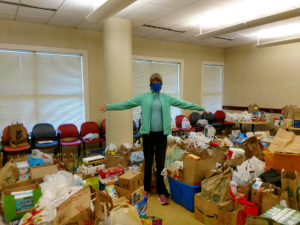
Last week, we sent an urgent call to the community to help us restock our Food Pantry with canned goods, cleaning supplies, and other home products. We’re in awe and grateful for the community response!

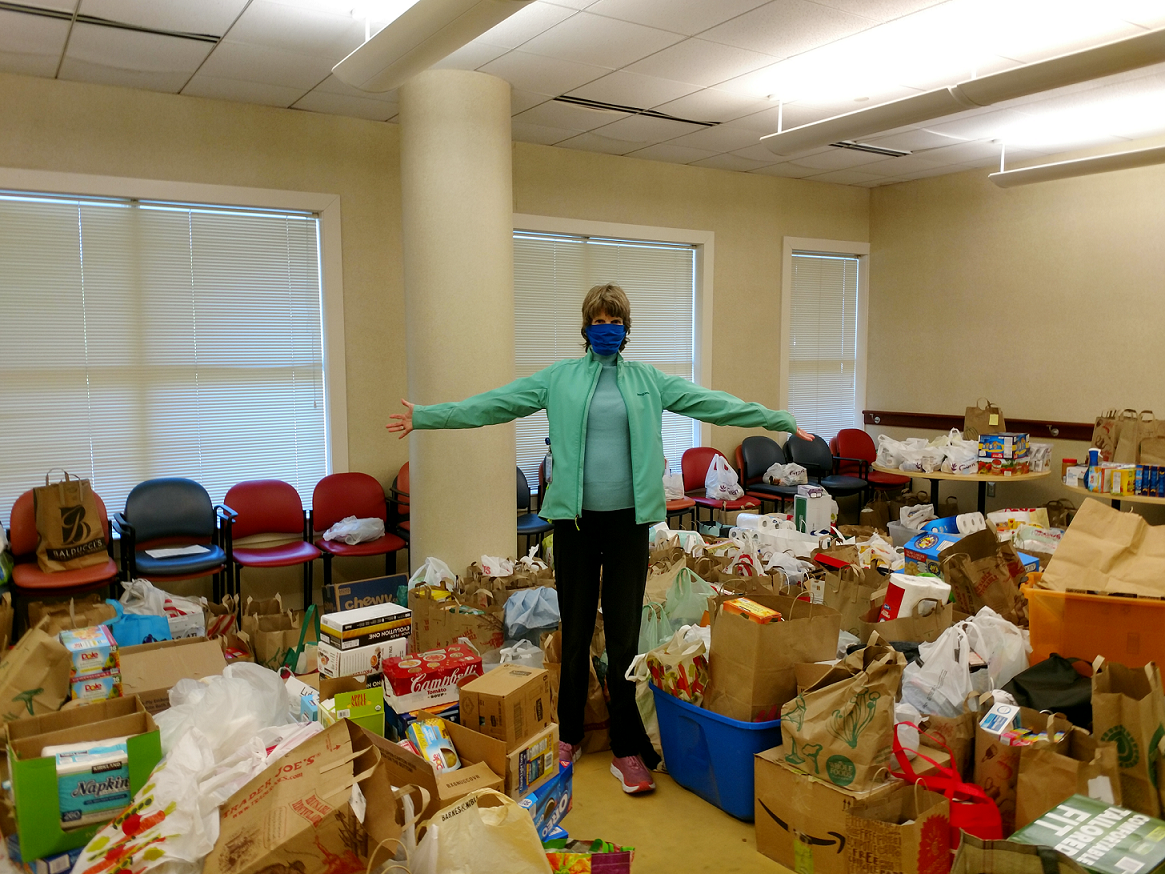
We’re so thrilled to share that we had more than 200 cars drop off items at Iona on Saturday. It was amazing! Our fitness room is FULL with food and household items to be sorted and distributed to our clients’ doorsteps. Thank you so much to those who donated, the staff who organized these efforts, and to the volunteers who helped us collect the items while practicing good social distancing. It is comforting to know that we can lean on caring friends like you to get us through these unprecedented times.

Many of you have asked if you can still donate items to our pantry—as you can see from the photos, we are at full capacity! Because we don’t yet know how long we will be in this crisis, or the extent that it will impact the community we serve—we may hold a pantry drive again in the future. We will communicate about future drives via email and on our social media. You can also contribute to our work by making a donation online here.

Thank you for your kindness and generosity!

“Eat Right, Bite by Bite” with Iona’s Nutrition Team

Healthy aging encompasses a lifelong love of good food and positive food experiences. Every March since 1980, the Academy for Nutrition and Dietetics leads a month-long celebration, National Nutrition Month®, dedicated to the role food and nutrition play in living a healthy lifestyle. The theme for 2020 is “Eat Right, Bite by Bite.” The overall message is that the best diet isn’t restrictive, and that meaningful, small changes over time add up to better overall physical and emotional health and wellness.

As Iona’s Nutrition Program Manager and RDN since 2008, I have the privilege of working with a wonderful team of professionals and volunteers:

  • Jakia Muhammad: Home Delivered Meals Coordinator, Supplement Program Coordinator
  • Michele McNally: Home Delivered and Holiday Meals Volunteer, Supplement Volunteer, Volunteer Grocery Shopper
  • Judy Portnoy: Former longtime Weekend Meals Volunteer
  • Jean Johnson, MS, RDN: Volunteer Nutritionist
  • Ashlea Steiner: Former Food Access and Farm to Table Coordinator and Iona’s DC Administration on Aging Project Director
  • Chris Brentin, MS, LDN, CNS: Part-time Nutritionist
  • Courtney Tolbert: Program Manager, Iona’s Active Wellness Program at St. Alban’s
  • Nathaniel Tolbertsmith: St. Alban’s Assistant and Weekend Meals Coordinator
  • Tania Sechriest: Volunteer Program Manager and Weekend Meals Coordinator

We are ground zero for all of Iona’s critical food and nutrition programs, which include:

  • Home-delivered weekday and weekend meals provided to 175 older adults weekly
  • Weekend meals delivered to 105 older adults every weekend by teams of dedicated volunteers
  • Weekday “lunches with friends” at Iona’s Active Wellness Program at St. Alban’s, our on-site Wellness & Arts Center in Ward 3, and our *NEW* soon-to-open adult day health center in the Congress Heights neighborhood in Ward 8
  • Home delivered holiday meals on Thanksgiving and Christmas day
  • Food pantry with shelf-stable, nutritious food staples for Iona clients
  • High calorie/high protein liquid nutrition supplements for 83 year-to-date nutritionally vulnerable, frail clients monthly
  • Assistance with benefit programs such as SNAP (formerly food stamps) and the Grocery Plus program
  • Healthy food demonstrations and nutrition education sessions
  • Pea Pod Market Program providing weekly free fresh produce
  • SHARE food network monthly “grocery basket” program
  • Access to a Licensed RDN or Licensed Nutritionist (Certified Nutrition Specialist) to provide personalized nutrition assessments for our highest nutrition-risk clients
  • Advocacy efforts on behalf of reducing senior hunger and malnutrition in our DC community

In honor of National Nutrition Month® 2020, here are some simple ways you can shift your eating habits and lifestyle, and put a new spin on positive aging:

  • Think positively about your relationship with food and your body
  • Be active – physically, socially, mentally, and emotionally
  • Focus on your overall dietary pattern, not specific “superfoods” or trendy restrictive diets
  • As author, professor, and food activist Michael Pollan says: “Eat food, not too much, mostly plants” as advised by a Mediterranean diet pattern
  • Get cooking!
  • Eat less added sugar, desserts, sodas and juice drinks, refined grains, sodium/salt, fatty meats, and highly processed or junk food
  • Eat more dried beans and legumes, whole grains, leafy greens, other vegetables, fruits, nuts and seeds, and healthy oils such as olive oil
  • Address age-specific nutrient concerns
  • Try to eat seafood – fish or shellfish – twice a week to help get enough omega-3 fats
  • Stay hydrated
  • Explore new foods and flavors

To put action to healthy eating intentions, try preparing one of our favorite recipes: Black-Eyed Pea Salsa (click here for the recipe). This bean salad/salsa recipe is delicious served over salad greens and lasts for several days in the fridge. We hope you enjoy it!

By Rose Clifford, RDN, MBA


Rose Clifford, RDN, MBA has practiced as a registered dietitian nutritionist in the Washington, DC area for many years. Her current primary work as the Nutrition Program Manager for Iona Senior Services focuses on helping older adults maximize their nutritional health so they can live active, full lives in their own homes. Rose is an active member of the Age-Friendly DC Nutrition Sub-Committee, the DC Administration on Aging Nutrition Task Force, and the DC Chapter of Les Dames d’Escoffier (an international philanthropic organization of women leaders in the areas of food, nutrition, fine beverage, and hospitality).

Feedback for Iona