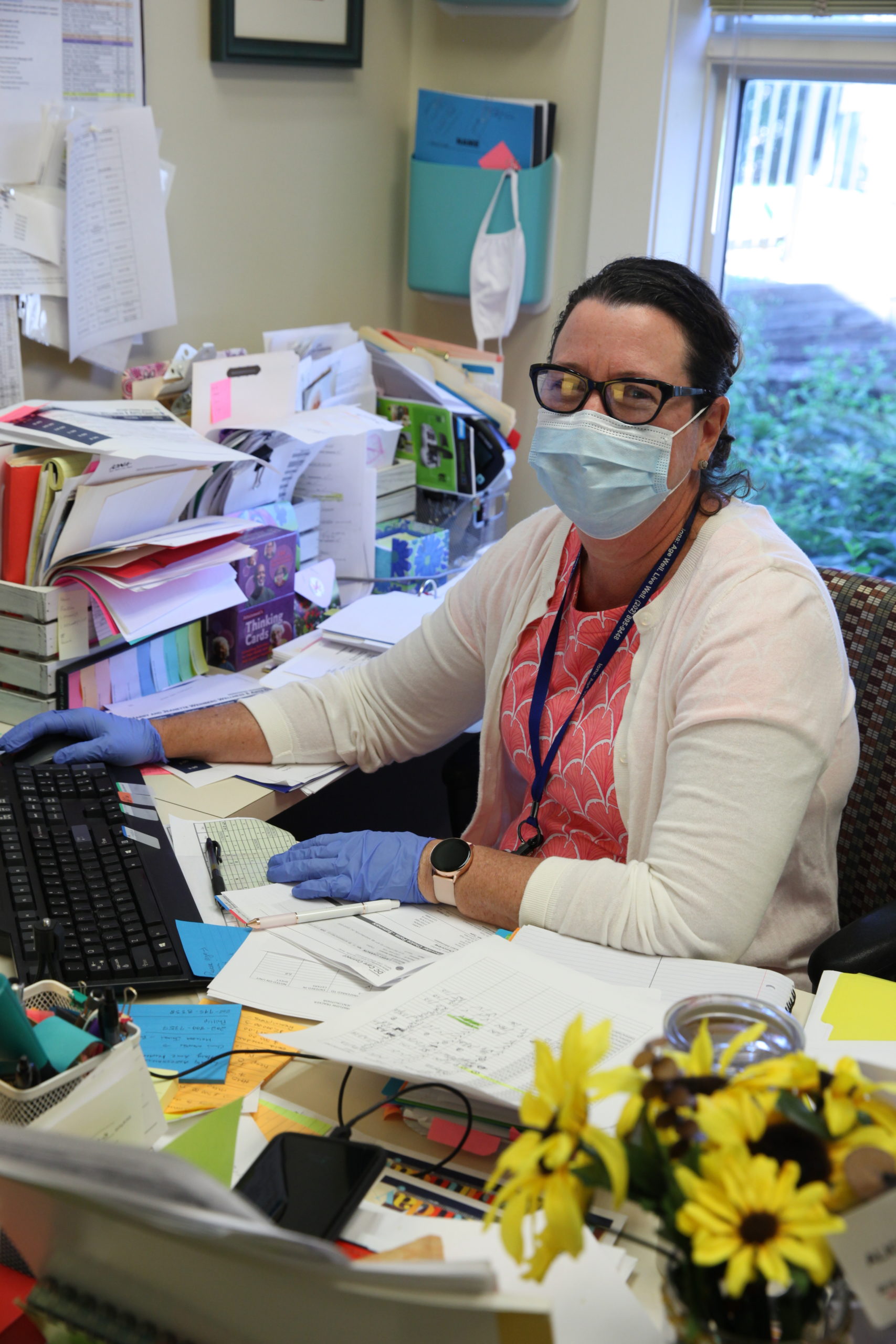
Celebrating National Social Work & Nutrition Month

March is National Social Work Month and National Nutrition Month. In celebration, Iona would like to introduce our teams working in these fields and explain what they do for our clients every day.

Social Work Team

Social workers are critical to Iona’s mission. They protect vulnerable older adults in the community and provide assistance and support to family caregivers. Case management services provided by Iona social workers might include helping older adults apply for public benefits, scheduling medical appointments, and assessing how well an older person is managing on their own .

Many of our social workers provide specialized supports. In Iona’s Money Management Program, social workers help older adults manage their finances and work to prevent financial abuse. Dementia Navigators, who are embedded within Sibley Memorial Hospital’s citywide Club Memory® program, support older adults with dementia and their family caregivers by providing care plans, activities, and linking them to community programs.

Other Iona social workers facilitate support groups or provide mental health psychotherapy for older adults and family caregivers. Iona’s two adult day health centers–the Wellness & Arts Center and The Washington Home–each provide an onsite social worker for participants and their families. Each year, graduate social work interns from local universities get in-depth field experience by supporting Iona clients and programs. Finally, Iona’s Helpline is staffed five days a week by social workers ready to answer questions and offer help to the community.

Nutrition Team

Iona’s Nutrition team works quickly–and for good reason. Each year, thousands of older adults across Washington, DC rely on Iona to facilitate the delivery of meals, groceries, basic necessities, and nutrition supplements.

Services provided by our Nutrition team include:

  • Nutritional counseling, assessments, and information
  • Nutrition supplements to prevent malnutrition
  • Home delivered weekday and weekend meals (provided with support from the D.C. Department of Aging and Community Living)
  • Iona’s Food Pantry Plus, which provides free home deliveries of shelf-stable food, toiletries, paper products, and cleaning supplies

Thank you to our incredible teams for their hard work supporting older adults and family caregivers!

By Lauren Stephenson

If You Didn’t Know How Much You Mean to Me…

I’m active in various groups on Zoom, and recently there’s been much discussion about rituals and how they can mark milestones in our lives or punctuate an event.

My mother passed away in 1995. During her last week in hospice home care at her assisted living facility, I knew her time was short. She had had a series of mini-strokes, and her speech and understanding were affected.

I knew her three closest girlfriends, who could not visit because they too were homebound. So I decided they all needed to say goodbyes. I took the telephone, dialed their numbers, and told them about my mother’s condition. Then I put the telephone to my mother’s ear so they could all say goodbye. I held it there for a reasonable time while my mother smiled and sometimes tried to make a sound. I would then thank her friend and say goodbye, and they in turned thanked me.

The most difficult call was with my mother’s friend Isabell. They were closer than some sisters. In fact, some friends teased them as if they were a couple, which both found hysterical. When I put the phone to my mother’s ear, there were tears in her eyes while she listened to Isabell. Mother passed about a week later. When I called Isabell to let her know, her cousin answered, and we realized Isabell had passed about three days after my mother.

So now that we are in this COVID-19 pandemic, what does all this have to do with anything? Well, we all know families who have not been able to say goodbye or be there with their family members. So many people never got to tell their families and friends that they loved them one last time. Others wish they hadn’t argued with their loved one the last time they spoke.

I have decided that I am not going to let that happen to the very close friends I have left. So, I am creating a new ritual for myself in which I will call those four friends and tell them how much they mean to me. If they should pass or become ill, it’s not like I could travel to see them or they could come to see me.  And we all know that COVID can happen fast.

I am calling this ritual: “If you didn’t know how much you mean to me.” Here’s how it works:

  • First, I mention the number of years we’ve been friends.
  • Then, I talk about some historic event we’ve both seen in those years, such as the first Gay Pride celebration, the legalization of gay marriage, the two Kennedy assassinations, or Martin Luther King, Jr.’s assassination.
  • Next, I talk about some of the good and bad times we’ve shared together: our cross-country trip by air, great dinner parties, the hotel with the heart-shaped pool, and dressing for dinner.
  • Finally, I offer my personal support, encourage my friend to pursue a specific goal, or just let them know that they’ve always been there for me.
  • I end the call by saying, “I do not want you to respond to this, just know it.” Then I change the subject or say we will talk another time.

Life is short. Let the people you love know that, right now!

By Wes Morrison

Taking Care of Other People’s Parents

Alicia McCarthy is a social worker at Iona’s Wellness & Arts Center. In this interview, she discusses her daily responsibilities and how she entered the social work field.

What do you do at Iona?

I’m the designated social worker for the adult day health program at Iona’s Wellness & Arts Center. During normal times, the day program serves 40 participants with cognitive impairments and developmental disabilities.

What does the center look like these days during the pandemic?

The center has pivoted to a hybrid model. We have virtual programs twice a day during the week—a 10:30-11:30 exercise program in the morning and in the afternoon we have stimulating discussion groups. Visitors come in from places like the Spy Museum and the Montgomery Historical Society. We also can have up to 10 participants physically at the center daily right now.

How did you start working with older adults?

I grew up with older parents, and I was totally surrounded by older adults growing up. Apparently when I was a kid, someone asked me what I wanted to do when I grew up, and I said, “What do you mean? I’m going to take care of my parents.” So I always tell people, I’m not taking care of my parents now, but I’m taking care of other people’s parents.

What are your responsibilities as a social worker?

Much of my focus is bringing people into the Wellness & Arts Center. Once they decide to join, we have to do an assessment. Out of each assessment there comes an individualized plan of care. That plan is then developed and closely monitored. We meet regularly with the family and we are always reviewing that plan, with the goal of providing the best services that we can to that individual. We’re also engaging with family members and trying to help them out.

You recently started two support groups for family caregivers whose loved ones attend the center. Tell us about that.

We started two groups last April for caregivers who were at home with participants who would normally be at the center but who couldn’t come in because of the shutdown. We used Zoom and it was really well received. One support group has almost become like sisters.

For me, it’s just a way to help them understand that they need to focus on themselves, whether that’s having another family member pick up their loved one while they take a walk or a bath and get some alone time. In a strange way, the Zoom platform has given people more intimacy—you get that opportunity to vent or share tips and information.

By Lauren Stephenson

Feedback for Iona