A jar full of pennies…

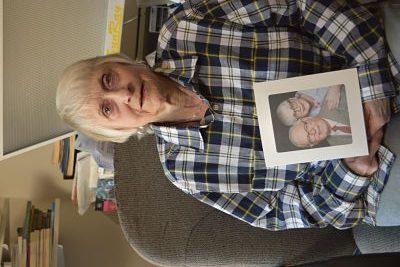
At Iona, John “Johnnie” Schofield is known for his generous spirit. A participant in Iona’s Wellness & Arts Center and a resident at a residential home for adults with developmental/intellectual disabilities, Johnnie has been collecting pennies to give to Iona.

He tells us, “My sister said to me [before I came to Iona], ‘You are bored where you are because you are not doing anything all day.’ Now, I come to be with people who say to me, ‘Johnnie, I miss you [when I am not there].’ Iona is a place that helps a lot of people. I don’t want Iona to go under. We can get plenty of pennies to help Iona a little.”

Fortunately, because of our generous donors, Iona is in no danger of “going under.” But, Johnnie’s words tell us how much Iona means to him.

He is grateful to you and Iona for always being there for him, and anyone else who needs the special services and loving care that only Iona can provide.

Johnnie collected pennies for more than a year—and those pennies added up! Over the summer he generously donated $30 worth of coins to Iona. After making the gift, he said, “It was a pleasure giving to Iona.” We’d like to add this message to Johnnie: It’s a pleasure having you in our community!

Johnnie’s gift, along with your support, helps fund the programming we offer at the Wellness & Arts Center. There, we have art therapy, musical performances, a vegetable garden, exercise classes, cooking events, and so much more for Johnnie and others to enjoy. Thank you for holding them close in your heart. 

What safeguards are in place for guardianship in DC?

Last October, The New Yorker published a truly terrifying read, “How the Elderly Lose Their Rights.” The article outlines how a legal guardian in Nevada sold assets and controlled the lives of older adults without their consent, and even reaped a profit from it.

After reading the piece, staff members at Iona had a number of reactions. Disbelief. Anger. Horror. And surprise.

That’s because this kind of financial exploitation with guardians would be nearly impossible to occur in the District for older adults.

In DC, guardians and conservators are defined as:

  • A guardian is responsible for managing a person’s healthcare, living situation, medical care, shelter, and hygiene. In the District, a guardian may manage small amounts of an individual’s income, like Social Security or Supplemental Security Income. The income could not include any property or assets.
  • A conservator is charged with managing a person’s finances, including property, savings accounts, and investments. A conservator needs to be bonded (insured) to cover the individual’s complete assets.

In order for an individual to have a guardian or conservator appointed, they must meet the following criteria:

  • Have limited functional capacity. This includes their ability to manage their healthcare, finances (like benefits, income, or properties), housing, and living situation. It also refers to someone’s ability to provide personal hygiene care without serious physical injury.
  • Be unable to effectively receive, evaluate, and follow-up on information to communicate decisions. For example, when meeting with a doctor, could the person discuss their challenges, understand and interpret the doctor’s recommendations, and follow-up on next steps in their care treatment?

Additionally, DC has many checks and safeguards in place throughout the entire guardianship process to ensure the least restrictive measures are taken.

Here at Iona, our case managers work hard to find alternatives and solutions in order to help our older neighbors live as independently as possible. Before considering guardianship or conservatorship, case managers work to:

  • Put services in place to help older adults live safely and independently
  • Explore care options with support from family or friends

That said, sometimes it becomes clear that an older adult can no longer live safely at home because of cognitive or functional incapacity, and needs support. In that case, their case manager follows these steps:

  1. First, they will discuss the situation with the Protective Arrangements Evaluation Panel, a multidisciplinary panel composed of licensed social workers, community case managers, adult protective services representatives, lawyers, and other health care professionals. Together, the panel hears the case and discusses all alternative options. A consensus is needed from the panel in order to move forward with a petition for guardianship or conservator.
  2. With the Panel’s approval, and with legal representation, the case manager files a petition in probate court for either guardianship or conservatorship (or both).
  3. At this point, the judge appoints an examiner, visitor, and attorney for the older adult. The examiner evaluates the older adult’s functional and cognitive capacities. The visitor addresses the appropriateness of the older adult’s overall living situation. The visitor also addresses the older adult’s relationships, and whether a proposed family member or friend is appropriate to take on the guardian or conservator role. Both the examiner and the visitor interview the older adult, and the people in their life (like children, friends, and medical professionals). They also review medical records. Based on all of these factors, they make a recommendation to the court. At the same time, the attorney is required to zealously represent the older adult’s interests, including whether they consent to a guardian or conservator.
  4. Additionally, unlike in the case outlined in The New Yorker, the older adult and any interested parties (like their case manager, family members, friends, neighbors, or medical professionals) receive a copy of the petition in-writing. They are also notified of the court date and are encouraged to attend.
  5. Finally, after the notifications and interviews, the court hearing occurs. There, the judge makes a decision. If they don’t have enough information, the judge may also request additional hearings. The older adult’s presence is required. However, should they have medical or other circumstances that prevent them from attending, they may be excused.

In addition to these checks and safeguards, the District’s Guardianship Assistance Program provides oversight, feedback, and a formal complaint procedure for the entire process, as well as on specific court-appointed guardians or conservators. You can contact them at (202) 879-9407.

Let’s Celebrate Social Worker Month: Meet Leland Kiang

Helpline Manager Leland Kiang
Photo Courtesy of Philip Gerlach

Iona social worker Leland Kiang manages, and frequently answers, Iona’s free Helpline. Staffed by social workers every weekday from 9 a.m. to 5 p.m., the Information & Referral Helpline was set up to answer common — and uncommon — questions and to refer callers to services and programs in our area.

Leland, who has a master’s in social work from Catholic University, worked as an Iona case manager before taking over the Helpline in 2008. The job, says Leland, is part social worker, part resource librarian.

In honor of Social Worker Month this March, we want to celebrate members of Iona’s team, like Leland, who dedicate their lives to serving the community each and every day.

Last year, Iona social workers answered more than 3,000 calls to our Helpline. Most of the questions came from caregivers — spouses, adult children, close friends, and professionals — but some came from older adults interested in resources for themselves. Callers represent the spectrum of income levels. During the recession, there was an increase in inquiries related to financial support.

Today, many people are looking for affordable housing. Callers also want to know about accessible and affordable transportation services, home care services, government benefits, and home-delivered meals.

“Our job is to sort out where the need is,” Leland says. “If the caller is anxious, I let her vent, which gives me time to figure out how I can help.”

Questions run the gamut. Are callers trying to find out if Medicare pays for long-term care? How to support a parent who is being discharged from the hospital? How to help a family member who is depressed or socially isolated? Leland frequently refers callers to Iona’s team of experts, which includes case managers, social workers, and a dietician, among others.

Leland’s affinity for working with older adults stems from his relationship with his grandmother. In a first-person account for The Washington Post, he said, “My grandmother helped raise me, so ‘seniors’ have never seemed like some ‘other’ group. My grandmother was a very, very strong, capable woman, and I got to see that strength. She was the primary caregiver to my grandfather, lifting him and being his support.

From a young age, I had the realization that just because you age doesn’t mean your capacity diminishes. Your needs may increase or change, but that shouldn’t be a stigma. I don’t see getting older as meaning you’re less vital.”

Asked how his work has influenced thoughts about his own aging, Leland points out that he has the privilege of witnessing both the challenges and the rewards of aging. “I’ve seen a lot of courage and resiliency,” he says.


You can read more from Leland in The Washington Post Magazine’s First Person Singular Interview originally published on March 11, 2014.

Grieving the caregiver role when a loved one dies

When Suzanne Gentes’ husband passed away in May of 2015, she had anticipated feeling the deep grief of losing a spouse. What she didn’t expect was feeling an additional loss from saying goodbye to friends in Iona’s caregiver support group for spouses and partners of people with dementia.

Over several years, Suzanne had come to rely on the group as a safe space to vent, laugh, and cry with people in similar situations. “The group really helped a lot, and in a way, I had a circle of caregivers to take care of me,” says Suzanne.

After her husband died, it was difficult not to have that continued support. And, while she tried bereavement groups with other area organizations, there was always something missing. Suzanne found that few addressed her important caregiver role. Knowing that Iona had been there during her caregiving journey, Suzanne turned to Iona again in her grief.

Using feedback from Suzanne’s personal experience, along with best practices, Iona staff members  Bill Amt and Deb Rubenstein designed the After Caregiving Support Group. Its first meeting was in April 2016.

Sandi O’Neill and her husband, John, were married for 43 years. He died from vascular dementia in 2016.

Today, the group continues to help members process their grief, as well help them think about next steps. Additionally, it’s also a great space to share resources, literature, and success stories for self-care.

For members like Sandi O’Neill, it’s a blessing. Sandi credits the group with reducing her anxiety about grief. “When I first went, I kept saying, ‘Well I don’t think I’m grieving right,'” she says. “They put an end to my worry.”

She encourages any caregiver who has lost a loved one to join. “All feelings are accepted” she says. “You can’t talk that way with other people. Here, everyone knows what it’s like.”

Were you a member of a caregiver support group when your loved one was alive and would like the continued support of a group in this next phase of your life? Please join us!

The After Caregiving Support Group meets on the second and fourth Thursday of the month from 4:00-5:30 PM. Pre-registration is required. Please contact (202) 895-9448 to speak with the group facilitator.

New Medicare Card Coming. Are You Ready?

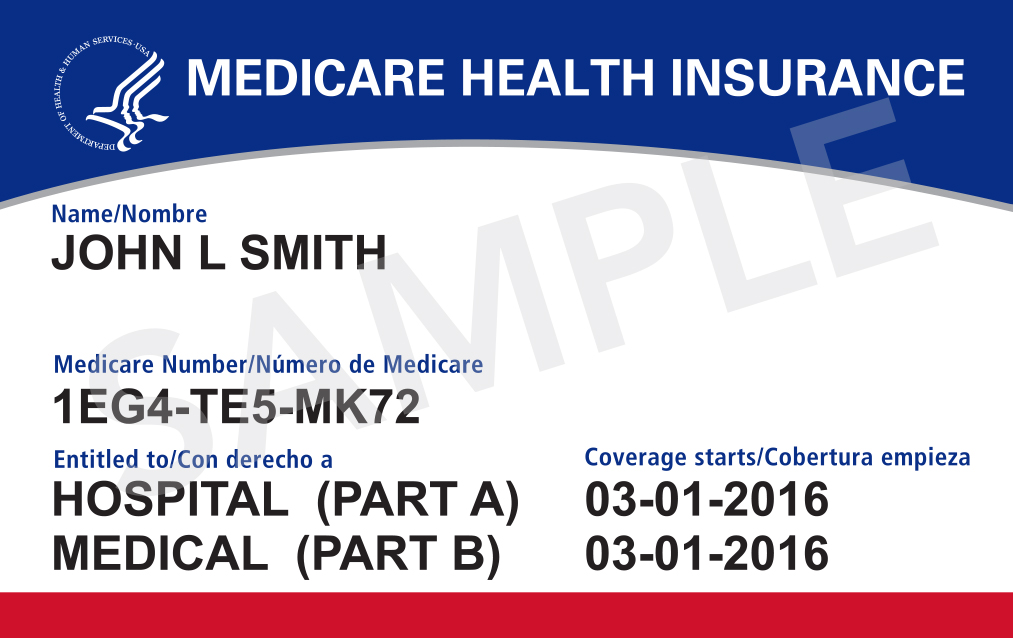
Your Medicare card is changing. Starting April 2018, Medicare will start mailing new Medicare cards to beneficiaries. The new card, which replaces your current card, will contain a unique beneficiary number in place of your Social Security number on your current card. Medicare hopes this change, required by a 2015 law, will help protect your Social Security number from identify thieves.

While the new card will replace your current card, your benefits will not change. Once you receive your new card, you may start using it the same way you always have, seeing your same doctors, and receiving the same health services. To see a sample of the new card, click here.

What do you need to do?

  1. Make sure Medicare and Social Security have your current address. To change your address, log into https://www.ssa.gov/myaccount/, or phone the Social Security Administration at 1-800-772-1213. For TTY, phone 1-800-325-0778.
  2. Wait for your new card. Medicare will begin mailing the free cards in April 2018. Beneficiaries in DC, MD, and VA will receive their cards first (sometime between April 2018 and June 2018). Beneficiaries in other parts of the country will receive their cards on a rolling basis between June 2018 and April 2019. If you do not receive your card by the expected date, contact Medicare at 1-800-633-4227. For TTY, phone 1-800-325-0778.
  3.  Once you receive your new card, destroy your current card. Use your new card as you would your old one.
  4. Keep your new card safe. Like your Social Security number, your new beneficiary number is unique to you.
  5. Beware of scams. Medicare warns beneficiaries against responding to anyone asking for personal information or money in exchange for a new Medicare card. Medicare also warns about scammers threatening to cancel beneficiaries’ coverage unless personal information or money is provided. If you have questions, or if you were contacted by scammer, phone Medicare at 1-800-633-4227.

Want to learn more? Watch this short video or visit Medicare’s New Medicare Card website.

Let’s Celebrate Social Worker Month: Meet Randy Smith


Randy Smith has been on Iona’s staff for nearly eight years. In that time, he’s worn many hats as a social worker, advocate, and problem-solver.

In honor of Social Work Month this March, we want to celebrate members of Iona’s team, like Randy, who dedicate their lives to serving the community each and every day.

Read how he supports your older neighbors in this Q&A.

How long have you been working at Iona?

Since June 2010.

What is your job? Can you walk through a typical day?

I am a social work case manager and my clients are seniors. They are often low income, and we help them under a grant from the DC Office on Aging. Every day is completely different and unexpected.

Generally, I’m responding to unexpected situations that come up on short notice that varies widely from helping a client navigate the complicated hospital system and discharge process to enrolling them in a variety of city programs that include home delivered meals and tax breaks. My work really varies. I’ve installed air conditioning units. I’ve organized pest removal like helping someone prepare for spraying for bed bugs. I’ve helped clients move or declutter. I organize financial records and help them get the essential legal documents that they often lack.

Can you talk about some of the challenges your clients face?

Nutrition and access to healthy food is a basic right and a fundamental need of all of our clients. It’s particularly challenging not only because of the expense of food, but also because so many seniors are homebound. That means they are unable to get to a store themselves. Additionally, many can’t enroll online in a grocery delivery service because they don’t have a computer, or don’t know how to use a computer. And it’s expensive.

Many of my clients also have failing eyesight. So, even if they were to have a computer, they can’t read the size type. And bigger type is hard to follow. It goes off the screen. For someone who has low vision, the challenges are enormous.

But, I’d say that the biggest challenge in getting food is mobility. Most of my clients can’t drive anymore. So, they have to walk to and from the store, and carry heavy bags. If you have trouble just getting out of your apartment building, walking several blocks to a grocery store is an impossible task. For example, I have one client who had a stroke. She can’t take a step. She can’t go up a stair. So, Iona’s home delivered meals and food pantry are very key.

How often do you turn to Iona’s Emergency Food Pantry?

It’s hard for me to say for certain, but it’s there for emergencies or to supplement a client if their food sources are lacking. Obviously, I don’t know when an emergency will occur, but it’s vital that I can react immediately.

In the fall, I had a dual emergency on the same day.

Over the weekend, two different clients had gone to the grocery store and discovered that their Food Stamps had expired on October 31st and were not recharged for November. They were running out of food and both were in distress over the prospect of having nothing to eat.

So, I was able to visit both clients to complete the nine-page Food Stamp application. But to alleviate their immediate food shortage, I took items from our food pantry knowing that recertifying each client’s Food Stamps could take several weeks. I brought shelf-stable milk, fruit cups, boxed cereal, whole wheat pasta, and cans of soup, tuna fish, vegetables, and beans. A healthy selection that would meet the current crisis and, hopefully, tide them over for several weeks while I advocated with the DC Department of Human Services to expedite their Food Stamp reapproval.

Do you see trends in terms of when you use the Emergency Food Pantry?

I definitely go to the food pantry more in the winter. Just imagine this common scenario: a senior in their 80s who already has difficult walking to the store is now faced with a sidewalk covered with snow or ice. It’s now a very real threat that they will slip and fall on the way to or from a grocery store. That makes grocery shopping dangerous. And, it’s not practical or affordable to take a taxi to and from a grocery store.

Why does your work matter to you?

It is important and vital that we support our aging population. These are usually longtime city residents. In many cases they grew up here, and have lived their entire lives here. It would just be wrong to abandon them in their years when they just need some extra help to survive.

No one should ever starve to death because they can’t get to a grocery store or can’t afford food. It’s just not morally acceptable. We have an obligation as a society and as a city to support the seniors who have contributed so much to the fabric of life in Washington.

We are so grateful to Randy, and all of the dedicated social workers on Iona’s team, who make life better for older adults in Washington, DC. Comment below and let us know why you are grateful for their help!

A social worker can help you cope with and solve issues in your everyday life. They can also refer you to a variety of resources to ensure you’re getting the best care.

Here at Iona, social workers like Randy help older adults and caregivers through a range of challenges — everything from making a care plan, assessing nutritional health, or enrolling a client in public benefits to managing a move or facilitating conversation in one of our support groups (and that’s just a sampling of our daily work).

Needless to say, social workers handle some of the most difficult tasks within their day-to-day work life, and they deserve the utmost appreciation for the great work they do. We’re so grateful to our team! If you are facing a challenge related to caregiving or aging, Iona is here for you. Contact us here to speak with a social worker.


Feedback for Iona