Resources to Support Unhoused Older Adults

Homelessness in the U.S. is at a record high, with older adults the fastest-growing group affected. In the D.C. region, nearly half of all unhoused individuals are over 55. At Iona’s Oasis Senior Center, we work every day to connect older adults to safe, stable housing and critical services — and the need is greater than ever. If you or someone you know is experiencing homelessness, help is available. Below are local and national resources that can offer support right now.

Iona Resources

Oasis Senior Center: Provides a safe space for unhoused older adults to find nutritious meals during the day, while also receiving supportive services and a community that welcomes them.

John Wesley AME Zion Church 

1615 14th St. NW, Washington, DC 20009 | 8 a.m. – 3 p.m. | (202) 895-9448 

(Enter on Corcoran Street next to ramp – program located on basement level) 

Community Dining Sites: Iona’s Community Dining Sites offer in-person programs for DC residents aged 60+ Monday–Friday, 10:00 a.m.–2:00 p.m., at various locations throughout Wards 2, 3, and 4. Enjoy coffee hour, a nutritious lunch, wellness activities, and the chance to connect with the community. 

Ward 2 Locations: 

  • Asbury Dwelling Place – 1616 Marion St NW, Washington, DC 20001 
  • Asian and Pacific Islander Senior Service Center – 1739 9th St NW, Washington, DC 20001 (The New Bethel Baptist Church) 
  • Claridge Towers – 1221 M St NW, Washington, DC 20009 
  • James Apartments – 1425 N St NW, Washington, DC 20005 
  • Oasis Senior Center for the Homeless – 1615 14th St NW, Washington, DC 20009 
  • St. Mary’s Court – 725 24th St NW, Washington, DC 20037 

Ward 3 Locations: 

  • Active Wellness Program at St. Alban’s – 3001 Wisconsin Ave NW, Washington, DC 20016 
  • Regency House – 5201 Connecticut Ave NW, Washington, DC 20015 

Ward 4 Locations: 

  • Colony House – 930 Farragut St NW, Washington, DC 20011 
  • Fort Stevens Recreation Center – 1327 Van Buren St NW, Washington, DC 20012 
  • Hattie Holmes Senior Wellness Center – 324 Kennedy St NW, Washington, DC 20011 
  • Lamond Recreation Center – 20 Tuckerman St NE, Washington, DC 20011 

Helpline: Iona’s Helpline is available Monday to Friday from 9:00 AM – 5:00 PM. Staffed by licensed clinical social workers, our Helpline specialists listen to concerns, answer questions, and connect callers with the resources they need. Dial (202) 895-9448 to get connected. 

Mental Health Support: Iona’s team of compassionate licensed clinical social workers are available to help you address any challenges, connect you to support systems, and learn ways to communicate your emotions in a healthy and positive way. Please contact our Helpline at (202) 895-9448 for assistance or additional information. 

Food Resources

Ward 2 Food Resources

Ward 3 Food Resources

Ward 4 Food Resources

Ward 8 Food Resources

Bread for the City: Food Pantry and Free Farmers Market open Monday-Thursday 9 a.m. – 12 p.m. and 1-3 p.m. Current DC identification OR proof of DC residency (within 3 months) is required. Free Farmers Markets: Free, fresh, and seasonal produce. Fridays from 9 a.m. – 11:45 a.m. or until food runs out, whichever comes first.

Northwest Food Pantry: 1525 7th St NW, Washington, DC 20001 

Southeast Food Pantry: 1700 Marion Barry Ave SE, Washington, DC 20020 

Capital Area Food Bank: To reach the Hunger Lifeline, call (202) 644-9807 or e-mail hungerlifeline@capitalareafoodbank.org. To utilize their interactive map to locate food resources in your area visit https://www.capitalareafoodbank.org/find-food-assistance/

Friendship Place: Non-profit that assists individuals and families experiencing or at risk of homelessness secure stable housing, supportive employment, and comprehensive case-management services. It also operates drop-in centers, clinics, outreach programs, and specialized housing. 

4713 Wisconsin Ave NW, Washington, DC 20016 | Phone: (202) 364-1419 

Martha’s Table: Non-profit organization that provides quality family support programs, alongside no-cost healthy food markets, mobile meal delivery, and affordable clothing services. Martha’s Table Markets are open Monday – Friday from 11 a.m. – 4 p.m. 

Northwest Market: 1474 Columbia Rd, NW  Washington, DC 20009 

Southeast Market: 2375 Elvans Road, SE  Washington, DC 20020 

Phone: (202) 328-6608 

NW Community Food: Non-profit organization dedicated to supporting individuals and families in DC with fresh produce, shelf-stable foods, household and personal hygiene items. Provides resource links to DC residents (Legal services, Immigrant Advocacy, WIC, Crisis intervention, Mutual Aid, Clothing). Open Sundays 1 p.m. – 3 p.m. 

4340 Connecticut Avenue NW, Washington, DC 20008

St. Paul’s Weekly Lunches: Prime Time Center at St. Paul’s Senior ministry gathers on Wednesday for seated exercise followed by pre-plated lunch and entertainment. Welcome to those 50+ and vaccinated. Pre-registration is required. Please notify Joy Belew by 11 a.m. on the Friday prior to each week’s program to participate. Wednesdays, 11 a.m. -2 p.m. 

4900 Connecticut Ave., NW, Washington, DC 20008 | Phone: (202) 966-5489  

Email: joyb@stpaulslutherandc.com 

Woodley House Food Pantry: Provides food staples, frozen meat, and fresh produce to Woodley House residents and community neighbors in need. Tuesdays 1 p.m. – 2:30 p.m. Open to all DC residents. Must provide proof of residency with current photo ID, passport, or utility bill, etc. 

Valenti House – 2711 Connecticut Ave., NW, Washington, DC 20008 |  Phone: 202-830-3508 

Shelter Resources

If you or someone you know needs emergency shelter, please contact the Homeless Services Hotline at (202) 399-7093 or dial 311. The Homeless Services Hotline is open every day from 8 AM – 12 AM. During hypothermia season (November 1 – April 15), the Homeless Services Hotline is open 24 hours a day. Transportation to the shelter is available 24 hours a day, 7 days a week during hypothermia season. 

Everyone Home DC Drop-in Day Center (Shirley’s Place): Everyone Home DC’s drop-in Day Center is open Monday, Tuesday, and Wednesday, 8:00 a.m. to 3:00 p.m., and Thursday and Friday from 8:00 a.m. to 12:00 p.m.

1338 G Street, SE, Washington, DC, 20003 | Phone: 202-544-3150  

Additional Resources & Important Numbers

Healthcare Resources

Legal Assistance

Substance Abuse Treatment and Rehabilitation

Help With Paying Bills

Warming Centers

Find a list of locations that are open when DC Government activates the Cold Emergency Plan: https://snow.dc.gov/service/warming-centers-and-facilities 

Mental Health Crisis

The Community Response Team (CRT) can provide immediate assistance to individuals experiencing emotional, psychiatric or substance use challenges. Call 202-673-6495 to request an on-the-spot assessment and linkage to mental or behavioral health services or visit https://dbh.dc.gov/service/community-response-team.

Additional Support

For other resources available for older adults in the District, call the DC Department of Aging and Community Living at 202-724-5626 or visit https://dacl.dc.gov/ 

If you suspect an older adult is being abused, neglected, or exploited contact Adult Protective Services at 202-541-3950 or visit https://dacl.dc.gov/service/adult-protective-services-0 

Resources in Montgomery County: Contact the Aging and Disabilities Resource Unit at (240) 777-3000 or visit https://www.montgomerycountymd.gov/senior/.   

Resources in Other Locations:  The Eldercare Locator can provide information on aging services anywhere in the United States. Call 1-800-677-1116 or visit https://eldercare.acl.gov/Public/Index.aspx 
Celebrating Five Years of the Washington Home Center

Dear Friends, 

Five years ago today, we opened the doors of Iona’s Washington Home Center. It began as a bold vision, made real through a community-led capital campaign, and has grown into a vital and vibrant space for older adults and caregivers in D.C.’s Ward 8. Opening this center during a pandemic was a true act of resilience. And today, the Washington Home Center proudly stands as the only medical adult day center in Southeast D.C., offering health services, nutritious meals, compassionate care, and connection to older adults living with cognitive and physical impairments across the Anacostia River. 

Thanks to your support, we’ve expanded our team of dedicated staff members and currently serve 42 older adults living with a form of dementia each week. Over the past five years Iona has impacted nearly 200 lives of individuals living with dementia and their family caregivers. These numbers tell a powerful story of growth, but the true impact lies in the moments of joy, connection, and caring happening each day inside the center’s walls.   

As we mark this 5-year anniversary, we know our work is far from finished. Our nation’s population is aging rapidly, with 11,000 people turning 65 every day, and by 2060, experts project 1 million new dementia diagnoses each year. Senior hunger is also on the rise, expected to affect more than 9 million people by 2050. If D.C. were a state, it would rank among the highest in the country for both senior hunger and dementia prevalence. 

Iona is the only organization in not only Ward 8, but in the entire District, that is building an ecosystem of care to address these urgent needs. 

 Together, we’ve accomplished so much, but meeting the challenges ahead will require all of us to act. 

That’s why we’re inviting you to join us on Wednesday, August 20 for Iona’s Giving Day fundraiser to benefit the Washington Home Center. Your gift will be MATCHED and will help us continue to meet the growing needs of our community and ensure older adults have access to the care, programs, and support they deserve. 

Thank you for being part of our journey. Here’s to five incredible years—and many more to come. 

P.S. Every gift makes a difference! Mark your calendar for Wednesday, August 20 and help us celebrate five years of the Washington Home Center by investing in its future. Together, we can ensure older adults across the Anacostia River continue to thrive.

Services Available from Legal Counsel for the Elderly

Beginning October 17, 2022, Legal Counsel for the Elderly’s Self-Help Office will be providing paralegal services to District residents aged 60 and older at Iona’s Tenleytown office (4125 Albemarle St NW).

Services are available by appointment only and can be made by calling the Legal Counsel for the Elderly’s hotline at (202) 434-2120. Appointments can also be made at other locations throughout the District.

Services available include:

  • Applying for public benefits
  • Help with utility assistance programs
  • Referrals to social service agencies
  • Assistance completing legal forms
  • Addressing credit issues
  • Help with student loan issues
  • Information on requests for vital records
  • Assistance filing a small claims complaint
  • and more!

Advocating for DC’s Elders

In recent weeks, Iona staff have played a part in legislative and community efforts to advocate for older adults in Washington, DC.

Increasing food access for all seniors

On February 14, Iona CEO Joon Bang testified before DC Councilmember Anita Bonds and the Committee on Housing and Executive Administration in support of the No Senior Hungry Act of 2021.

In particular, Bang showed Iona’s support for two elements of the bill: the Elderly Simplified Application Project (ESAP) and the addition of Home Delivered Meals (HDMs) to the Elderly and Persons with Disabilities Waiver (EPD Waiver).

Currently, only 46% of the District’s eligible older adult population receives SNAP, the program formerly known as food stamps. The adoption of ESAP would help increase SNAP participation among older adults across the city.

EPD Waiver HDMs would provide home-delivered meals for disabled adults aged 18-59 living in the District. Bang shared the compelling story of a recent referral Iona received for a 57 year-old man who was EPD Waiver-eligible and desperate to find a home-delivered meal program. The man lives alone and suffers from multiple chronic conditions including congestive heart failure, which make him unable to shop for or prepare appropriate meals for himself. He can also barely afford to buy food.

Watch Joon’s testimony below (beginning at 3:00:07) or read it here.

Introducing Iona’s Community Advisory Council

On February 25, Iona held its inaugural Community Advisory Council (CAC) meeting. The CAC is an advisory group of community leaders, community members, and Iona participants and caregivers from Wards 7 and 8. All have expressed a commitment to ensuring their support and guidance so that Iona’s Washington Home Center is established as a welcoming and visible resource for older adults and family caregivers in the community. Iona Board of Directors member Shawn Mcleod will be Chair of the CAC.


Improving DC’s Healthcare Workforce

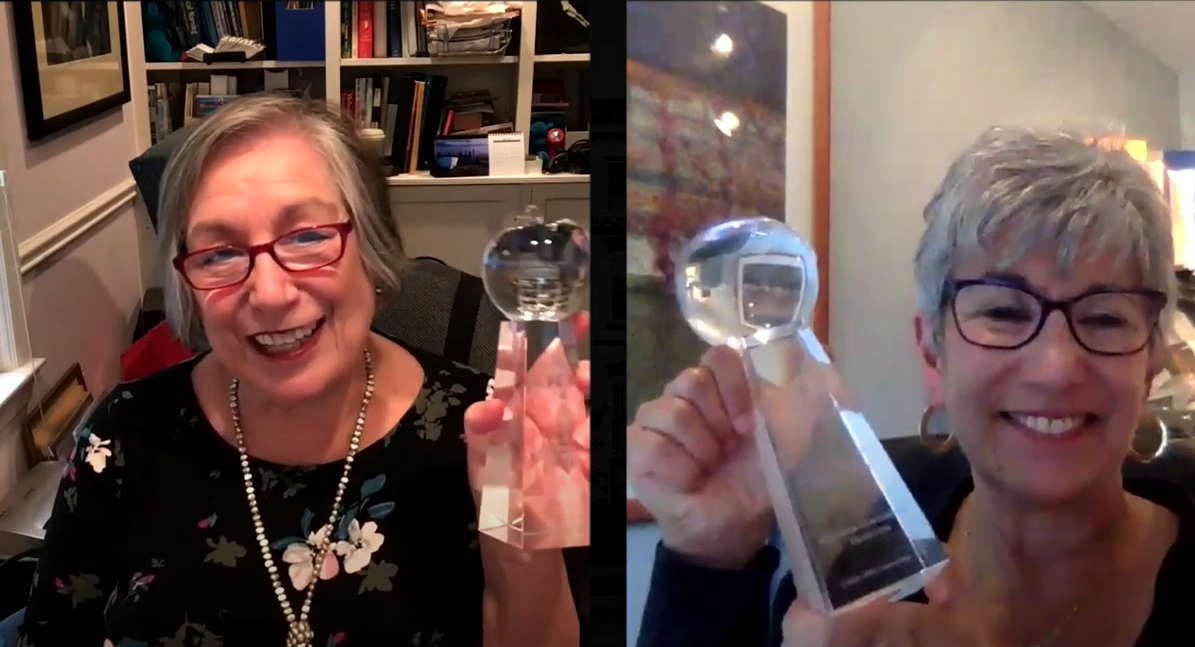
Judy Levy, Coordinator for Iona Senior Services and DC’s Coalition on Long-Term Care, and Claudia Schlosberg, member of Iona’s Board of Directors, were honored with DC Appleseed’s Community Service Award in October.

The DC Appleseed Center for Law & Justice is a nonprofit dedicated to making the District of Columbia a better place to live and work. According to Jeffrey L. Handwerker, who presented the Arnold and Porter Community Service Award, “Claudia Schlosberg and Judy Levy have been essential in helping to make the District government support the direct care healthcare workforce. They have educated stakeholders, sent letters, made phone calls, organized meetings, made connections, and, quite simply, banged the drum the loudest in getting the Nurse Education Enhancement Act passed in the most recent DC budget.”

The Nurse Education Enhancement Act of 2021 was passed by the DC Council in August 2021 and provides $5.8 million over the next three years to support training and education for certified nursing assistants, home health aides, and medication assistants. Participants are eligible for free tuition and a monthly stipend. After two years of employment in one of these fields, students can continue their nursing education at the University of the District of Columbia for free.

According to the DC Coalition on Long-Term Care, the COVID-19 pandemic has had a devastating impact on the home healthcare workforce. Seventy-three percent of home health and home support agencies reported that more home health aides are leaving the workforce or not reporting to work since the pandemic began. Over half of agencies say they do not currently have enough home health aides to staff all their clients at every shift. (Read the findings here.)

“The Coalition’s focus on the healthcare workforce has never wavered since it was established in 1995,” says Levy. “Today we are faced with shortages including direct care workers. The Nurse Education Enhancement Act is one part of this effort. We are also focused on job quality such as benefits and salary because we believe that quality jobs mean quality care.”

“Investing in workforce development today is essential to the mission of Iona Senior Services and to our ability to meet the needs of a growing population of District seniors who need assistance and support to live independently in the community,” adds Scholsberg.

Congratulations, Judy and Claudia! Watch them accept the award by watching the video below. (Starts at 59:51)

Macro Social Work: A Seat at the Policy Table

I’ve always had a passion for helping others.  As a student at All Saints Catholic High School in Washington, D.C., I joined the Community Service Club and remember the rewarding feeling I felt as I volunteered at local nonprofits like Martha’s Table, S.O.M.E., Saint Ann’s Infant Home, and Catholic Charities. In college, I continued to follow this passion as a Big Sister with Big Brothers and Big Sisters of Central Maryland. All these experiences were life changing for me. I realized I could make a difference in the lives of individuals and children who needed encouragement and a helping hand.

Ultimately, I graduated with a bachelor’s degree in Social Work, and I chose to start my career in Micro Social Work. This type of social work is the kind most people are familiar with, wherein a case manager works with individuals and families to connect them to resources, services, and programs within the community. I enjoyed working with clients in Baltimore, Prince George’s County, and Washington, D.C.  However, during my time as a case manager, I found myself asking the same question over and over: How can these programs and policies become more effective to truly meet the needs of clients?

Eventually, I realized I wanted my career to go in a different direction. I saw that there needed to be more Macro Social Workers at the decision-making table—people who were active participants in the development of social and human services programs and policies. Too many of these are created without consulting the expertise of professionals who work in those systems every day and who understand the real needs of individuals and families. I realized I wanted to get involved in the legislative process for social justice issues and policy reforms. As a result, I returned to graduate school at Howard University to pursue a Master’s of Social Work degree in Macro Social Work.

So, what is Macro Social Work exactly? Macro-level social work addresses the challenge of alleviating societal problems to improve the quality of life locally, nationally, and internationally (socialworkguide.org). Macro Social Workers look at the “big picture.” These social workers work to confront issues at the systems level. They work in regional and federal government agencies, universities, human rights organizations, and nonprofits. The roles of Macro Social Workers vary and may include advocacy, community organizing, program development, and policymaking.

As a Macro Social Work Intern at Iona Senior Services, I’ve had the opportunity to assist with Iona’s online Aging Solo program. Aging Solo is a program created by Dr. Deb Rubenstein, Iona’s Director of Client Services, to educate and help older adults to be proactive about issues related to aging. Aging Solo promotes self-determination and helps older adults choose how they want to live out their later years.

In weekly webinars, we facilitated discussions with older adults about advanced healthcare planning, end of life planning, wills, how to create a support network, aging in place, senior housing options, money management, and additional topics. One of my assigned tasks was conducting outreach among faith communities throughout Washington, D.C., with a focus on Wards 7 and 8.

Historically, Wards 7 and 8 have been underserved in the city when it comes to healthcare, mental health services, education, and food security. These resource gaps are especially devastating for older adults who are aging alone with limited resources. Research shows that racial disparities still exist today in terms of access to quality treatment and services for older African Americans and other minorities, especially in healthcare, mental health services, housing, food security, advanced health care planning, and hospice care.

When the Aging Solo class began, we had over 40 older adults from diverse racial, socioeconomic, and cultural backgrounds. Iona wanted every participant to see themselves reflected in the Aging Solo curriculum. The course helped participants prioritize next steps needed in order to successfully age on their own.

Testimonials after the course showed that it was life changing for participants. One stated, “I want to try to make decisions for myself before I can’t.” Another said, “You can start a little at a time, but just get started.” Most participants reported an increase in confidence in their ability to engage in activities that are important to as they grow older, maintaining a social network, knowledge of services to help if they have difficulty performing daily activities, readiness to talk to financial decision-makers about how they want their finances managed, and having friends and/or family to support them as they age.

The Aging Solo curriculum is vitally important for Black older adults living in Wards 7 and 8, as well as those nationwide who may not have access to or knowledge about their options as they get older. This curriculum provides that access at an affordable price (Aging Solo is offered on a sliding scale based on income). Aging Solo shares valuable local, regional, and national resources and includes the experiences of Black older adults who are aging on their own.

My experience as an African American middle-aged social work intern at Iona Senior Services has been a unique and extraordinary one due to the COVID-19 pandemic. This internship journey has also been educational and insightful in that I am aging as well. As I enter the next chapter in my life, my purpose as a Macro Social Worker is clearer than ever before as I witness the health disparities and lack of equal access to COVID-19 treatment and vaccinations for older adults and individuals who come from underserved, marginalized, and oppressed communities.

As social workers, we cannot afford to sit on the sidelines. We must be active participants at policy and legislative tables on local, state, and federal levels in order to ensure that fair and just policies and programming are available for older adults of color. Where do I see myself in 10 years? Sitting at the table with agency directors, policymakers, and local politicians—just as I’ve witnessed with Iona Senior Services’ leaders and staff. We must fight for these priorities because ALL older adults deserve them.

By Angela Mitchener

Understanding Rent Control in DC: The 2019 Annual Increase


My husband and I are “aging in place” in our rent-controlled apartment in upper Northwest DC. When we moved in 40 years ago, I didn’t know anything about DC rent control.

But now I do. And today I believe that leasing our rent-controlled apartment—an affordable housing option— is one of the best financial decisions we ever made.

What is a rent-controlled apartment?

Rent-controlled units are neither federally- nor District-subsidized. Anyone who can meet a building’s leasing requirements can lease a DC rent-controlled apartment. My neighbors include non-profit executives, federal government contractors, a UDC professor, and one of my favorites – a Shakespearean actor/director.

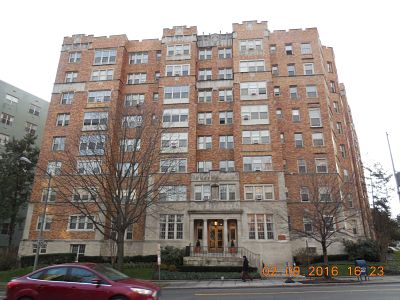
Only buildings built before January 1, 1976 are covered under rent control. In my Connecticut Avenue neighborhood you can have a rent-controlled building across the street from a brand new apartment building. Residents share the same neighborhood conveniences – at a fraction of the cost.

Is your apartment rent-controlled?

If it is, this is your annual rent increase notice: in English, and Spanish. For more information about rent control in DC, read this Fact Sheet, “What You Should Know about Rent Control in the District of Columbia.”

How DC Rent Control Works

What is “controlled” under the law is how often and by how much DC’s landlords can raise the rent. Landlords are allowed only one annual automatic rent increase to keep pace with inflation.

Our annual automatic rent control increase is based on the LOWER of:

  • the Social Security Cost of Living (SS COLA), or
  • the Consumer Price Index-Urban Workers (CPI-W)

For 2019, the CPI-W is 2.3% which is lower than the SS COLA’s 2.8%.

There are two levels of rent control increases:

  1. 2.3% (Only CPI-W). For renters aged 62-plus or people with disabilities (any age as long as you signed the lease). However, this rate only applies if you filed the FREE application form linked here in both English and Spanish with the DC Rent Administrator, 30 days before your next rent increase date. There are no income requirements to receive this reduced rent increase! And the form is short—just 3 pages—filed only once with no application fees. See Form 6 – Tenant’s Notice to Housing Provider of Elderly or Disabled Status.
  2. 4.3% (CPI-W +2%). For all other rent control renters. The 2019 rent control increases begin May 1, 2019 and end April 30, 2020. They are applied only once during this 12-month period.

The 2019 2.3% base rate has been creeping upward from 1.1% in 2017 and 1.4% in 2018. Here is a history of DC rent control rates back to 1985.

Want to learn more about DC rent control?

For a detailed discussion of DC renter rights, including an overview of DC rent control, visit the Coalition for Non-Profit Housing website for an online copy of the 2013 Washington DC Tenant Survival Guide, Eighth Edition (visit cnhed.org/policy-advocacy/research. Scroll down to “Additional Research Information”).

DC’s Office of the Tenant Advocate (OTA)—DC Renter’s Agency—helps all DC renters—whether you’re renting a rent-controlled or non-rent controlled apartment, or renting a condo, co-op, or room(s) in a house. OTA offers FREE legal help and can assist you in filing the elderly or disabled reduced rent control increase form. Visit www.ota.dc.gov to learn more. Also, check out OTA’s training resource OTA Renters’ Rights 101 . OTA offers free renter rights classes at their Reeves Center office located at 2000 14th Street, NW Suite 300 North.

Contact the Outreach and Education Coordinator Stephen Dudek at Stephen.dudek@dc.gov or 202-719-6561 for future classes.


By Barbara B. Cline

Barbara B. Cline, CPA, is a former auditor and non-pro  fit executive. She is a SERVEDC Commissioner, where she works on the emergency planning task force. She lives with her husband, who has some physical challenges, in an apartment in NW, DC. Barbara is a fair housing and disability rights advocate and writes articles on housing issues — including rent-control, an often unknown and misunderstood type of affordable DC housing, for both Iona and the Forest Hills Connection.

Understanding Your Rights as a DC Renter: Online Resources for You


For the last two years, I have trekked down to the Kellogg Conference Hotel at Gallaudet University to attend the DC’s Office of Tenant Advocate’s (OTA) Summit.

The FREE Summit is a day-long, city-wide  event of workshops and clinics to teach DC renters how to be their own  advocates.

Now you can skip the trip – and learn your renter rights in the comfort of your home.

Videotaped sessions with captions are available online from both the 10th and 11th- Annual Summits.

Topics include:

  • DC Renter’s Rights 10
  • 2018 Eviction Procedures: What You Need to Know
  • Preparing for Emergencies
  • Burdened with High Utility Costs…Take Control and Act
  • Meeting the Housing Needs of Veterans
  • What’s in the Hopper? Rental Housing Hot Topics

Visit the Office of the Tenant Advocate webpage to access these videos.

Other Resources for DC Renters:

Whether you’re renting an apartment, condo, co-op, or room(s) in a house, all DC renters will benefit from the 2013 Washington DC Tenant Survival Guide, Eighth Edition, written by Georgetown Law’s Harrison Institute.

The Guide is a comprehensive primer written for the non-lawyer. It covers  leases, DC rent control, repairs, housing code violations, security deposits, and evictions.

The Coalition for Non-Profit Housing has an online copy available in both English and Spanish. Follow the hyperlink or click on the button below to access.

Washington, D.C. Tenant Survival Guide, eighth edition

Need more information or have a question about a renter issue? Contact an OTA caseworker.

OTA Stakeholders

Stay informed by joining the OTA stakeholder mailing list with notices on the upcoming 2019 September Summit and legislative updates. Contact Stephen Dudek, OTA Education and Outreach Coordinator, Attorney-Advisor, Office of the Tenant Advocate at (202) 719-6560 or stephen.dudek@dc.gov.

Do you know other DC renter resources? Let us know in the comments!


By Barbara B. Cline

Barbara B. Cline, CPA, is a former auditor and non-profit executive. She is a SERVEDC Commissioner, where she works on the emergency planning task force. She lives with her husband, who has some physical challenges, in an apartment in NW, DC.  Barbara is a fair housing and disability rights advocate and writes articles on housing issues — including rent-control, an often unknown and misunderstood type of affordable DC housing, for both Iona and the Forest Hills Connection. 

Older inspires our community!

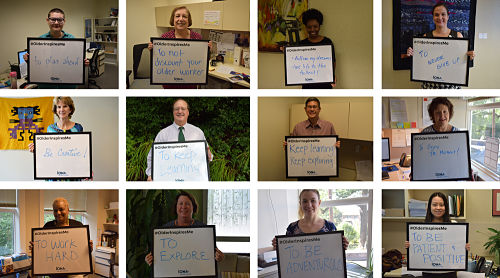
#OlderInspiresMe is a campaign to recognize and celebrate the many ways older adults contribute to our lives.

Older people are sometimes seen as out of touch with the times, boring, or useless. At Iona, we know that’s not true. Here, everyday our staff witnesses the vibrancy, creativity, curiosity, and agency of older adults.

In celebration of the many ways  older people make a difference in our communities,  we asked staff, volunteers, participants, and community members to share how #OlderInspiresMe.

Here are some community responses:

“Always give back. The leadership of my senior village demonstrates how valuable wisdom is and how important it is to always give back to others. They inspire me by showing what women in their 70’s and 80’s look like – strong, active, smart, and passionate.” – Denise S.


“Always keep seeking knowledge. My grandmother [was] orphaned by the Spanish flu. She raised two children alone after being widowed in the Great War. She only went to the sixth grade, but always revered learning. She told me when I was a child that I had to be educated.” – Carol M.


“To take care of our families. My grandmother watched over her daughter who was disabled all her life. Her daughter is living in a group home now where there is a church across the street. I think that would mean a lot to my grandmother.” – Kelly D.


“Stay active. My mother, born in 1931, who still enjoys line dancing almost as much as all-she-can-eat crab legs!” – Laree M.


“Keep striving + thriving. My neighbors ride bikes, do home improvements + are holding down jobs. I’m also inspired by the Back to Work 50+ Program.” – Carlyn C.


“Keep a sense of perspective and humor. [My friend], a retired teacher and former mentor, faces challenges with declining vision and mobility, but she never complains. She’s quick to share a joke, wry observation about politics, or a line from her favorite poet. [She] is a dear friend and inspiration.” – Chhaya R.


“To appreciate the many things they are. All older people inspire me. They are wise historians and preservers of the past. Teachers of the present. Guides to the future. I respect and admire all older people because of the many things they have and offer.” – Edda S.


“Record memories of my grandparents.” – Helene K.


“I am inspired by a fellow member of my congregation. She is a retired teacher/mother of 2 sons, and at least 3 foster children (that I know of), and a mother/grandmother figure to SO many of us in our congregation! Her careful, considered caring has touched all of our lives… with my own family, when my wife needed 2 operations, she insisted that she go and stay with her to convalesce, so that I did not have to miss work, as a sole proprietor. She observed our birthdays by having a “family dinner” at which she would serve the favorite menu of the birthday celebrant. She is a shrewd judge of determining what people need, and how she can reach out to them and care for them, in a mutually dignified manner. In short, she lives by the Golden Rule.” – Norman S.


“Take a step back and think. My mom inspired me to embrace novelty in food, food products, and utensils with caution. I was reading labels before it was fashionable, and careful with plastic containers before concerns were raised!” – Joana R.


“Keep being creative. I have had many older women in my life inspire my love of art and being creative. My mother was a wonderful knitter and used to make beautiful hooked rugs when I was little. My grandmother was a milliner and made my wedding veil.” – Jill T.


“Live in the moment and reach out to others. I’m inspired by everyone around me. I’m challenged to widen my head and heart to new ideas, to reach out to new friends and to remember longtime friends and family with more love, keeping in touch and smiles.” – Le R.


“Take chances. My grandmother graduated from Columbia Dental School in 1922 and then went on to become one of the first orthodontists. On the side she studied business law at night, got a degree in interior design and had four children!” – Wendy B.


“Go from aging to saging. Use the wisdom life lessons has taught you; share and embrace the friendships, aspire to always know more.” – Martha H.


“Be completely me.” – Linda J.


“Stay independent as long as I can. One of my all-time best friends was a woman 30 years older than I was. We were so much alike. When she told me about her life experiences, I felt as though I was looking into a crystal ball showing what my own future could be like if I could be as brave.” – Ann H.


“Be a angel to others. There is a senior neighbor who has cancer and he still wants to help others in any way he can.” – Cedric B.


“Follow your heart. My mother, “Age is only a number on the Calendar. You are as young as you dare to feel.” No wonder all her life people thought she was my sister.” – Raji T.


“Listen and be kind.” – Doug B.


“Soar. As a young social worker, my supervisor at my first very challenging job was an older, joyful woman with much wisdom. She was inspirational to me. I always found myself fascinated with the interesting stories and endless discussions of life and its turns.” – Kris L.

Add your voice

Want to join the movement? Tell us how an older person inspires you by filling out this form. We’ll print any responses, and post them in our lobby and online community in deep gratitude to the older people who have shaped our lives for the better.

Share your inspiration

Finding low-cost housing in the District

Rents in Washington, DC are expensive. On average, a one bedroom apartment can go for more than $2,000/month. That’s more than $800 higher than the national average. Unfortunately, if you’re seeking low-cost housing, your options can be scarce.

Assessing your need:

Meeting your budget might require some changes to your housing criteria. For instance, you might have to change your ideal location because rents tend to be higher downtown and in NW DC. You might also need to choose a smaller space, get roommates, or cut back on other spending.

When looking for housing, you might have success on the open market. Free magazines, like Apartment Guide and Apartment Showcase often can be found at metro stops. Other online sources include Trulia and DC Housing Search.

DC’s Housing Lottery

If you can afford $1,000 to $1,500 per month, you might find relief through DC’s Inclusionary Zoning Affordable Housing Program. In this program, housing is assigned by lottery. To enter the lottery, you must take a class and complete an online form. Find the form at the website of the DC Department of Housing and Community Development (https://dhcd.dc.gov/service/inclusionary-zoning-affordable-housing-program).

Inclusionary Zoning Affordable Housing Class Providers

GREATER WASHINGTON URBAN LEAGUE
2901 14th St., NW
Washington, DC 20009
202-265-8200

HOUSING COUNSELING SERVICES
2410 17th St., NW
Washington, DC 20009
202-667-7006

LATINO ECONOMIC DEVELOPMENT CENTER
641 S St., NW
Washington, DC 20009
202-588-5102

LYDIA HOUSE
4101 Martin Luther King Jr. Ave., SW
Washington, DC 20032
202-373-1050

MARSHALL HEIGHTS COMMUNITY DEVELOPMENT ORGANIZATION
3939 Benning Rd., NE
Washington, DC 20019
202-650-5604

UNIVERSITY LEGAL SERVICES
3939 Benning Rd., NE
Washington, DC 20019
202-650-5631

UNIVERSITY LEGAL SERVICES
220 I St., NE, Suite 230
Washington, DC 20002
202-547-4747

UNIVERSITY LEGAL SERVICES
1800 Martin Luther King Jr. Ave., SE
Washington, DC 20020
202-889-2196

Other Housing Options

The government offers several programs to help older adults with low income or people with disabilities afford rent. However, all of these programs have waiting lists. Residents of these programs pay about a third of their income in rent.

Many buildings offer these programs, and each building keeps its own waiting list. Nationwide listings can be found online. The local nonprofit Bread for the City also keeps a list. Phone them at 202-265-2400, and ask for their Housing Access Program.

Help for Urgent Housing Needs

If you’re behind on your rent, you may receive financial help from DC’s Emergency Rental Assistance Program (ERAP). This program helps renters with short-term needs. To qualify, you must have low income. Four nonprofits partner with the city to offer this service.

CATHOLIC CHARITIES
The Southeast Family Center
2812 Pennsylvania Ave., SE
Washington, DC 20020
202- 338-3100

SALVATION ARMY
National Capital Area Command
1434 Harvard St., NW Suite B
Washington, DC 20009
202- 332-5000

HOUSING COUNSELING SERVICES
2410 17th St., NW
Washington, DC 20009
202-667-7006

VIRGINIA WILLIAMS FAMILY RESOURCE CENTER
920 Rhode Island Ave., NE
Washington, DC 20018
202-312-5510

If you’re facing eviction, a lawyer may also help stop slow the eviction process. Slowing the process gives renters more time to find other options. Both free and low-cost legal aid is available. See our Fact Sheet on Legal Assistance for resources.

For older adults needing housing now, options are scarce. Homeless shelters make up the bulk of emergency housing for older adults. Survivors of elder abuse may find alternate emergency housing, but only if there are openings. Find homeless shelters by calling the city’s Shelter Hotline at 1-800-535-7252. Survivors of elder abuse who need housing may contact Elder Safe at 202-541-3950, or Kuehner Place at 202-797-8806, ext. 1311.

Help for Veterans Experiencing Homelessness

Veterans may find help via the HUD-VASH program. This program also has a waiting list. To qualify, the veteran must be experiencing homelessness. Veterans must receive their health care from Veteran Affairs or qualify to do so. A veteran also must need and accept help from a case manager. To apply, call the National Call Center for Homeless Veterans at 877-424-3838.

Thanks to a grant from the DC Office on Aging, Iona has a new Fact Sheet that outlines low-cost housing options in DC (as of October 2018).

Download, save, or print them here:

For additional fact sheets on critical topics like memory loss, legal services, and more, visit our Resource Library.


Feedback for Iona