
The Stories of Dementia in the District

These are stories of clients receiving support through Iona’s Dementia Navigator program. You can view the Dementia Navigator Program Demographics Sheet to learn more about the clients served since the program launched in November 2016.

Dan’s Story

In late 2019, Dan, an 80-year-old Caucasian male and retired house cleaner residing in Ward 1, confided in a social worker at his local senior center about his inability to cover his gas bill. The social worker connected Dan with an Iona social worker to aid in restoring his financial stability. As the pandemic unfolded, Dan and his Iona social worker proactively sought assistance, applying for energy and rental aid, discounted phone service, and renter’s property tax credits. Enrolling Dan in these programs reduced his monthly expenses, freeing up resources to cover essential needs such as food, medication copays, and rent. 

As the partnership between Dan and his Iona social worker deepened, it became evident that additional needs required attention. Dan’s mobility issues and sporadic cognitive challenges emerged as areas of concern. In response, the Iona social worker helped Dan navigate the intricacies of the EPD Waiver (Medicaid) application process to qualify for an in-home aide to assist with shopping, transportation, and household tasks. Iona’s social worker also scheduled appointments with Dan’s physicians and utilized a phone-based translation service to ensure Dan understood correspondence and benefits-related applications in his first language. 

Addressing safety concerns within Dan’s living environment became another priority for the Iona social worker. Reports of pest infestations were promptly relayed to Dan’s property manager, with follow-up measures implemented to ensure a pest-free living space. When mold stains were discovered on apartment walls, the social worker orchestrated meetings with the property manager and coordinated the secure packing of Dan’s belongings, enabling timely mold remediation work to commence. 

When Dan refused in-home help and his self-neglect increased, Iona’s social worker continued to visit Dan weekly, ensuring he had food, help with mail-review and assistance calling family members. Dan’s case was closed when a guardian was appointed to oversee his care and affairs. 

Over four years, Iona social workers provided 522.5 hours of service to Dan. 

Brenda’s Story

Brenda, a 70-year-old African American woman residing in Ward 5, has been under the care of a Dementia Navigator since September 2022. Initially grappling with the news of her Alzheimer’s diagnosis, she faced uncertainties regarding her future. Her vision of continuing to work into her senior years, taking on consulting roles, was abruptly shattered by the onset of early dementia symptoms. This left her grappling with financial instability due to a lack of income and health insurance, alongside high out-of-pocket healthcare costs stemming from her lapsed insurance and her attempts to find out what was making her “feel crazy.” 

Throughout 2023, the Dementia Navigator worked tirelessly to assist Brenda in enrolling in Medicare and claiming her Social Security benefits, thereby establishing a stable income and assembling a solid healthcare team. Working together with her daughter, Brenda and the Dementia Navigator began to face the scary realities of a future with Alzheimer’s and develop a long-term care plan. The Dementia Navigator also addressed Brenda’s immediate needs by arranging home-delivered meals, connecting her to bill-paying support, locating a therapist, and enrolling her daughter in the DC Caregivers Institute. Additionally, the Dementia Navigator connected the family with Legal Counsel for the Elderly, resulting in the creation of power of attorney documents and a will aligned with Brenda’s wishes. 

Expressing a strong desire to remain in her childhood home for as long as possible, Brenda faced the challenge of its deteriorating condition, exacerbated by negligent renters and the progression of her illness. The home had a leaky roof, crumbling walls, broken exterior doors, a hole in the bathroom floor, and inadequate insulation, significantly driving up Brenda’s heating bill. 

Brenda’s limited income and savings made it impossible to afford necessary repairs. So, the Dementia Navigator assisted her in applying to Rebuilding Together, a program which promised the potential to complete such renovations— if Brenda ever made it to the top of their extensive waitlist. Together, Brenda and the Dementia Navigator crafted a letter explaining how meaningful the repairs would be for her and meticulously gathered the extensive documentation needed to be considered for acceptance. After enduring months of anxious waiting, with Brenda sometimes losing hope and the Dementia Navigator regularly calling to check on the status of the waitlist, Brenda received confirmation in September 2023 that her application had been accepted, with a program coordinator scheduled to assess the required repairs. 

By year’s end, she had been approved to have her entire list of repairs addressed, with work commencing in January. Overjoyed by the news, Brenda expressed a sense of regained control amid the challenges imposed by Alzheimer’s. 

Over two and a half years, Iona social workers provided 447 hours of service to Brenda. 

Theresa’s Story

Theresa, an 83-year-old Caucasian woman residing in Ward 2, was connected with a Dementia Navigator through Legal Counsel for the Elderly (LCE) to safeguard her against potential exploitation by her landlord due to her severe memory impairment. Suffering from significant short-term memory loss and other difficulties stemming from dementia, Theresa has a hard time retaining information, leaving her vulnerable to the deceptive practices of her landlord, who seeks to illegally evict her. With the collaborative efforts of LCE and the Dementia Navigator, Theresa has been provided with protection, enabling her to focus on securing alternative housing options that cater to her needs for affordability, accessibility, and safety, free from harassment. 

Unfortunately, suitable housing meeting Theresa’s requirements is hard to find in the District. Ideally, she would benefit from residing in an assisted living facility equipped to address the memory and cognitive impairments associated with dementia. However, her income falls short of covering the costs of such housing, and her financial status exceeds the threshold for qualifying for the limited number of Medicaid-subsidized options available. Even affordable independent senior housing options with none of the support built in that Theresa needs, have waiting lists of at least six months. 

In less than 1 year, Iona social workers provided 113 hours of service to Theresa. 

Sharon’s Story

Sharon, a 73-year-old African American woman residing in Ward 8, is a retired Airline employee who takes pride in never being married and being very independent. In June of 2022, she was referred to Iona’s Money Management Program (MMP) following severe financial exploitation, during which over $75,000 was stolen from her. Struggling to manage her bills independently, Sharon began working with a social worker who helped set up autopay for some bills, scheduled biweekly home visits to handle other bills over the phone or by check, and monitored her income by reviewing her bank statements monthly to ensure she was spending within her limits and not seeing any unfamiliar charges or withdrawals. Through the MMP social worker, Sharon successfully filed a financial fraud claim and recovered her stolen funds. 

In December 2022, due to her declining memory and increasing difficulty managing daily tasks and appointments, Sharon was referred to the Dementia Navigator Program. Having neglected medical care for over two years and experiencing confusion over insurance coverage changes, she required comprehensive assistance. With the Dementia Navigator’s support, Sharon was enrolled in appropriate healthcare coverage and accompanied to medical appointments to address both physical and cognitive health concerns. The Dementia Navigator team facilitated a memory evaluation, resulting in a formal diagnosis of dementia, and assisted Sharon in applying for benefits such as utility discounts, home-delivered meals, and Metro Access transportation services. Sharon’s situation was carefully monitored over the next year by phone calls and home visits to see Sharon. 

As Sharon’s condition deteriorated over the past four months, it became evident that she was having greater difficulty taking care of herself and navigating situations on her own. There were a couple instances where the Dementia Navigator had to call 911 for Sharon to help through an emergency. 

Sharon resisted in-home assistance and attendance at an Adult Day Center due to a lack of insight into her memory and care needs. Concerned for her safety, the Dementia Navigator engaged Sharon’s family and Adult Protective Services (APS). Collaborating with family members, including her nephew and cousin, the Dementia Navigator provided education on dementia care, highlighted the severity of the situation, and facilitated discussions to develop a care plan for Sharon. 

Currently, the Dementia Navigator makes weekly visits to see Sharon and continues to provide care coordination in conjunction with the APS social worker and Sharon’s family. The Dementia Navigator also provides check-ins, resources, and support to keep Sharon safe in her home, while also reducing her risk and enhancing her capacity to manage independently. 

In less than two years, Iona social workers provided 502 hours of service to Sharon.

Memory Café: Día de los Muertos

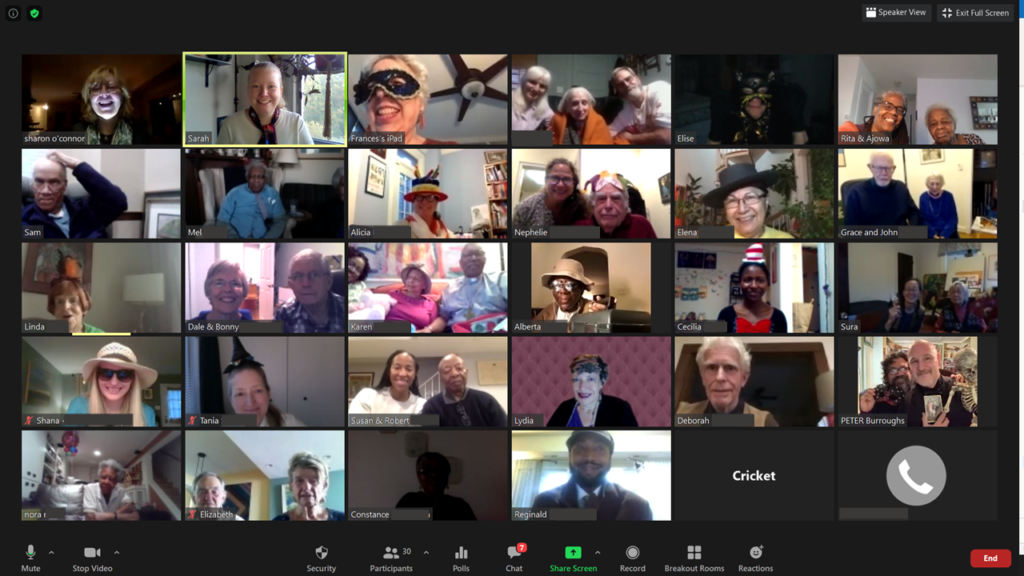
Screenshot of Halloween Memory Cafe participants

On October 31, Iona hosted its second-ever virtual Memory Café, this time celebrating Halloween and Día de los Muertos (Day of the Dead).  The event was led by tenor Peter Joshua Burroughs, a professional singer and performer. Clients and their family caregivers showed off costumes, sang songs in multiple languages, danced, and learned about Day of the Dead traditions. 

 Here’s what one participant said about the event: 

 “I wanted to thank you all so much for the Memory Café. Things seem so long ago, it came back to me in pieces… what is a Memory Café?  And first I remembered a buffet, and people and families at tables, and then… some kind of entertainment. (In the big room, once, another singer about 3 feet from me sang with all the power of an opera singer, I could almost feel the sound waves.) And there were other things for us to do, like Jesse and Seth playing for us to dance. 

But even though I’d gotten to dance then, this was the first time when I really felt what it was like to be on the other side of the line, not a part of the providers, but one of the receivers. And how much I needed it, how good it felt to be dancing, singing, all by myself in my box-filled basement room, monitor with no mic or camera, but still part of all of you, and the energy and good feeling that was coming across the room. Even though I couldn’t talk or be seen, you still managed to include me in what you were saying and writing-just as I bet everybody else felt included.   

So I really got to experience the power of Iona. And to be so glad it’s there. Which is to say, glad you’re there. And that you’ve found ways to keep doing what you do. How valuable it is. 

11 purposeful activities to do at home for people with Alzheimer’s

The COVID-19 outbreak has been a difficult time for all of us. But for those with Alzheimer’s or other dementia-related illness, change is especially confusing.

We’ve seen this with participants in our adult day health program. Many have Alzheimer’s and can’t understand why they aren’t coming to Iona each day like they used to. Instead, some are withdrawing into their private world and falling into depression. A few even refused to leave their beds when the stay-at-home orders first began.

That’s why to help support our families during this crisis, Iona’s adult day health program staff now offer daily activities for current participants and their families to do together over the phone and online. It’s a reason to get up and a way to stay connected.

But this challenge goes well beyond our adult day health center roster. We know that many care partners in our wider community are burning out or running out of creative ideas for how to keep their person engaged and active while at home. Additionally, in the words of Teepa Snow, a leading educator on dementia, “Meaningful days matter to all people. This need does not change for someone who is living with dementia.”

As we’re all experiencing change to our routines and a loss of control, it’s easy to feel like our days are less meaningful. So we asked Wellness & Arts Center Program Coordinator Cecilia Sono to share some of her favorite activities that focus on what people can do, not what they cannot do. In doing so, everyone can have positive new experiences.

11 activities that can help your family member feel valued, productive, and purposeful

  1. Nature appreciation: Take a family walk. If there’s a nice place to stop, you can write a story, a poem, or simply write down observations. On a bad weather day, see if you can take a drive and find a place to park with a nice view.
  2. Helping around the house: No matter the activity you do with your loved one, giving your person a sense of purpose can make a big difference in the success of the activity. This can be as simple as stating, “I’ve made a little mistake and need some help. Will you help me?”Ask your loved one to help with folding laundry or towels, drying dishes, matching socks, etc. These small tasks have many benefits including improved self-esteem and sense of purpose.
  3. Blast from the past: Take an hour or so to pull out old photo albums or family videos. Watch and reminisce together. You might also want to listen or even dance to old favorite songs.
  4. Explore your block: Take a scenic walk around your immediate neighborhood. Take the time to appreciate the place you call home. You may discover interesting things that you never knew existed. Some neighborhoods in DC even have interesting back alleys to explore.
  5. Organizing fun: Pick a room in your house that needs some TLC and involve your person with tasks like organizing CDs, emptying drawers, etc. Take a couple of hours to organize this space.
  6. Plan a family video chat with family and friends: “Zoom” and “Skype” are two popular platforms. For other technology advice, read our blog post here. If you’re new to Zoom, Iona’s Around Town DC program offers regular Zoom 101 Workshops. Visit our Around Town DC website to learn more and see the upcoming schedule of classes.
  7. Spa treatment day: This activity is so versatile. It can be done inside or outside, paired with lemonade or tea, coffee, or hot chocolate—iced or hot—depending on the season. You might choose to play soothing music or even light candles (battery-operated candles work too). And don’t stereotype; all genders can enjoy and benefit from relaxing spa treatment. To get started, all you need is an emery board, polish (can be clear or colored), and some lotion. Provide your loved one with a gentle hand massage using some lotion and file. If desired, you might paint their nails. Other variations of this idea include purchasing or making a DIY face mask or trying a foot bath and pedicure.
  8. Flower arranging: Together or independently, ask your loved one to help create beautiful centerpieces. All you need is an assortment of artificial flowers and a colander with large enough holes that the stems will fit inside. There is a sense of immediate gratification. As you add the flowers, the plain colander transforms into a work of art! You can also arrange flowers with vases, jars, and real flowers.
  9. Scrapbooking fun: Find mementos around your house that are special to you and start scrapbooking. This will be a fun way to preserve all your favorite memories.
  10. Collage making: Cut up magazines or newspapers and make collages. You can choose to respond to a theme or feeling.
  11. Go on a virtual tour: The Google Arts and Culture project has content from more than 2,000 organizations to bring their collections and galleries online.  You can view virtual tours of many of the museums, galleries and sites, and also explore details of their collections as well as cultural and historical contexts through their online “exhibits.”Many Washington, DC museums are offering virtual tours too. Here’s a list of some to check out. 

We hope these ideas will provide a little fun and routine into your daily schedule. One final tip—because routine can be especially important for people with Alzheimer’s, if possible, we encourage you to make a weekly calendar with designated times for these activities (for example, a daily activity at 2:00 PM). You may find that your person even starts to get ready and prepare for the activity before it begins!

If you have other aging or caregiving-related questions, please contact our Helpline at 202-895-9448 or info@iona.org. We’re here to support you.

Tips to Reduce Holiday Stress for People Affected by Dementia

The holiday season is upon us. Depending on your perspective, this may be one of your favorite times of the year or your least favorite, or maybe somewhere in between. In general, though, most would agree that stress levels can go up during this time. And if you’re living with dementia or caring for someone who has it, the holidays can be even more stressful than usual.

The holidays can be busy and intense, and often entail traveling to places you may not get to very often, attending crowded gatherings like parties and worship services, seeing family and friends you may not have seen in a while, purchasing and giving gifts, preparing food items to contribute to a meal, or even hosting a gathering. Such activities can be stressful in and of themselves, but dementia can sometimes make them seem overwhelming and not worth doing.

Additionally, feelings of sadness, anxiety, and frustration can understandably arise as you realize how life has changed because of dementia. You might even decide to stop engaging in holiday events altogether.

But staying socially active is good for your brain (see previous blog post for maintaining brain health here) and your mood. The social, culinary, musical, spiritual, and other aspects of this time of year can be beneficial for everyone involved.

So, if celebrating the holidays is something you’ve done in the past, consider continuing to do so. Planning ahead and being realistic about what’s possible can make them meaningful, enjoyable, and less stressful.

Planning Ahead

  • Think of ways the person who has dementia can continue to participate in holiday preparations, such as home decorating, signing and opening cards, helping with food preparation, picking out music to play, and reminiscing about past holidays and traditions, especially from their youth.
  • If a get-together is planned, help manage the expectations of family and friends who will be there by giving them an update about what the person living with dementia and their caregiver are able to do and not able to do. This also includes being able to set limits and say “No” to requests, if needed (see Taking Care of Yourself below).
  • A person who has dementia can sometimes become disoriented and anxious when visiting an unfamiliar place and/or when attending a gathering with people they don’t recognize. Holding a get-together in a place that’s comfortable for the person who has dementia and that doesn’t involve a lot of traveling can reduce their anxiety, as can celebrating with people they know.
  • Related to this, aim for smaller groups of people so that the person who has dementia doesn’t feel overwhelmed.
  • If needed, schedule getting together with others at a time of day when the person who has dementia tends to be less confused (such as morning and early afternoon) if this is an issue.

Getting Together with Others

  • Introduce the person living with dementia to others, even family and friends, if needed. Wearing name tags can be helpful.
  • Involve the person who has dementia in conversations as much as they feel comfortable.
  • Show the person who has dementia where the restroom is if the gathering is at an unfamiliar location and accompany them to it if needed.
  • Limit stimuli like loud music.
  • Be prepared and bring your “activity toolkit” in case the person with dementia gets confused, anxious, or agitated. This can include topics of conversation they usually respond positively to or an album of photos they recognize and can talk about with you. You might also try asking them for help with something, listening to familiar music together, or anything else that engages them.

Taking Care of Yourself

  • Just as it’s important to be able to say “Yes” to invitations to get together with others or requests to do things during the holidays, it’s also important to be able to say “No” if you’re not feeling up to it. You may not be able to host a party for 20, or go to 20 holiday parties, or bake 20 fruit cakes like you may have done in the past, but maybe there’s another way you can stay connected with others and engaged in activities.
  • It’s also important to be able to ask for help if you have dementia or care for someone who does. Knowing your limits can help reduce stress. Family, friends, and even paid professionals like home health aides can help with cooking, shopping, and cleaning. They can also support the caregiver by staying with the person living with dementia while the caregiver does what they need to do to take care of their self.
  • Another form of self-care is being able to talk about the stress you’re experiencing with a friend, your doctor, faith leader, geriatric care manager, or mental health professional. Iona offers care management services, individual counseling, and a variety of support groups for people affected by dementia.

Happy Holidays!

By Bill Amt, LICSW


Bill Amt, LICSW, is a licensed clinical social worker and is the Mental Health and Support Groups Program Manager at Iona Senior Services. As a psychotherapist he works with older adults and caregivers who are coping with the emotional challenges of aging, and he also leads support groups for caregivers and people diagnosed with early-stage dementia. He has a Master of Social Work degree from The Catholic University of America.

Three action steps if you’re experiencing memory loss

It’s a good idea to see your regular doctor if you’re worried about your memory. You may be having changes in your memory that are normal for everyone as they get older. Or you may be having some memory changes that are signs of an illness. You may find yourself facing the following question:

Is memory loss normal?

As we get older, some memory loss is normal. You might misplace your glasses. Or, maybe you occasionally forget a person’s name, but recall it later. Those changes are normal.

Here are some signs you might be having more serious trouble with your memory:
  • You’re having trouble figuring out how to do things that used to be easy for you—like paying bills or keeping track of your medicine.
  • You get confused when you drive or walk somewhere you usually go.

What can you do if you or a loved one has symptoms of memory loss? Start with these three action steps.

1. Get evaluated.

If your experiencing abnormal memory loss, it’s essential to get an evaluation from a physician. Memory loss and confusion are caused by a variety of medical conditions, including Alzheimer’s, infections, anxiety, insomnia, and medication interactions. A physician can sort out what’s causing the memory loss, prescribe appropriate treatment, and in some cases (depending on the cause of the memory loss) may be able to reverse symptoms. Both neurologists and geriatricians are the best kinds of doctors to see about memory loss. Find a neurologist or geriatrician who accepts Medicare via Medicare’s website.

Be sure to take the following information with you to your appointment.

  • Your health information
  • A list of the medicines you are taking
  • A list of the other doctors you see
  • Your Medicare card and other insurance cards

It may also be a good idea to bring along a relative or friend who can talk about any memory changes that they witness.

2. Get Support.

Supportive services exist throughout the DC metro area for older adults with dementia and for the people caring for them.

You might consider joining a support group, calling information & referral, tapping into community services like home-delivered meals, or meeting with a care manager. Contact Iona’s Information & Referral Helpline to learn more about local supportive services at (202) 895-9448 or info@iona.org. Alzheimer’s-specific information and referral also is available from the Alzheimer’s Association’s 24/7 Helpline.

3. Plan ahead.

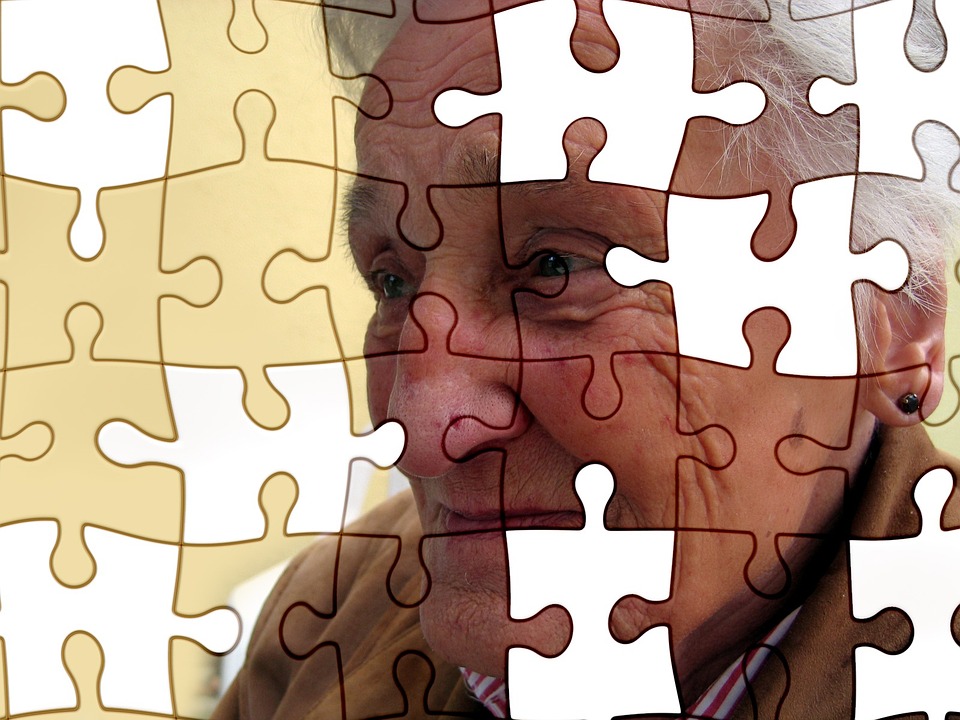
Making a plan now for your aging and long term care should be something everyone does, not just people experiencing memory loss. Like any puzzle there are many pieces to review and put together to construct the final picture: financial decisions, housing, legal questions, coordinating supportive services, making an advance directive, and more. The process to evaluate and establish a long term care plan may seem daunting, but you are not alone. A geriatric care manager, also called Aging Life Care Professional, can evaluate your needs, create a plan, and even coordinate care.

Learn more about long-term care planning via the federal Administration for Community Living. Learn about Alzheimer’s-specific long-term care planning via the National Institute on Aging.

At Iona, we call our geriatric care management services, Iona Care Management. You can learn more about services offered and schedule an in-home, office, or phone consultation by calling (202) 895-9448.

Six new ways to exercise your brain

As you get older, you may experience some memory loss like momentarily forgetting someone’s name or misplacing your keys. What is unusual–and concerning–is if you’re forgetting close friends or family, getting lost in your neighborhood, or forgetting how to use common objects. Serious changes in memory like these are not a normal part of aging, and should be evaluated by a physician.

There are a number of factors like poor diet, lack of exercise, lack of sleep, or limited social and mental stimulation that contribute to your brain health and memory. Fortunately, there are simple strategies you can adopt now to help your overall brain health.

Eating your veggies, getting a good night’s sleep, and regularly exercising are all important habits for maintaining your physical, cognitive, and emotional health. But, your brain needs exercise too. Trying new things that are challenging and fun can get your brain out of a rut.

Here are six new ideas for exercising your brain:

    1. Play new word, number, and strategy games.

    2. Learn new things like recipes, a foreign language, or musical instrument.

    3. Drive a different route home.

    4. Use your non-dominant hand more, such as for brushing your teeth or when eating.

    5. Read aloud (which engages more of your brain than reading silently).

    6. Socialize with new people.

      Studies have shown that socially active people are less likely to develop Alzheimer’s. Examples of activities include getting together with family and friends on a regular basis, joining a book club or other type of group, volunteering, or even getting a dog so you can meet people at the dog park. An added benefit from socializing is that it’s also good for your emotional health.

These are just a few of the ways you can take care of your brain and overall self. Have any other ideas for how you keep your brain fit and active? Let us know in the comments!

Belonging is the Healing Balm: Find Community When Facing Dementia


I have had a long career working intimately with people diagnosed with dementia and their family caregivers. It is a humbling lesson to see the stages of dementia from early diagnosed memory loss to near death.

As a past hospice nurse, I saw extreme frailty and utter exhaustion in patients and partners who were at the very end of the dementia journey.

When their physician finally recommended only comfort-based care or hospice care, the news often brought both grief and relief to families and patients. Now, as nurse care manager at Iona, I’ve become more aware of the agony of dementia. During consultations, I sit with family members and listen to their different interpretations of how the disease impacts the person they love. They each wait to hear from me, the clinical nurse, that it is not as bad as they think. They want to hear when relief will come, hoping to be awoken from the nightmare of this relentless and destructive disease. I see hope in their faces, their posture, and in their presence from just showing up for a consultation. If you’re a caregiver, I am sure that you can relate.

It is through these experiences that I have learned an important lesson.

The greatest relief for people with memory loss comes from community.

I’ve seen and still continue to see how the many points of human connection help awaken a person’s sense of self.

As the disease progresses, the brain becomes more impaired. There can be a loss of identity, loss of purpose, and even loss of joy. Sometimes, the person with dementia even forgets who they belong to within the context of personal relationships.

That is why trusting relationships are so important to a person with memory loss.

Having familiar caregivers, routines, and engaging events make life a bit sweeter.

I encourage caregivers to discuss and review memories that represent times of belonging with your person. Talk to them about family, friends, past employment, neighbors, faith communities, and other communities in your person’s life. In doing so, you can help remind and restore their sense of self.

There is a primal need in all of us, with or without memory loss, to be part of an authentic community. Especially for folks with cognitive impairment or memory loss, there is a need to be accepted and welcomed. I believe that creating friendly community is therapeutic beyond measure. It is really the most healing balm that we can offer as caregivers, family members, and professionals. Community is how we help those with memory loss know they are valued and supported.


By Dixcy Bosley

Dixcy joined the Iona Care Management team in 2018. She’s spent the last 30+ years developing wellness programs, raising a family, caring for her own aging parents, and advocating for informed end-of- life care in various community settings. Dixcy graduated from Catholic University’s Family Nurse Practitioner program in 1997. She later taught community health nursing at Iona, where she first discovered its many services. She
brings a deep respect for older adults who have stories to tell and lessons to teach.

Is it dementia, memory loss, or Alzheimer’s?

Your father is having trouble keeping track of his bills and got lost driving to your house. You misplace your car keys and notice you’re having trouble remembering names. Your elderly neighbor is repeating the same stories over and over.

Some forgetfulness, or memory loss, is a normal part of the aging process. Normal age-related memory changes include taking a longer time to learn new information, misplacing possessions and not remembering as well.

Dementia is an umbrella term that refers to a decline in cognitive functioning – thinking, remembering and reasoning – and behavior changes that affect daily functioning. Dementia is a set of symptoms and can have a number of different causes. Just as chest pain can be caused by muscle strain, a heart attack, or even pneumonia, dementia can be caused by a variety of illnesses.

This picture shows a normal brain and a brain with Alzheimer’s disease.

The most common cause of dementia is Alzheimer’s Disease, named after Dr. Lois Alzheimer, who discovered the disease. Abnormal proteins called plaques and tangles grow in the nerve cells and the spaces between the brain cells, damaging and eventually destroying nerve cells.

The second most common cause of dementia is cardiovascular disease. Cardivascular dementia occurs when the blood supply to the brain is interrupted by a stroke or a mini-stroke.

Other causes of dementia include Lewy Body disease, which causes symptoms similar to Parkinson’s disease, frontal lobe dementia, and alcoholism.

Some causes of dementia are reversible. For example medication side-effects, B-12 deficiency and depression can cause dementia or make the symptoms worse. This is why it’s important to consult a doctor about memory loss.

If you, a friend, or a family member is struggling with memory loss, Iona can help. Call our Helpline at
(202) 895-9448 or email info@iona.org to speak with a licensed social worker, who can provide information on Iona’s services, and other community resources that support people with memory loss, including their caregivers.


By Deborah Rubenstein, PhD, LICSW
Director of Client Services

Deb has been on staff at Iona for more than 20 years. She has worked as a care manager, psychotherapist, and support group facilitator, and became the Director of Iona’s Consultation, Care Management, and Counseling Services in 2005. In 2018, she became the Director of Client Services. In this role, Deb oversees a staff of social workers and nurses who provide direct support to older adults and their families, works with Iona’s Nutrition team, and leads Iona’s data and performance management initiatives. Deb also develops and presents curriculum for Iona’s Take Charge/Age Well Academy, including the Aging Solo workshop series. A former attorney, Deb holds both an MSW and PhD from the National Catholic School of Social Service at The Catholic University of America.

What to Expect When Interacting with Someone Who Has Dementia

Developing dementia or other memory loss issues can take a great toll on a person’s mood and outlook. At Iona, we see and speak with people experiencing these challenges regularly.

We understand that many family members are also unexpectedly thrown into managing a family member or loved one’s diagnosis, oftentimes with a great deal of mixed emotions and expectations. Oftentimes, these expectations can work against you.

If this is your experience, you are not alone. To help you better communicate and care for people with dementia, we’re sharing some common dos and don’ts for how to respond.

Use this list to help manage your expectations and understand the effects of this disease.

People with dementia experience:

  • A range of moods and behaviors.

    The person with dementia can go from being happy and engaged, to being sad or anxious and withdrawn seemingly suddenly. They might experience restlessness, and as a result, begin to rummage, pace, or disengage from activities or receiving care. These factors can also be affected by the following: stage of condition, personality, surrounding environment, medical challenges, level of independence, and level of trauma. The number one expectation you should have is to not have any hard or engraved expectations at all. This disease brings about unpredictable behaviors and every case is different.

  • Feeling agitated and anxious in the late afternoon and evening.

    Therefore, it is best to plan activities in the morning or early afternoon.

  • Difficulty remembering who their friends and loved ones are.

    It’s possible that over time, they may forget your name or your relationship to them. But it’s very likely that they will remember how you treat them. For example, they will remember your kindness.

  • Feeling overwhelmed.

    How you communicate with the person can make the difference. Speak in a calm and reassuring tone, and avoid shouting. To help avoid distractions, keep background noise low. Communicating through gentle touching can also be soothing and assuring for persons with dementia.

  • Becoming easily startled.

    When you first interact with the person, approach them from the front to avoid startling them, smile (as much as possible), and address them by name.

  • Trouble communicating clearly and being understood by others when speaking.

    Pay attention to the person’s body language and non-verbal cues, which can be their way of communicating with you. As the disease progresses, you may also have to adapt how you communicate with them. For instance, you might use short and simple statements or questions, or ask questions with “yes” or “no” responses. You can also break tasks down into multiple steps and give instructions one step at a time or make requests one at a time.

  • Repeat questions and statements multiple times, or forget people, dates, and words.

    Although dealing with this regularly can be taxing and frustrating, it’s important to communicate as patiently, and as calmly as possible. Instead of saying, “You already said that,” respond as if you’re hearing it for the first time. You can also shift gears by responding with a nod to what they said and then change the subject.

  • Challenges with exercising their independence.

    Most people diagnosed with dementia are used to living independently. With this in mind, frame questions and instructions in a positive way that reaffirms their agency. For example, instead of instructing a person with dementia to do something, use the “let’s do it” or “you can do it” approach. For example, avoid saying, “Get dressed.” Instead say, “Let’s get ready for the day and get dressed.” It’s also important to avoid talking down to them and using “baby talk.”

Do you have other tips or advice for communicating with someone with dementia?

Let us know in the comments what you have learned and found helpful through your caregiving journey.

Checklist: Are adult day health services right for your family?

Adult day health services provide older adults living with chronic conditions individualized therapeutic, social, and health services during the day.

Participants enjoy lively activities and the company of their peers, all within a safe environment. At the same time, their families are able to go to work, run errands, or simply take time for themselves–all with the knowledge that their loved one is not bored or lonely at home all day.

But knowing whether adult day health services is the right option for your family can be difficult. These questions might help. If you answer “yes” to any of the following questions, adult day health services may be the right care option for you and your loved one:

  • Do you worry about your family member’s safety if they are alone at home?
  • Are you concerned that your loved one is bored, unhappy, or isolated sitting at home all day? Do they have someone to talk to during the day?
  • Do you worry that your family member’s physical or cognitive health is declining?
  • Does your loved one need assistance to remember to take their medications, check their blood sugar, or eat healthy meals?
  • Do you want to avoid senior facilities, and help ensure your loved one remains at home for as long as possible?
  • Do you feel overwhelmed by your caregiving responsibilities? Would you like time away from your family member to go to work, run errands, or rest?

To learn more about how adult day health services can help you and your family, and to schedule a tour of Iona’s Wellness & Arts Center or Washington Home Center, please contact us by calling (202) 895-9448 or emailing info@iona.org.

Feedback for Iona