Self-Care Checklist for Caregivers


If you’ve ever been responsible for supporting the care of another person, you can probably attest to the physical and emotional strains. All too often, caregivers ignore their own needs for the sake of helping somebody else, especially if their relative’s needs seem so much more present due to a chronic illness.

Here at Iona, we encourage caregivers to practice good self-care. First of all, self-care is important for your own health! Research shows that caregivers can be at an increased risk for depression and chronic illness. Secondly, when your needs are taken care of, the person you care for will benefit too.

Not sure how to practice self-care?

Take a look at our Self-Care Checklist below (or, download and print out a copy here and put somewhere you regularly see, such as your refrigerator or planner). How many aspects can you currently check?

Then, choose just one new aspect to focus on for the week. Could you add a morning walk with friends into your routine, or go to bed one hour earlier, for example? It’s OK to start small!

SELF-CARE FOR THE CAREGIVER

Physical Health

____ I’m seeing my doctor(s) regularly.
____ I’m taking my own medications on schedule.
____ I’m exercising.
____ I’m eating nutritious meals regularly.
____ I’m getting enough sleep.
____ I’m not misusing alcohol or drugs.

Social Health

____ I’m seeing family and friends on a regular basis.
____ I’m keeping up with at least one activity I enjoy.
____ I have fun at least once a week.

Emotional Health

____ I’m getting ongoing emotional support for my caregiving situation from at least one person.
____ I have at least one outlet for stress (e.g., an enjoyable activity, confiding in someone, writing, exercise, meditation or relaxation techniques) that I use regularly.
____ I understand that typical emotional responses to caregiving include denial, anxiety frustration, anger, guilt, shame, and grief.
____ When I feel I cannot handle difficult emotions on my own, I get help.

Spiritual Health

_____ If I have attended religious services in the past, I continue to do so.
____ My faith community is aware of, and supports, my caregiving situation.
____ I am caring for my loved one in a way that is consistent with my values and beliefs, and this experience has meaning for me.

Caregiving Health

____ I understand my relative’s diagnosis and prognosis.
____ I understand what type of care my relative needs and I have a plan to provide it.
____ I understand my relative’s and my own financial and legal situation.
____ I have a plan for the future as my relative’s needs changes and/or know where to get help making a plan.
____ I’m not tolerating abuse from the person I am caring for.
____ I’m asking for, and accepting, help from family, friends, neighbors, members of my congregation and community, and professionals.
____ I’m in regular contact with other caregivers.

If you have questions about any of these points or are unsure how to begin, Iona can help! Call our Helpline at (202) 895-9448 or email info@iona.org to speak with a licensed social worker. They can provide resources and support on planning ahead, communicating effectively with your loved one, finding respite, and practicing self-care.

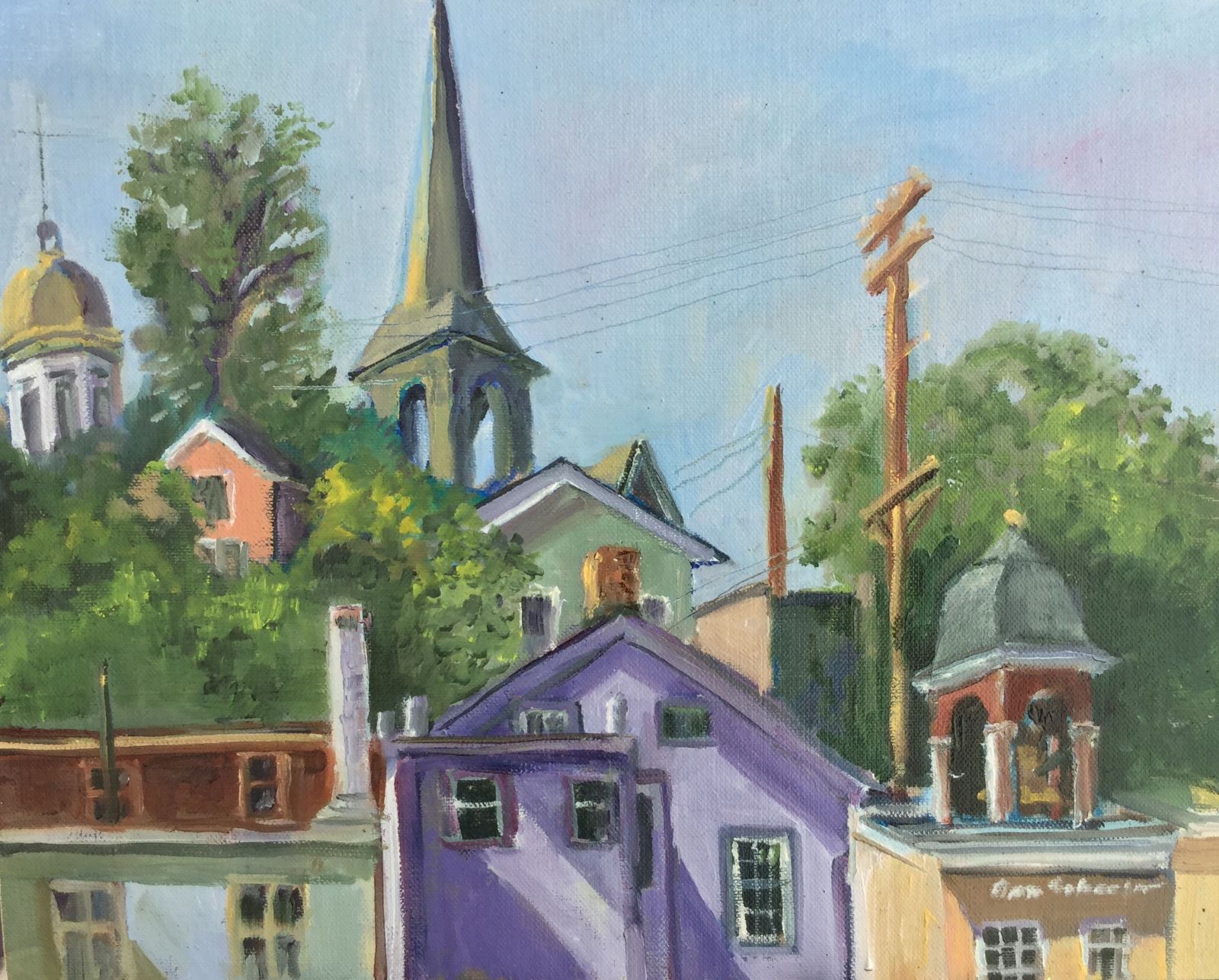
The Urban Landscape Artists’ Statements

From September 14, 2019 through January 16, 2020, the Lois & Richard England Gallery at Iona is proud to exhibit seven local artists in the show, “The Urban Landscape.”

Read more from the curator and artists below.


Joey Mánlapaz, Curator
Professor, Corcoran at The George Washington University


The seven artists in this exhibition have a lot to tell…stories, memories, imaginations, and experiences. They show a vision of the city or town that touched them deeply and uniquely. No doubt these artists excel in their craft.

Whether abstract or representational, two-dimensional or free-form, each individual artwork transports us into a place where the scent of air is imagined, colors are experienced, and the vibrancy or stillness of the locale serve to inspire.

You can view my portfolio at joeymanlapaz.com.


Linda Button, artist


As a representational artist, I portray the human figure and its avatars in various guises using three distinct presentations.

My oil-on-linen mannequins in their urban abodes honor these human wannabes that are made out of resin, linen, and even chicken wire.

Would-be humans in their window-dressed glass cages are often accompanied by a miscellany of reflected buildings, vehicles, crosswalks, signage, vegetation, and actual people.

My oil paintings on unprimed birch panels use a process akin to staining that emphasizes the grain of the wood. The stained panels often portray faces and urban camouflage.

My third series of paintings—oil collages on panels—“recycle” my unfinished paintings by using the canvas as fabric that I cut into human silhouettes. The collages feature human relationships, congenial and otherwise.

A case can be made that my expat childhood in remote parts of Venezuela is the source of my fascination with the human figure as an art form. Where is everybody? What are they wearing? When can we go to the city again? Lots of solo play with 3-D and paper dolls can yield adult preoccupation with similar concerns! I began painting about twenty years ago after completing a career at the Library of Congress. Having established the foundation that my self-imposed art curriculum required by studying with many excellent artist teachers, I joined a studio suite in Bethesda where I both create and display my paintings.

You can view my portfolio at bartleybutton.com.


Jane M. Coonce, artist


The way light falls on an object has always fascinated me. In paintings, I strive to capture the interesting effect that light plays on the subject. I believe an artists job is to make people notice the things that they see in everyday life but fail to really notice. There is so much subtle beauty in the world, and it is the artists’ job to make people learn how to see it.

I started off as a still life painter. It’s a great way to learn how to see and to paint. A person can see so many more colors from the real objects than one can from a photograph. One can set up a still life, and it’s there waiting for you each time you return. I found that not all people share the love of still life, so I branched out in my art.

I focused on portraiture. I took many classes and workshops and painted a portrait a day until I could do them well. Arlington County commissioned me to do Judge Wiggins when she retired from the Juvenile Courts. The portrait hangs at the Arlington County Courthouse. But portraiture is about pleasing the client and painting what the client wants. It’s not, necessarily, what the artist wants to paint. So I branched out again.

Next, I focused on landscapes since there is an infinite amount of subject matter to see wherever one goes. I especially liked the views of Georgetown and the Key Bridge as I would drive down the George Washington Parkway. Thus, I became know for my Key Bridge/Georgetown paintings. But I also gravitated to the urban landscape. I love the city scenes of people and cars going about their business with the beauty of the lights from the storefront windows and the stop lights and tail lights of cars.

Art is a lifetime of discovery. I always say, “if you aren’t growing , you are dying.” So I will continue my puzzle solving through painting ,and I will enjoy it every day that I do. I hope you enjoy my show here at Iona Gallery. My other work may be seen at Gallery Underground in Crystal City and Gallery Clarendon; both galleries are located in Arlington, VA.

You can view my portfolio at jmcelvany.blogspot.com.


J.Ford Huffman, artist


I create whole new worlds from old, found objects.

Then I invite you, the gallery visitor, to imagine the narratives for the mixed-media assemblages I call “little theaters.” I provide the composition. You may provide the story.

Some of my works are figurative. Some are abstract. Each is inspired by the shape and form of a found object. For example, pieces of found wood turn into skyscrapers in the two Metropolis-series sculptures in this exhibit.

I make drawings, photographic compositions, and the works you see here. Visualizing and executing work in three dimensions is enjoyable from development through completion.

In 2016, the National Building Museum commissioned a little theater, and my work is in private collections in the United States and in Japan and France. I designed the sets for two world-premiere plays at Oglebay Institute’s Towngate Theater in Wheeling, W.Va.

Besides the work here at Iona’s Lois and Richard England Gallery, I’ve one piece in a show through 11 November at the Athenaeum in Alexandria, Va., and 21 pieces at Watergate Gallery in Foggy Bottom through 21 September.

My work has been exhibited also at venues including Capitol Hill Center Galleries, Torpedo Factory Art Center, GWU’s Gallery 102, Politics and Prose, and Art Registry, which hosted my first solo show (in 2009).

When I am not in my studio, I offer training in words and art at publications everywhere including India and in Dubai. Also, I write fiction and nonfiction book reviews (Military Times).

You can view my portfolio at pbase.com/jfordhufffman/stages.


Richard Levine, artist

My love of travel and exploration spark the inspiration, both spiritual and visual that I derive from experiencing new landscape, people and culture which in turn invigorates my work and challenges me to both portray and understand our world. I like to paint and photograph in places where the weather, the traditions and the geography still dominate; where these elements identify and characterize a locale. My work has always been of a “documentary” nature, whether painting rural New England barns, grain mills in Oregon or urban landscapes I seek to capture essentials before they disappear.

For several years I traveled the Amtrak train on its “Northeast Corridor” service between Washington and New York. Along this route one passes through a microcosm of the changes that have occurred in the American urban landscape. Factories which once employed multi-generational families and around which towns grew and prospered now stand empty and silent. I see many of these urban landscape subjects as “remnants”, left over artifacts of once fully intact structures and community, now disused and deteriorating. In other cities adaptation to the new economy has been successful and shuttered factories have been re-purposed to provide entirely different functions.

Cities have, for millenniums, represented the apotheosis of human development and endeavor. They are our locus for culture, art, science and commerce and for a visual artist provide an endless challenge to depict its architecture, its moods, its secrets and the special character which defines each. These paintings represent my attempt to capture something of those qualities in places as diverse from one another as New Jersey to Italy to Virginia to Amsterdam.

I have been greatly influenced by the urban landscapes of Richard Diebenkorn, particularly his “Berkeley” series. The unique American style and sensitivity of Winslow Homer and Andrew Wyeth inform and inspire my work in rural areas.

You can view my portfolio at richardlevine.net.


Ann Schaefer, artist


I work outdoors, fascinated by the way sunlight makes every scene constantly change, as highlights and shadows shift. I enjoy painting buildings and capturing history in my work. Washington, DC, and the countryside and towns of Maryland are my favorite sources of inspiration. I love painting in Frederick County, and historic downtown Frederick, as well as by the Potomac River, the C&O Canal, and the Nanticoke River, where I now live part-time.

Immersed in the outdoor experience, interpreting the world around me, I seek to capture on canvas or paper not only the visual impression of light and color, but other sensory aspects of the scene, such as the warmth or chilliness, sounds and atmosphere, or activity around me as I paint in a particular place and time. I use a bright palette, modeled on the Impressionists’, and the excitement in my work comes from the rapid brushstrokes, and energy I get from my attempts to catch the light as it washes across a scene.

A Fine Arts graduate of the George Washington University, I paint landscapes and cityscapes outdoors in oil, watercolor and acrylic. A life-long artist, I had a “day-job” career at NOAA, in the US Department of Commerce, managing environmental programs and projects. My commitment to our precious and fragile environment continues as I paint outdoors, enjoying the beauty of nature, hoping that my work will help others appreciate it more deeply. I live near the Potomac River in Bethesda, and part-time by the Nanticoke River on Maryland’s eastern shore. A member of the Mid-Atlantic Plein Air Painters Association (MAPAPA), I participate in plein air painting events in Maryland and neighboring states and have won awards in many of these competitions.

I am pleased to return to Iona, where I showed a large selection of my earlier work in 2012. My work has been on view at Gallery 322, 322 N. Market Street in Frederick, MD since 2009.

You can view my portfolio at annschaeferart.com.


Tom Walsh, artist


My interest in painting began in the early 60’s. I began working with an artist in Bucks Country PA. I would help her with art shows and Friday night lectures, which would cover a wide range of subjects and demonstrations.

In school, I went more for graphic arts. Knowing I would have to make a living, I worked as a graphic designer for Temple University for twelve years, before moving to DC in 1980, where I began my design firm until 1997.

In the summer of 1997 while on vacation at the outer banks of NC I began to paint, the abstract paintings I did led me in the direction I wanted to go. I am drawn to the works of Jackson Pollock and Mark Rothko.

After winning first place with The Alexandria Commission for the Arts, I rented a studio on the third floor of a Historic house in SW, DC where I worked on my first solo show for the Nevin Kelly Gallery in DC and my second show at the Wexler Gallery in Philadelphia, PA.

I see my paintings as Urban Landscapes on the basis of various architectural landscapes. I see light and color reflections in every concrete building I look at and the light reflecting from glass gives constant streams of color at different times of day and night.

I have spent most of my life in two cities Philadelphia and Washington; Philadelphia has tall dark buildings and narrow streets, and DC has lower architecture and wider streets with sky.

I have lived in Washington, DC with my partner Anthony since 1980 with our canine pets. It is a great visual treat to live in DC with all its museums and diverse culture.


Elaine S. Wilson, artist


Being observant and alert are central to the act of drawing and painting. Our culture has sped up so much that the act of slowing down and noticing helps me to see more deeply – especially the relationships between things.

I believe that the interdependence of all things is key to life and work. I see the beauty and meaning of physical things as metaphors for this interdependence of forms, which is a moral imperative. Unless we see what is around us in a rich way, we are likely to become more anxious: looking always for something that may not be there, when what is there is really remarkable. In the end, even the most mundane thing can contain lyricism.

My paintings are about revealing the specific nature of a place through repeated encounters versus capturing a particular moment. Over several visits, I find out more about a setting to see if I can unearth a rhythm of mark and color that elevates what I notice into something that others will find compelling. Every place has stories. As I work I discover what they are. Sometimes stories are brought to a place by the individuals who populate my paintings with their errands, their play, and their work. While I choose a site primarily for its visual quality, the stories contribute to the richness of the experience.

The three sites in DC that have engaged me most recently are the Hughes Tower in Brightwood, a construction site at T St. and Florida Avenue next to the Howard Theater, and the McMillan Filtration site at Michigan Ave and North Capitol. In all three cases, I became interested in the structure. Then, found myself learning about the development in the neighborhood and the meaning of the site for the people who live there, and the case of T Street and Florida people who have been displaced.

The quality of light in my paintings is paramount. The color must articulate the light and depth of a space, but also create its own rhythm within the painting. Light is a physical sensation, not just visual, as it is specific to both place and time. Without light, a painting is dead. I aim to have my artwork appear as if it made itself, effortlessly. Previous decisions may be part of the visual fabric, but I like the work to appear inevitable rather than labored or improvisational. The initial colors and marks left in the surface of the painting are an expression of the ‘ongoingness’ of time and place – evidence of the act of looking.

You can view my portfolio at elaineswilson.com.

Come help us celebrate these artists on Saturday, September 14 from 7 to 9 PM for an energetic reception, with conversation and refreshments. This reception will also be a part of the popular Tenleytown Art All Night celebration.

Learn more and RSVP.

Find Job Training to Match Your Skill Level and Interest

We are in a time of ever-changing technology. Many older adults need to keep working, even after retirement, to make ends meet. Others want a job because they want the challenge or need to fill up time. If this is you, then this may be a good time to brush up on your career skills.

In today’s job market, new versions and new updates for technology, software, and equipment are produced at lightning speed. Given this swift pace for change and development, it’s easy to feel like you may not be able to keep up.

You may ask yourself, “Will I measure up to the competition?” Thus, we’ve gathered 11 resources to help equip you with the skills, and information that will help you succeed in your job search.

Check out these tips and services where you can access individualized counseling to help you thrive in today’s job market.

Training for basic level skills:

  • (National) – Basic job skills training for older adults available nationally from the federally funded Senior Community Service Employment Program.
  • (National) Use the Older Worker Program Finder to locate employment services for low-income, unemployed older adults.
  • (DC) – Get free GED (high school diploma) training, and basic job skills for DC residents available from Academy of Hope.
  • (MD) Get access to a career counselor, workshops for landing a federal job, literacy and aptitude testing, in-demand training, and more via WorkSource Montgomery.

Training for specialized level skills:

Why Iona’s Silver Circles Facilitators Love Working with the Support Groups


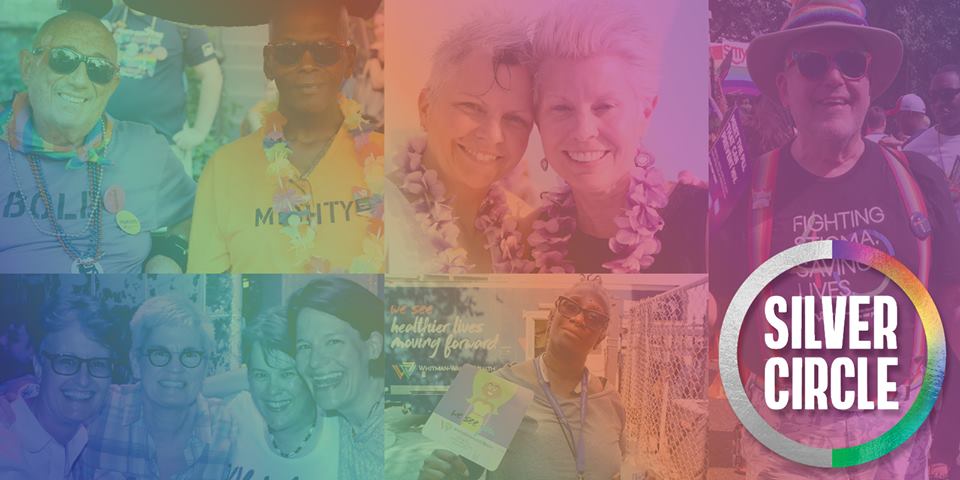
Silver Circles are peer-led support groups for LGBTQ people over 60. In partnership with Whitman-Walker Health, Iona has been offering these groups for more than a year. The groups are funded by a grant from the DC Department of Aging and Community Living and private funds raised by Iona.

Most of the groups still have room in them! If you identify as LGBTQ, consider joining a group to meet new people and share information about this stage of life.

The peer facilitators were trained to create a safe and welcoming space for you. We recently interviewed two of the Silver Circle support group facilitators, Ron Boggio and Victor Wexler, about their experiences leading the group sessions.

It’s clear from their responses that they benefit from the experience just as much as the group members!

Q: Why did you decide to get trained to be a Silver Circles facilitator?

Victor Wexler (VW): Wonderful thing, I had to slow down and go to rehab for a month, which left a void in my day-to-day. My old friend Michael Mitchell [from Whitman-Walker] referred me to the opportunity. I accepted because I love being of service to others. It gave me a new home, and a group identity.

Ron Boggio (RB): I’m as psychologist and I was interested in mentoring.

Q: What have you personally gotten out of being a facilitator?

VW: It’s a wonderful experience. There’s something about the age group of people 60+ that creates strong bonds. They are very encouraging, more helpful to one another, and they don’t compete.

RB: Although there are similarities between being a facilitator and therapist, I had to learn how to be a facilitator and not a therapist. I had to learn to become more of a peer, and be more transparent.

Q: What topics are discussed?

VW: Housing, eviction, medical issues, relocating, health, and traveling.

RB: Getting older, dating, housing and relocating, and aging solo.

Q: What have you observed your group members have gotten out of being in a group? What are the major take-a-ways that you’ve noticed?

VW: I’ve seen a lot of take-a-ways but mainly “friendship and social connection.

RB: A number of participants were socially isolated, and some widowed. Most have gotten someone to talk to and more social connection.

Q:What have you learned since becoming a facilitator for Silver Circles?

VW: That I am not alone. It’s so relieving when you are going through things and you find out that someone else is going through or has gone through the same thing.”, The sharing of experiences builds stronger connections and bonds.

RB: I was impressed by the support group overall because I have not noticed similar programs in Maryland or Virginia yet.

If you are interested in joining one of the groups, we’d love to have you. In addition to Ron and Victor’s group at Whitman-Walker’s 14th street location, we have other groups at Iona, Metropolitan Community Church of DC (MCC-DC), and the Max Robinson Center in Anacostia. We have two groups for men, one group for women, and two groups that are for both.

To join a group, you must have a short intake phone call with Whitman-Walker staffer Michael Mitchell at 202-939-7646 or mmitchell@whitman-walker.org.

Why Iona’s Team Loves Working with Older Adults

Happy World Senior Citizen’s Day! This day was created to acknowledge and show appreciation for older adults, and raise awareness on issues to build a more connected and inclusive society. In honor of today, our staff shared what keeps them coming back to Iona, as well as what they love most about serving older adults.
We asked staff to respond to one of these three questions:

  • What is your most memorable short story of an older adult that you worked with via Iona?
  • What has been your greatest impact at Iona thus far?
  • What’s your favorite thing about serving older adults around the city?

Here are their heartwarming responses.

What’s your favorite thing about serving older adults around the city?

  • Social Worker Trevor Goodyear – “In the hardest moments of their lives the work I do can bring them some solace, connection, and dignity.”
  • Deputy Director Susan Messina – “I started at Iona having worked with a variety of populations –teens, young adults, pregnant women, and people who are dying – but I had never worked with older adults. I admit I had always been a little afraid that I wouldn’t know what to say around older people. Working at Iona and getting to know hundreds of amazing older adults – staff, board members, volunteers, clients/participants, and advocates – has enriched my life enormously and now I don’t fear talking to older folks!”
  • Home Delivered Meals Manager Jakia Muhammad – “My favorite part about serving adults who are aging and thriving around the city is visiting their homes. I’m usually in awe of their art collections and artifacts collected through their lives. It gives me more insight about who the person really is and makes them feel like more than just a participant. By asking questions about their things, it creates a genuine dialogue and leaves a lasting impression. I’m grateful to hear their stories. They motivate me to travel, see the world, and take risks.”
  • Front Desk Coordinator Fran Forman’s favorite thing is, “Greeting visitors and extending a pleasant attitude to help them feel good.”
  • Both Care Manager Dixcy Bosley and Building Manager Darryl Simpson “love hearing about their fascinating life stories”.
  • Communications Coordinator LaVita Gunby – “Knowing that the work I do supports a growing yet under-resourced population of people makes me feel content.”

What is your most memorable short story of an older adult that you worked with via Iona?

  • Department of Aging & Community Living Project Director Ashlea Steiner – “My favorite story is about “Turnip Tom”. Tom G. was a St. Alban’s Active Wellness Program participant. He was often around when we had our Farmer’s Market, yet hardly ever asked for any produce. But when he heard that there were turnips, he shared his story. As a young boy growing up in Virginia, all of Tom’s neighbors had a turnip patch. In Tom’s words, whenever his buddies got hungry, “they bent down and pulled up a turnip.” Someone in the group would always have a pocket knife on hand to cut it open and share. At our market, Tom asked for only one turnip because it reminded him of when he was a boy. I was reminded then about the memories that foods carry and it isn’t always about quantity in delivering services but the quality of meaningful connections.”
  • I&R Program Manager Leland Kiang – “A man once called inquiring about long-term care options for his wife. He was convinced that his wife had memory loss and needed additional care. As we spoke, I noticed that it didn’t sound like his wife had memory loss but something else. Through further conversation with the husband, I expressed my idea and suggested that his wife get additional testing to be sure. It turned out the wife had delirium, and not memory loss, which resulted in them not needing long-term care.”

What has been your greatest impact at Iona thus far?

  • Educational & Wellness Program Manager Lena Frumin – “We have increased the opportunity for socialization, exercise, field trips, and art expression throughout Wards 2 and 3. People who have participated in our programs seem to really enjoy them and I have loved getting to know some of them and colleagues at other organizations (libraries, Parks & Recreation sites, and faith communities) who serve a similar clientele. We have several participants who come to many of our programs repeatedly and seem to be getting a lot from them.”

Drink Up! Hot Weather Hydration Tips

Summertime is in full swing and many of us spend more time outdoors enjoying the longer, sunny days. Older adults, however, are more prone than younger people to heat stress.

Their bodies don’t adjust as well to sudden changes in air temperature. In addition, they’re more likely to have chronic medical conditions or take prescription medications that change the normal body response to heat or affect body temperature or sweat regulation.

How much should you drink to stay adequately hydrated? The average American adult gets 37% of their daily fluid from water, 46% from other beverages, and 17% from food. The Institute of Medicine recommends that the average woman consume about 9.5 cups of fluids from drinks per day and the average man consume about 13 cups of fluids from drinks per day. This seems like a lot, but you need to make allowances for individual variations or factors. Some factors include body size, activity or sweat level, or medical conditions or medications that limit fluid intake or call for increased intake. One of the best ways to make sure you’re hydrated is to check your urine – it should be pale yellow. Darker? Drink up! If in doubt, check with your doctor or health care provider for individualized guidance.

Here are some tips to help you stay well-hydrated all year round:

  • Drink a glass or two of water when you wake up, even before you have your morning coffee or tea.
  • Enjoy your morning coffee or tea. It used to be thought that caffeine was dehydrating, but that’s not necessarily the case.
  • Drink water with all of your meals and snacks.
  • Take small water bottles with you whenever you go out, and refill them at every opportunity.
  • Flavor your water with packets of crystallized lemon or lime. You can also add slices of real fruits such as oranges or lemons, berries, or even cucumber or fresh herbs such as mint to enhance the flavor of plain water.
  • Add a splash of 100% fruit juice to iced seltzer water to make a refreshing spritzer.
  • Drink milk or milk-alternatives daily. Milk is a great source of calcium, protein, riboflavin, and vitamin D and is almost 90% water.
  • Limit soda and other heavily sugar-sweetened drinks unless you are underweight and can use the extra calories. There are a few very lightly sweetened juice and water drink products on the market and consuming those in moderation should be fine for most active people.
  • If you drink alcohol, limit it to one glass per day for women, and two for men. Drink a glass or two of water between drinks as alcohol has a diuretic effect, meaning it can contribute to dehydration.
  • Don’t wait until you feel thirst to drink. Thirst, dry mouth, dark yellow urine, fatigue, dizziness, or irritability may be symptoms of dehydration.

So sip, slurp, or munch away to keep dehydration at bay!

Here are two refreshing and easy recipes to help you hydrate.

One is a chilled, tomato-based veggie soup full of crunch and flavor, and the other is a morning smoothie packed with protein, fiber, and good fats to get your day going.

Quick Classic Gazpacho

Slightly adapted from Ben Shapiro/Allrecipes

Ingredients:
2 (14.5 ounce) cans diced tomatoes
½ cup water
2 TBSP extra virgin olive oil
1 small yellow or red pepper, cut into ¼-inch dice
1 small red or sweet onion, cut into ¼-inch dice
1 small/medium seedless cucumber, cut into ¼-inch dice
1 garlic clove, minced or ¼ tsp garlic powder
Pinch of red pepper flakes, or half of a seeded, minced fresh jalapeno (optional)
2 TBSP sherry, red wine, or cider vinegar (or substitute fresh lime or lemon juice)
2 TBSP fresh herbs such as basil, cilantro, or parsley
Salt and ground black pepper

Directions:
Process ½ cup of tomatoes, along with the water and oil in a blender or food processor until pureed. Transfer to a medium bowl, along with the remaining ingredients. Season with salt and pepper to taste. Refrigerate for a few hours before serving to allow the flavors to blend. Enjoy!

Rose’s Morning Smoothie

Original recipe by Rose Clifford, makes one 28-oz smoothie, recipe can be halved or ingredient amounts adjusted for your preferences.
Ingredients:
10-12 ice cubes
12 ounces cold water
One medium banana
One heaping TBSP peanut or other nut butter
¾ cup plain Greek yogurt
1 heaping TBSP dry rolled oats
2 tsp chia seeds
1 TBSP ground flax seed, such as Bob’s Red Mill
One scoop of chocolate protein powder (such as Orgain Organic Plant-Based Protein Powder in Milk Chocolate)

Directions:
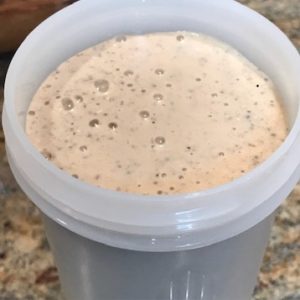
Place ice and water in a blender jar, followed by the remaining ingredients. Process on “pulse” or “crush ice” setting for about 15 seconds and then on puree or liquefy (whatever makes sense for your blender) for about 30 seconds until well-blended. Shake will thicken on standing and may be refrigerated for a few hours.

From Aging Solo to Aging in Community

Here at Iona, we encounter many people who lack a support system of family or close friends to rely on as they age. We call it aging solo—and it’s not as uncommon as you might think. If this sounds like you, there are a number of ways that you can build your own support network, and plan ahead now.

When making a plan, you might need to consider how you envision living in the future, and what support you may need. Consider the help you may need in the areas of finance, legal support, medical care, and more. Specifically, here are some questions to consider when mapping your plan for the future:

  • What services or planning do I need to age in my home?
  • Should I make a move?
  • Would I consider moving to a Continuing Care Retirement Community or assisted living?
  • Can I afford care if I need it?
  • What sources of funding are available to me?
  • Do I have long term care insurance?
  • Do I have an Advance Healthcare Directive?
  • Do I have a financial Power of Attorney (POA)?
  • Do I have someone I trust who I can give my user names and passwords for online accounts to?
  • Can I identify someone to come to the hospital to be my communicator or advocate?
  • Have I researched services like Care Management or tapped into my local Village?
  • Would I benefit from a consultation with an expert?

If you’re aging solo, Iona has programs that support adults of all income levels and needs. Our goal is to help you go from aging solo to aging in community. We will not only help you navigate changes in your health or functional ability, but also help you tap into or build meaningful relationships. Some of the ways we do this include:

Education: Iona’s Take Charge/ Age Well Academy offers presentations and workshops on critical topics like legal planning, deciding among housing options (aging in place or making a move), how to pay for care, and how to build a social support network.

We even have a series specifically on Aging Solo and how to age well while aging alone. If you don’t quite have the answer to any of the questions above, you can register at the link for our next Aging Solo series, which begins on Wednesday, September 4th.

Community: Many of our programs encourage social connection. Iona’s Active Wellness Program at St. Alban’s welcomes DC residents over 60 for discussions, films, field trips, fitness, and lunch. We also provide social events for our Take Charge/Age Well Academy alumni. Or, you might get involved by volunteering with us.

Direct support: Another good option for aging solo may be Iona’s Care Management Services. Iona Care Management consists of a team of experienced, licensed social workers and nurse care managers who have deep knowledge of local resources and aging-related issues. Care Managers can be on call for health crises and coordinate care if needed. Even if you aren’t currently in need of help, a care manager can serve as your expert advisor providing individualized guidance. This fee-based service can also ensure a case manager is available to assist you in the event of a health crisis down the line. Additionally, we offer free subsidized case management services to eligible individuals. Having a Care Manager on call provides great peace of mind.

If you’re feeling anxious or unsure about your social support as you age, you’re not alone.

Iona can help. To learn more about our services and speak with a social worker, we encourage you to contact our Helpline. Iona’s Helpline is open Monday – Friday from 9:00 AM – 5:00 PM. Call (202) 895-9448 or email info@iona.org.

Take Charge of What You Communicate to Your Doctor

Life gets busy fast, and sometimes it’s hard to pay attention to your health or even schedule your annual check-up with your primary care doctor. But while it’s common for many health tasks to take a backseat to other day-to-day activities, that doesn’t mean you can ignore your health completely.

Take charge with these tips to get on track.

Due (or overdue) for your annual physical? Schedule one today! Then, plan to make the most of your appointment with these tips.

  1. Think about and prioritize the topics you wish to discuss in order of what’s important to you before your visit to the doctor.
  2. Save the small talk for the end of the appointment.
  3. Remember, mental health is important too! If you’re feeling anxious, depressed, overwhelmed, or anything else, it’s good to share that information with your primary care doctor who can give appropriate advice and referrals.
  4. To help you stay on track of future and follow-up appointments, use a system that works for you, be it notes on a paper calendar, or setting reminders on a digital calendar on your phone. Once you receive confirmation of your next appointment, immediately put the information into your calendar.

How do I communicate with my doctor in-between appointments?

Communicating with your doctor after or between appointments has gotten easier in some practices. Patient portals are increasingly the most efficient way to deliver a non-urgent message to your doctor or their staff.

Patient portals are secure online websites. They provide patients with convenient, 24-hour access to personal health information from anywhere with internet access. With a secure username and password, and internet access, you can view all of your health information in one place. You get access to recent doctor visits, lab results, medication lists, upcoming appointments, and even referrals to other medical providers. If you have an urgent issue, you should still call your doctor’s office, or call 911.

Another great resource for communicating your medical needs and preferences with your doctor is by using an advance healthcare directive.

An advance directive is a document that acts as your living will. It is important because it communicates your healthcare wishes with medical professionals and family members or friends, should you become incapable of expressing them yourself.

If you have one, make sure that you review and update your advance healthcare/medical directives as often as necessary. You’ll want to highlight all, new changes. Be sure to discuss and share the updated version of your advance healthcare directive with your doctor and your Health Care Power of Attorney. For more information on healthcare directives and to see a sample, check out Iona’s recent blog that tells you all about advance directives.

If you need help thinking through your advance directive, you might consider consulting with a professional. To learn more about our services and speak with a social worker, contact our Helpline. Iona’s Helpline is open Monday – Friday from 9:00 AM – 5:00 PM. Call (202) 895-9448 or email info@iona.org.

By Iona Care Manager Carol Kaplun


Carol joined Iona in 2003, and currently manages Iona Care Management. As a care manager, she helps older adults and their family members explore options and navigate through the everyday challenges of aging to achieve the most positive outcomes possible. Carol also leads workshops for Iona’s Take Charge/Age Well Academy and in the community. Workshop topics include Stay or Move: How to Find and Pay for the Best Living Arrangement and Hospital to Home: Navigating Transitions in Care. Carol is a member of the Aging Life Care Association. Carol is a graduate of Georgetown University and the University of Maryland School of Nursing. Prior to joining Iona, she worked as a clinical Research Nurse at the National Institutes of Health.

Bring Order Back to Your Living Spaces


Life gets busy, making it hard to keep your living spaces in order.  Taking inventory and organizing your home can relieve stress, clear your head, and even help with your estate planning.

Brent Miller, 78, recently decluttered her apartment. After moving out of her mother’s condo, Brent’s home was full of boxes that had spent years in storage. The thought of going through everything alone felt overwhelming, at first.

“Women have mothers and grandmothers and we inherit stuff,” she says. “We don’t want to give it away or throw it out before we see it.”

Brent’s case manager at Iona helped her hire a firm that went through all of Brent’s belongings one by one and helped her select what she wanted to keep. “It made such a big difference,” Brent said. After decluttering and reducing her possessions, she plans to downsize to a smaller and more affordable apartment down the hall in her building.

Here are some tips to help you start making progress:

Declutter and downsize
  • Using the divide and conquer method, tackle just one room at a time.
  • Break large and time-consuming tasks into small bits. Doing just a little bit at a time can make decluttering seem less daunting. Remember, Rome was not built in a day.
  • Recruit help. Reach out to friends and family, and turn your declutter work into a fun and bonding experience. Professional firms, many of which specialize in working with older adults, are also available to assist.
  • Get rid of unused and unwanted items (e.g. furniture, clothes, shoes, magazines, books, tools, utensils, etc.). If you are holding on to things that you don’t need, you might be causing yourself unnecessary distress. Clearing out these items might free up space for new things, or open up the area so you can move around more. The space will feel larger and brighter.
  • Once you’ve decluttered and downsized, you’ll have a better idea of what you actually own. This can be useful if there are any items you want to include in your will or other estate planning.
Get important files and documents organized
  • Let go of old or unused files. If you aren’t sure if you’ll need a file or document at a later date, check out this useful resource from Consumer Reports.
  • Sort and organize files alphabetically by name and/or numerically by date.
  • Keep files housed in one area, not spread out across multiple places. This will diminish confusion and disorder when searching for a particular file or document.
  • Keep copies of all important documents, preferably outside of your home and with a trusted friend (to protect against a possible crisis that may cause damage to your in-home files), family member, or business professional (e.g. lawyer, advisor, caregiver, and Power of Attorney/guardian).

If reading this list causes you anxiety, you are not alone! Ione offers classes through our Take Charge/ Age Well Academy that can help you prioritize tasks, connect with others, and learn more about Iona’s services.

To learn more about our services and speak with a social worker, contact our Helpline. Iona’s Helpline is open Monday – Friday from 9:00 AM – 5:00 PM. Call (202) 895-9448 or email info@iona.org.

11 Job Seeking Tips & Resources for Older Adults

Many older adults are entering or re-entering the workforce. But finding employment can be a big challenge, especially if you haven’t applied for a job in many years or don’t know how to market your experience and skills.

These resources provide practical tips on the job search process and information on where to get counseling and support for people 50+.

Use these resources to help find and secure positions that are the right fit for you.

Job-seeking tips:

  • AARP offers various tips on conducting a structured job search, and making a successful transition from one career to another. 10 Tips for Reinventing Your Career.
  • Here’s a comprehensive guide from the National Association of Area Agencies on Aging (n4a) that covers how to market your skills, interview tips, and more. Employment Options: Tips for Older Job Seekers, by the Eldercare Locator.
  • If you’re considering a work-at-home job, be wary of common scams. The Federal Trade Commission (FTC) outlines common scams to be cautious of and how to report them. Common Work-at-Home Scams.

Individualized job counseling or training:

  • National Council on Aging’s Senior Community Service Employment Program (SCSEP) helps low-income, unemployed individuals aged 55+ find work. SCSEP matches eligible older adults with part-time training assignments for non-profit organizations.
  • EconomicCheckUp (of the National Council on Aging) has a Define Your Skills resource page to help you understand your strengths and interests, and find work that is right for you.
  • My Next Move offers various directories, and an assessment to help you answer the question, “What do you want to do for a living.”
  • Visit the DC Library’s Job Seekers Drop-In Clinic for staff assistance with various factors related to your job search, including online job searches, creating an email address, and more.
  • Jubilee Jobs offers many free services related to both job placement and preparation, as well as up to two years of continued support.
  • The Jewish Council for the Aging of Greater Washington offers employment programs for older adults, including its “Career Gateway” program, which offers training, take-home materials, mentoring, and more.
  • Virginia Career Works of northern Virginia has seven Employment Centers with events, workshops, programs, and basic and individualized job seeker services.
  • Maryland’s WorkSource Montgomery’s staff provides career counseling, and helps craft individualized employment plans for you to achieve long-term employment. WorkSource Montgomery Career Services.

We wish you good luck on your job search!

Feedback for Iona