Pride Events for LGBTQ Seniors

There’s plenty to do this month in celebration of Pride!

Friday, June 3 (7:00 PM): Capital Pride Honors

Friday, June 6 (2:00 PM): Friday Tea Time for LGBTQ Older Adults (DC Center for Aging)

Saturday, June 7 (6:00 PM): Virtual LGBTQ Social Hour (Capitol Hill Village)

Saturday, June 11 (3:00-7:30 PM): Pride Parade

Sunday, June 12 (12:00 – 7:00 PM): Pride Festival. Engage with over 300 service organizations, social groups, businesses, amateur sports leagues, faith-based groups, educational institutions, government agencies, artists, consultants, potential employers, and much more. Don’t forget to stop by Iona’s booth!

We’re also looking for booth volunteers! You can help set up and decorate, break the booth down, or hang out with Iona staff during the day to hand out information and goodies. If you’re interested, please email Ashlea Dowden at adowden@iona.org.

Thursday, June 16 (6:00 PM): DC Villages 2022 Pride Celebration

Wednesday, June 29 (10:00 AM): Supporting LGBTQ Grandchildren (Capitol Hill Village)

Silver Circles Support Group Facilitator Olivia O’Neal Shares Advice from LGBTQ Members

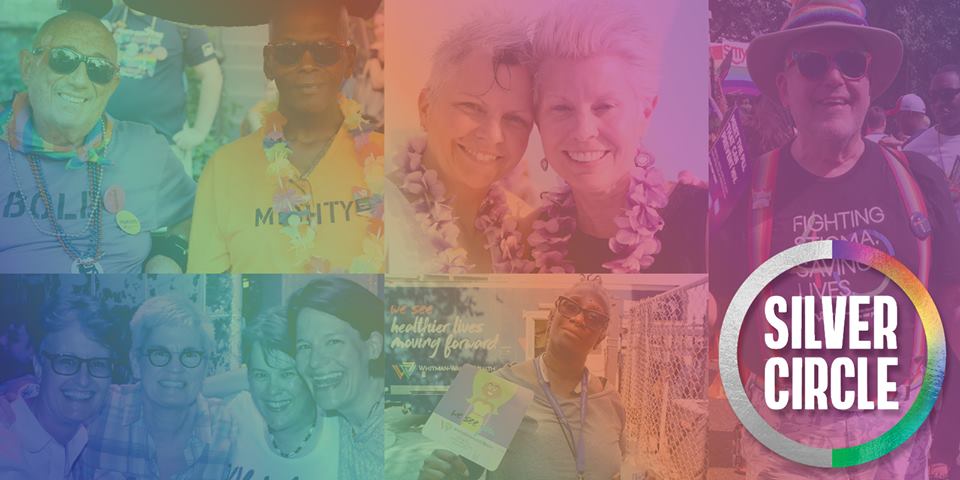
Every year, the LGBTQ community celebrates June as Pride Month along with “straight” allies. This month pays tribute to those involved in the 1969 Stonewall Riots, as well as celebrates all lesbian, gay, bisexual, transgender, queer, intersex, or agender individuals. Although much progress has been made since the Stonewall Riots, social isolation, loneliness, and even access to safe, friendly services are still challenges for people who identified as LGBTQ. Iona is committed to providing safe, welcoming spaces for older LGBTQ adults to where they can gather, find support, build community, and get help with accessing resources. In partnership with Whitman-Walker Health, Iona offers Silver Circles—peer-led support groups for LGBTQ people over 60. We recently caught up with Silver Circles Facilitator Olivia O’Neal. Read ahead for our brief Q&A session as Olivia shares advice from group members on curbing isolation and anxiety during this time, and top take-a-ways from the group.

Q: What changes or other things have you noticed within your group since you all have been in quarantine?
A: I noticed the groups had more anxiety and a sense of loneliness than ever before, especially before we were able to get Zoom. Not knowing what was going to happen in the future affected many of our members. Remember, even before the pandemic, isolation was a challenge for some members. So the pandemic enhanced that a great deal—more than ever before. Now that we are able to see and hear each other again at our weekly Zoom meeting, it has lessened some. I think it will take a while to get back to where we were before the coronavirus. Many members told us [group facilitators] that they were feeling less isolated before the pandemic and thanked us for being there for them.

Q: Regarding the group members’ feelings of anxiety and isolation, was there any advice shared by you or other group members in the group?
A: There were a lot of tidbits that were shared on anxiety. It ranged from exercising to talking with friends that you haven’t heard from in years. Some other suggestions were as follows: Zooming with relatives, connecting with neighbors and social distancing, playing games on the computer, cooking new dishes, going for a walk, riding a bike, doing household projects, cleaning out closets and attics, organizing pantries, getting financial papers in order, etc. These are some ideas that members talked about.

Q: Have you noticed any major changes in group members overall from being in the group?
A: As a facilitator, I have witnessed a transformation of several members since joining a Silver Circle. For example, one member from a military background, was assaulted while serving in the military, and didn’t get much support or help before and since being discharged. Now, since being in the group, this member is active in the community and is thriving—seems to be more alive. The member told me and my co-facilitator that they owe it all to us. Impacts like this are why we need these groups to continue and be funded. This is just one story of many.

Q: What key benefits and take-a-ways have you noticed from group members?
A: They feel less isolated. They feel connected to other like-minded older adults from being able to talk about issues pertinent to them. They look forward to talking with one another on a regular basis, and become more open to developing friendships outside of the group. At our meetings, they feel safe to talk about their lives, including deaths of love ones, separation from loved ones, etc., even hearing advice from the members present. The cohesion of the group is important to the members and sets the foundation for a family like setting. Some members live alone and don’t have a family involved in their lives. So the group becomes their family.

Q: What information can you share with people who identify as LGBTQ who’d like to join a Silver Circle support group?
A: If you are interested in joining one of the groups, we’d love to have you! We have a total of five groups, including a new one just forming that will remain offered through Zoom even after in-person meetings eventually resume. To join a group, you must have a short intake phone call with Whitman-Walker staffer Michael Mitchell. He can be reached at 202-939-7646 or mmitchell@whitman-walker.org.

Additional Information

Silver Circles support groups have been offered since 2018, and are funded by a grant from the DC Department of Aging and Community Living as well as private funds raised by Iona.

In addition, if you or someone you know identifies as LGBTQ and is suffering from feelings of isolation, Advocacy and Services for LGBT Elders (SAGE) is offering support by matching them with community members to connect and share what’s going on in their day or just to say “hi.” The SAGE hotline is 877-360-LGBT (5428) for help. For more information about the Sage connect program, visit sageusa.org/sageconnect.

Sources:

www.sageusa.org/your-rights-resources/social-isolation

Why Iona’s Silver Circles Facilitators Love Working with the Support Groups


Silver Circles are peer-led support groups for LGBTQ people over 60. In partnership with Whitman-Walker Health, Iona has been offering these groups for more than a year. The groups are funded by a grant from the DC Department of Aging and Community Living and private funds raised by Iona.

Most of the groups still have room in them! If you identify as LGBTQ, consider joining a group to meet new people and share information about this stage of life.

The peer facilitators were trained to create a safe and welcoming space for you. We recently interviewed two of the Silver Circle support group facilitators, Ron Boggio and Victor Wexler, about their experiences leading the group sessions.

It’s clear from their responses that they benefit from the experience just as much as the group members!

Q: Why did you decide to get trained to be a Silver Circles facilitator?

Victor Wexler (VW): Wonderful thing, I had to slow down and go to rehab for a month, which left a void in my day-to-day. My old friend Michael Mitchell [from Whitman-Walker] referred me to the opportunity. I accepted because I love being of service to others. It gave me a new home, and a group identity.

Ron Boggio (RB): I’m as psychologist and I was interested in mentoring.

Q: What have you personally gotten out of being a facilitator?

VW: It’s a wonderful experience. There’s something about the age group of people 60+ that creates strong bonds. They are very encouraging, more helpful to one another, and they don’t compete.

RB: Although there are similarities between being a facilitator and therapist, I had to learn how to be a facilitator and not a therapist. I had to learn to become more of a peer, and be more transparent.

Q: What topics are discussed?

VW: Housing, eviction, medical issues, relocating, health, and traveling.

RB: Getting older, dating, housing and relocating, and aging solo.

Q: What have you observed your group members have gotten out of being in a group? What are the major take-a-ways that you’ve noticed?

VW: I’ve seen a lot of take-a-ways but mainly “friendship and social connection.

RB: A number of participants were socially isolated, and some widowed. Most have gotten someone to talk to and more social connection.

Q:What have you learned since becoming a facilitator for Silver Circles?

VW: That I am not alone. It’s so relieving when you are going through things and you find out that someone else is going through or has gone through the same thing.”, The sharing of experiences builds stronger connections and bonds.

RB: I was impressed by the support group overall because I have not noticed similar programs in Maryland or Virginia yet.

If you are interested in joining one of the groups, we’d love to have you. In addition to Ron and Victor’s group at Whitman-Walker’s 14th street location, we have other groups at Iona, Metropolitan Community Church of DC (MCC-DC), and the Max Robinson Center in Anacostia. We have two groups for men, one group for women, and two groups that are for both.

To join a group, you must have a short intake phone call with Whitman-Walker staffer Michael Mitchell at 202-939-7646 or mmitchell@whitman-walker.org.

Advice from Iona’s 2019 Capital Pride Visitors

Iona’s booth at the 2019 Capital Pride Festival on June 9th was a big hit thanks to all the people who visited us! Pennsylvania Avenue of DC was full of people singing, dancing, connecting, and most importantly just being themselves. A safe space for all, this year’s Pride Festival was once again a day of rainbow colors, music, and fun. Iona’s booth, which Iona hosts annually at the festival, quickly became full, and remained full with visitors drawn in by our most popular activity.

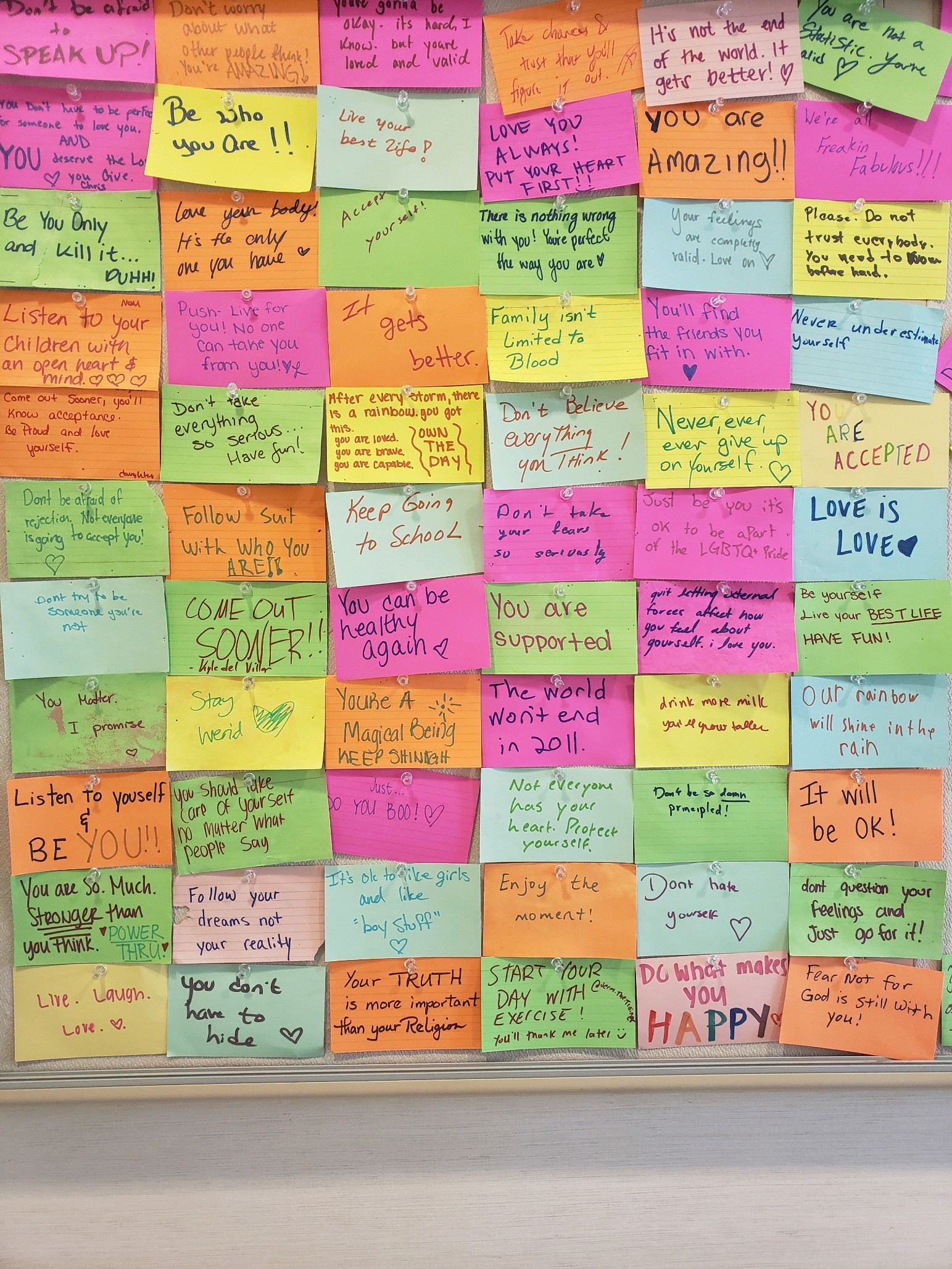
They were asked in the form of a writing prompt: “What advice would you give to your younger self?” Although many older adults participated in the activity, it was surprising to see how many teenagers participated–giving advice to their even younger selves. There was even a heartwarming moment between a mother and daughter when they read each other’s cards, which resulted in tears and embrace.

In the end, our booth echoed with the wisdom from the notes that were hung for others to see.

Of the 360+ notes we received, we began to see themes. Commonalities among the language seemed to center around ‘self’ (i.e., learning about self, and both getting comfortable with and remaining true to self).

Here are some of the comments that stood out, as well as some staff favorites.

  • Stay true to yourself
  • Believe in yourself
  • You will be ok
  • Surround yourself with positive individuals
  • You are accepted
  • Live, love, and laugh often
  • Listen to your kids with an open heart, and an open mind
  • You’re supported
  • Be fearless

Of all the advice given from visitors, it’s clear that everyone’s personal journeys of self-awareness and self-acceptance both start and end with themselves!

Take a look at the pictures and comment below what your favorite or most inspiring advice is. Or you can share with us advice you’d give to your younger self.

Iona’s LGBTQ Program Honored with Mather LifeWays Promising Practices Award

With the launch of several new programs in 2018, Iona continued to expand our programming and outreach to older adults who identify as Lesbian, Gay, Bisexual, Transgender, or Queer (LGBTQ).

After two focus groups and two workshop pilots, we launched “A Roadmap to Aging Well for LGBTQ People over 60.” This full-day workshop brought together LGBTQ older adults to both learn and connect. This workshop was presented with funding from the DC Department of Aging and Community Living and in collaboration with seven local Villages.

In recognition of this work, we’re thrilled to share that Iona received a Mather Lifeways Promising Practices Award.

Mather LifeWays Institute on Aging honors organizations that serve older adults in original and exciting ways. Additionally, in partnership with Whitman-Walker Health, Iona also launched three new peer-led support groups for LGBTQ older adults. “Knowing that LGBTQ older adults face unique challenges, we wanted to create educational programming to specifically address their needs,” says Susan Messina, Iona’s Deputy Director.

Together, these programs have offered a safe space for discussion, resource-sharing, and friendship.

One participant who’s benefited from Iona’s LGBTQ programming is Cedric Burgess. He was among the first participants in our Take Charge/Age Well Academy series for LGBTQ older adults a few years ago.

On the first day, he noticed there were more people than chairs, which, he says “spoke to the growing interest—and need—in the community.” Cedric valued hearing from Iona’s staff and other experts about health care decision-making, living wills, housing options, and ways to remain connected to others. Today, he continues to participate in our LGBTQ programs, and he leads the way as an advocate for others.

Whether he’s volunteering at Iona’s Capital Pride Festival booth, speaking at senior centers as a DC Office on Aging ambassador, participating in a new Silver Circle peer-led  support group, or checking on his Ward 5 neighbors. “I tell it straight,” he says, quoting his favorite Iona button: “Pride No Matter Your Age.”

You can access Mather LifeWays full report here: Revealing Research: 2018 Innovative Research on Aging Award Recipients.

Want to stay connected to our LGBTQ work? Click on the button below for more information about our services.

Iona’s LGBTQ Programming, Services, & Resources

Tips for Making Your Valentine’s Day LGBTQ-Inclusive

Valentine’s Day is just a few weeks away! In past years, Iona’s blog has spotlighted how Valentine’s Day might be different or more challenging for those caring for someone with Alzheimer’s or another form of dementia or memory loss.

This year, we’d like to expand our library and spotlight another community for whom Valentine’s Day can be different or challenging—and some ways that you can make your Valentine’s Day celebrations or traditions a little more inclusive.

Although Valentine’s Day receives lots of media attention, themed products, and events, these often exclude lesbian, gay, bisexual, trans, and queer (LGBTQ) people.

Cute romantic movies or stories shared on social media tend to display only male-female couples. People in same-gender partnerships and marriages may feel invisible during a holiday celebrating love, particularly if they have to hide their relationship from coworkers, family, or neighbors. LGBTQ couples of color receive even less attention in every arena, even media made by or for people of color and LGBTQ people.

For LGBTQ older adults, the holiday may bring unique challenges as well.

Perhaps a couple wants to go on a date but the residential community where they live is not as accepting as they’d like. Or perhaps a gay or bi older adult wants to remember a lost partner, but can’t discuss them with their friends or caregivers due to their gender.

Whether you’re hosting a Valentine’s Day party or event, participating in an exchange at work, or just going about your day like normal, here are some simple things to keep in mind to make Valentine’s Day more inclusive for LGBTQ people.

Tips for Making Valentine’s Day Inclusive to LGBTQ People

1.Be aware of the language you choose.

Think about the terminology you use for couples or romantic situations – does it assume all couples will include a man and a woman, even implicitly? Have you taken into account different terminology you could use, like partner or spouse rather than husband/wife? When you ask people about their plans for the holiday, are you specifying gender in an exclusive way (or expecting the person is even interested in romance)?

2. Similarly, be aware of the imagery you promote.

If you’re buying candy and cards packaged in pink hearts, make sure it’s not emblazoned with pictures of only male/female couples. If you’re sharing cute stories on social media, but they’re all of male/female couples, try searching for stories about same-gender couples as well. Remember not to include only white couples as well—LGBTQ people of color exist too!

3. Remember who might feel especially invisible.

Bisexual and transgender people may be part of male/female relationships, but that doesn’t mean any depiction of a male/female couple automatically includes bisexual and transgender people. Some strategies for explicitly including bisexual and transgender people are:
• Be accurate with your information:
• Don’t imply bisexual people are unfaithful, promiscuous, or indecisive, as these are harmful stereotypes.
• If you’re talking about a transgender person, be sure to use the person’s correct name and pronouns, and don’t refer to them using past names or titles (e.g. “Jamie, formerly Susan…” or “His wife, previously his husband…”).
•  Spotlight the stories of actual bisexual and transgender people!

4. Don’t forget about these things after Valentine’s Day!

When people only remember LGBTQ people during Pride month (June) or during specific holidays or events, it can feel like pandering, or insincere. Instead, you can use Valentine’s Day as an excuse to start being more inclusive, and keep it up all year long.

All of these might seem difficult at first—or you may feel guilty for having overlooked them in the past. But it’s never too late to start reaching out and being more inclusive, and it won’t go unnoticed by those around you.

Regardless of what you’re doing or who you’re spending it with, have a happy, healthy Valentine’s Day!


By Indy Weinstein.

                               
Indy Weinstein is an intern at Iona working to support our Take Charge/Age Well Academy, LGBTQ outreach, and other projects. They graduated from St. Mary’s College of Maryland in 2017 with a BA in History, and are excited to learn about nonprofit management and aging.

6 Reasons You Should Join Silver Circles

I know it can be daunting to think about trying something new. What will it be like? Who will be there?

Let me give you six reasons to join one of Iona and Whitman-Walker Health’s Silver Circles, which are peer-led groups for LGBTQ folks over 60.

1. It’s a way to meet new people!

As we age, our circles can shrink, for a variety of reasons. Joining a Silver Circle will expand your network. AND, we plan some fun social activities that will bring folks from all the different Silver Circles together.

2. The peer support leaders have been trained to create a safe and welcoming space for you.

Trust me when I say they are really eager to have new folks join the conversation!

3. Aging doesn’t have to be a lonely experience.

There are tons of us going through it at the same time.

4. Iona offers a wide range of services that you might want to connect with at some point.

Being in a group makes it easier to find out about them.

5. There’s a lot of laughter, and a lot of important sharing, that takes place in this twice-monthly meetings.

Come find out if it’s right for you. It might just be!

6. These groups are funded by the DC Office on Aging (DCOA).

Let’s show DCOA that there is a demand for LGBTQ-focused funding.

To join a group, contact Michael Mitchell of Whitman-Walker, who does all the intake phone calls. He will help you figure out which of our five groups is best for you. His email is mmitchell@whitman-walker.org and his phone number is 202-939-7646.


By Susan Messina

Susan is Iona’s Deputy Director. She holds three master’s degrees, including two from Bryn Mawr’s Graduate School of Social Work and Social Research. Susan has presented on many topics affecting the LGBTQ communities, including what factors contribute to aging well, aging in place, health advocacy, and more. Susan also manages our Silver Circle program.

Susan Messina on Podcast: Move or Improve? – Challenges of LGBTQ Aging

Iona’s Deputy Director Susan Messina recently spoke with Debbie Miller on her podcast, “Move or Improve: The Baby Boomer’s Guide to Housing Options.” The podcast tackles important issues about housing for the aging population. In their 30-minute episode, entitled “The Rainbow has a Silver Lining: LGBTQ Aging Issues,”Susan and Debbie discuss the specific challenges Lesbian, Gay, Bisexual, Transgender, and Queer (LGBTQ) older adults face as they age, especially when it comes to housing and social isolation. Susan also highlights programming Iona offers, funded by the DC Office on Aging.

You can listen to the episode on Spreaker below, or on iTunes. If you’re unable to listen, or would like to follow along with text, a transcript of the episode is provided below.

Listen to “The Rainbow has a Silver Lining LGBTQ Aging Issues” on Spreaker.

Debbie Miller (DM): It’s a real pleasure for me today to have Susan Messina. She’s the deputy director at Iona Senior Services in Washington, DC, which is a locally based nonprofit. As an out lesbian, she’s secured funding for and co-facilitated LGBTQ aging-related workshops, and serves as a co-chair of the LGBTQ Aging Services Network, as well as many other LGBTQ-related outreach programs, and I’m so pleased to have her today because we’re going to focus on the LGBTQ community and their issues with aging and having a full life and what their problems are that they may have to overcome. So thank you so much for being my guest today, Susan, I really appreciate it.

Susan Messina (SM): I’m delighted to be here, thanks for having me!

DM: Let’s start, because I don’t know how many of our listeners are gay versus straight, let’s define if you would the acronym LGBTQ, what does that acronym stand for?

SM: Sure. LGBTQ stands for Lesbian, Gay, Bisexual, Transgender, and the Q can mean Queer, which is a term that younger people have taken back, used to be a slur, taken back and being used with pride, sometimes it’s also used for questioning, maybe someone who isn’t quite sure of their sexual orientation. So it’s quite an alphabet soup but we try to use it to be very inclusive of everyone’s experience with same-gender attraction.

DM: Interesting. I’m glad you defined that for everyone so we’re trying to educate as well as find out the other issues that people in the LGBTQ community are facing. So could you talk a little bit about what some of the specific challenges are that are faced by LGBTQ older adults? Why are they more likely to be aging alone?

SM: Sure. There’s some new research on this, there’s lots of anecdotal conversation, it’s a rich area that people are very concerned about these days. So based on my knowledge and reading of that I’ll say that some of the issues are childlessness and low marriage rates, so you know, people who are 30, 40, 50, are probably getting married at a much higher rate than someone who is now 75, 80, 90, who really experienced living through times of great oppression here in America, where they could not get married, and certainly having children was very hard. And so many people rely on their children or their partners to deal with aging, obviously, that community is just gonna have less. There’s another issue I’d like to tell you about, which is possible estrangement from family of origin. Many, many of our older LGBTQ community members lived through times where being gay was so wrong and they were literally shunned from their families. Many moved to the coasts or moved to cities, and many of them haven’t had contact with family in decades.

DM: It’s very sad but it’s true.

SM: Exactly. There are other issues; social isolation is one, if you are gay or lesbian you may or may not have made deep friendships; many did, many have had huge, important communities of chosen family, that’s a term that we use. But for other folks, you know, who are more quiet, introverted, or shy, or just didn’t make those friends, it’s not easy to make friends when you get older, it’s not easy to find folks with your same orientation, potentially. And then there’s just the things that happen in life, people get older and their friends move away or they pass away. I would be remiss in not mentioning the HIV and AIDS epidemic which took thousands and thousands of lives, cut them short. I have one client here at Iona who talks all the time about how he lost one hundred friends to the epidemic.

DM: Oh.

SM: Yeah. He’s virtually the only survivor. So he’s made new friends, but he has virtually no friends that he’s known for more than 10 or 15 years.

DM: It’s very sad. And I imagine they face more discrimination with healthcare and caregiver issues, is that true?

SM: Yeah, there’s a huge worry about that. I don’t know if I’ve seen empiric evidence that it happens all the time, I’ve certainly heard anecdotal evidence that it happens, I don’t know if we have the research to back up, but it’s irrelevant whether there’s research to back up, the fear is there and the fear is real, and the fear keeps people from reaching out for the help and services they might need. So we definitely know that people are concerned about access to healthcare, it’s a big issue whether or not they can be out and open about who they are, whether or not they’ll get good quality health care, those issues are compounded for trans individuals whose bodies may not match their presentation and have to deal with doctors who may or may not understand that. That’s a whole other podcast for you, Debbie.

DM: I’m very willing to discuss that because I think it’s important to educate the public about these issues, and there’s so much that happens that it’s very difficult to cover it all in thirty minutes, that’s for sure. But I know you had said that there’s a report that said the three biggest concerns of aging LGBTQ adults are finding adequate support systems and the quality of the long term care facility services, and access to those specific older adult services.

SM: Yeah.

DM: What does Iona Senior Services provide that people would be interested in knowing about and can they find those types of services in other places in the country?

SM: Okay, that’s a multi-part question so come back if I don’t answer it all. I’ll start by just wanting to highlight, absolutely, people are very worried about where they can age if they have to leave their homes, which of course virtually nobody wants to do, but if people do decide they need to move, are they going to move to a facility that is accepting and kind and will they be discriminated against, even if the staff is friendly, will the other residents accept them? Will they have to go back in the closet? That’s a term we use a lot: re-closeting.

DM: I have gay friends who say, well, I really don’t know if I want to go there because, first thing they’ll ask me is how many children do you have and do you have grandchildren, and they don’t relate to that, so it makes it very difficult, it’s a sensitive topic.

SM: That’s exactly right. Even staying in your home, I’ll pause there for a second, even if you want to and can stay in your home and can afford the home health aides you might need, many of the home health aides, certainly where I live in Washington, DC, wonderful, mostly women who are immigrants, many of whom do not come from countries where being LGBTQ is accepted, and in some cases where it’s not even legal. People have deep concerns about bringing people into their home who might not be understanding or accepting of their gay paraphernalia, their rainbow flag, their partner’s photographs, all kinds of things. It’s a huge issue. In terms of finding out whether or not a facility in your area is LGBTQ competent, is that the second half of the question, Debbie?

DM: Yeah, if someone listening today doesn’t live in Washington, DC, because our broadcast does go further out along the east coast and some areas of the west coast, I just wanted to know if you could make a suggestion to them as to how they could locate services in their area. I’m sure they may already know if there are some, but it’d be good to let the word out more.

SM: Yeah, I wish I could just say “go to, you know, www.blank.com and find out the answers.” I have to give a couple of other resources because there is no one place to find out where good LGBTQ competent services are. But one place to start would be with the local area agency on aging. There’s a federally-funded website called the Eldercare Locator, which you may have talked about in other podcasts, so you can google “eldercare locator” or phone it at 1-800-677-1116, that’s 1-800-677-1116, that’s the Eldercare Locator. Whether they have a handle on LGBTQ resources, I do not know, but at the very least you could start with the list of facilities in your area and then start phoning them, and honestly I think some of that due diligence is just calling up and saying, “I am a gay or lesbian person. I am thinking of moving into or buying into whatever your facility is, talk to me about how culturally competent you are.” And if the answer is “uh, I don’t know, what,” that’s a bad answer. And if they have an answer, that’s the beginning of some hope and help on that.

DM: I’m just agreeing with you 100%, I think this is so great.

SM: Good. So another place to look for LGBTQ specific resources is trying the National Resource Center on LGBT Aging, which is run by SAGE, which is a national organization looking at older LGBTQ issues. According to my sources here, it’s not completely comprehensive, but it’s a good starting point. So that’s the National Resource Center on LGBT Aging, there’s no Q in that one. Some LGBTQ community centers or local SAGE chapters also have their own local resource lists, so I would say if anyone is wanting to be a friend or an advocate to the community, a thing to do would be start making some phone calls and doing some googling just in your local area and seeing what you can find. Chances are at least in every major city there’s going to be at least one CCRC or one nursing home, one LTCF that is taking the lead on wanting to reach this community and therefore has done some training and has done some publicity around that.

DM: And if they have friends who have already made the decision to move, for example, into a care facility, the word would spread that way as well, just by personal referral, is that correct?

SM: That’s absolutely right. Word of mouth would be something to really rely on. Because you know, there’s another point I want to make, any organization can slap a rainbow flag on the flyer or their front door. And that does not mean the staff has had any training, or that the residents have had any, not so much training but have the residents understood that they are living in a place that welcomes everybody. So you really want to dig around and ask hard questions. And asking residents who currently live there is probably the best way to get the info.

DM: Yeah, this is very true. Just so that our audience listeners understand, is SAGE an acronym and if so what does it stand for?

SM: I think it was an acronym and I honestly can’t remember what it stands for. SAGE, all caps.

DM: Well, they can google it. I just want to make sure people know how to get the information. But how are these challenges compounded by race and economic situation? Like some people are poor, some people are very wealthy, some people fall in the middle.

SM: Absolutely. Well, on the racial issue, I want to highlight this really good report that AARP put out just this March; it’s called Maintaining Dignity: Understanding and Responding to the Challenges Facing Older LGBT Americans. So that’s AARP, wonderful survey put out by their research shop, asks a whole bunch of questions. But around the black and Latino concerns in particular, it seems that you can’t separate out concern about healthcare discrimination due to their sexual orientation or gender identity from their concerns about discrimination based on their race. It’s a double whammy. So the research says black LGBT adults age 45 and over are equally likely to worry about each of these aspects, both their race and their sexual orientation. Altogether, aging as an LGBT person of color is more likely to carry reasons for concern compared to their white counterparts. So race and ethnicity in America is very complicated and showing up in this study as something that is equally as concerning as sexual orientation and gender expression.

DM: Interesting. Well, is there a variation that exists among lesbians, gay men, bi people, and trans people in terms of their challenges and fears of aging? Does each segment have their own particular concerns?

SM: Yeah, some things I can highlight. It sounds like, again from this research study, that they call the trans community the gender expansive community, right, so folks who don’t fit into a gender binary, that they really do face unique challenges and increased fear of discrimination as they get older. And this also is fascinating—according to this study, while many large cities have gender identity equality laws to help protect people, most transgender people do not live in big cities. So there’s this idea that cities are all liberal and where all the interesting people would go, and in fact our trans friends are around the country and that’s a big rural country too.

DM: Interesting.

SM: This is interesting—one more interesting thing about the differences. Lesbians tend to be living with a partner or married at much higher rates than gay men. So gay men tend to be more or may be more isolated than lesbian women, which is not a complete surprise when you think about how women tend to affiliate and make friendships, and men have more of a challenge with that sometimes.

DM: Interesting. Very much so. Well, what kinds of questions should LGBTQ older adults ask relating to housing, as far as if they have to have a caregiver come in or they’re seeking a retirement community or a LTCF, should they have a list prepared of specific items that they need to have addressed as well as generic questions about it?

SM: Yeah, great question. So I think some of those questions would be, just starting big, “Do you have a non-discrimination statement? Do you literally say that you will serve everybody?” and ask to see it, or it should be in their material. “Has your staff had specific cultural competency training or just even training around LGBTQ issues? Do you have any out members of the administration or other staff? How comfortable do you think your gay and lesbian, bisexual, transgender participants or residents feel here? Do you have current families that I could talk to?” Those are some of the questions I would ask.

DM: I would think that would be a big question, at least that I would have, is being able to talk to others in the community about how they’re treated and how they feel.

SM: That’s right. And also I just want to throw out, I’m sure this would not be a surprise to you or most of your listeners, these issues really affect everyone. There are many, many straight people who have gay parents, who have gay siblings, who have gay children, and they want to know that they would be welcome to sit in meetings and make decisions and visit and all of that. So really, being an LGBTQ inclusive and culturally competent institution is only going to help everybody.

DM: I absolutely agree, but there seems to be a lack in some areas about a feeling of inclusion and welcoming people regardless of their sexuality. But what do you hear specifically in your position at Iona from the LGBT community of seniors about what their needs and concerns are from their standpoint? What issues come up repeatedly that you would like to mention?

SM: Sure, happy to answer that question. We do a lot of work with small groups of LGBTQ older adults, so these questions come up a great deal. One of the top things we hear about is social isolation, the need to meet people, how to connect, how to make friends, how to find romantic partners as well. And as I think I mentioned earlier, a lot of those resources may have dried up—maybe I didn’t mention earlier, it was a conversation I had this weekend with some people—a lot of those resources have dried up, a lot of LGBTQ bars have closed. Whether a bar is a place you want to hang out or not, whether you drink or not, it used to be a gathering place, and there are just fewer of them. Here in DC, we used to have a wonderful older lesbian conference once a year that drew people together to plan it and then host it and have it, and that went by the wayside 15 or so years ago. So finding new friends and connections is hard. I already talked about housing and the challenges of moving into a different place, but a lot of it boils down to “who is going to drive me to my colonoscopy? Who can I trust to be my financial POA? I have no children, and I have no spouse, and my sister lives in California, or my sister lives two towns away but hasn’t spoken to me in 30 years, you know, who’s going to be there for me?”

DM: Yeah. This is very true, and I know that Iona Senior Services’ mission is to help people with the challenges and opportunities of aging, and they’ve been doing that since 1975. But I know some of the programming that you have personally spearheaded at Iona and otherwise for LGBTQ older adults—what kinds of programs do you have and what is that process like, and just chat about things that you are doing. I know you are just a wealth of information and expertise on this topic, and I’d like you to share with the listeners what you have done through Iona.

SM: I’m really proud of what we’ve been able to do in the last couple of years, really very intentionally this past year with a lot of new money. So one thing we did is offer what we call our Take Charge/Age Well workshop for LGBTQ people. It was offered twice. We have a better title in real life, but that’s basically what it was. It was a full-day Saturday, one day in April and one day in May, for 25 LGBTQ folks over 60. We brought them together to begin to think about just what I was talking about before. Who in your network can help you? What do you want to have your aging look like? Where do you want to be living? What are your goals? How can you begin to make that plan? The content was fantastic. It got people thinking about planning for their aging, but equally important, it brought 25 people who share a life experience together. There was so much joy and laughter and connection in those groups. It was really, really wonderful.

DM: And there, with those people, they immediately have a friendship with them, which is wonderful.

SM: That’s exactly right. And at least one gentleman emailed me the next day and said, “Could you give me the email for that guy with I had lunch with?”, and I got permission from the guy he had lunch with and made that connection, so who knows if there was a romance there or not. And then we got funding from the DC Office on Aging, which is our local government aging agency, to offer support groups for LGBTQ older adults over 60. So we’re running 5 of them right now, and they just started. We’ve got a couple of people in each group, and I attended one of them. People are so excited to have a twice a month opportunity to come and sit in a peer support group model. This is not a therapy group, but it’s a little bit different from a social group. It’s an intentional conversation, and it’s facilitated by a trained peer facilitator. And there’s a lot of need for that, to meet that need for decreasing social isolation.

DM: That’s absolutely wonderful. That’s great. How has the older adult community in DC responded to LGBTQ older adult programming? What needs still exist? What do you want to still accomplish?

SM: Well, one of the big issues is how do we reach everybody. There’s no one mailing list. People don’t walk around colored purple. So we have to find them. A lot of it is word of mouth. A lot of it is putting some ads in our local gay press, but not everyone reads that, so it’s really reaching people, and that’s our challenge.

DM: Excellent. I think what you’re doing is absolutely fabulous. I’m hoping that this program will help spread the word about it, and get more conversation out in the open. How hungry are LGBTQ older adults for the community and connection. It seems to me that what you’re doing is really providing a wonderful service by having the twice a month sessions and other things. But how can this be measured as far as the competency in an organization or company or service, surface level and structural, and deeper than that even?

SM: Well, I think to answer the question of how it’s being received: I think there are two broad categories of folks. This would probably be true of almost any service you’re offering. There are the people who really need it, and then there are people who don’t need it. So I don’t want to overstate the case and suggest that every older LGBTQ person in America or DC is, you know, alone and childless and sitting in their room not knowing what to do—many, many, many of my friends have rich and full lives, deeply connected in many communities, professional, face communities, recreational opportunities, and they don’t need a support group, because they actually have enough friends and connections and things to do. And then there are the people who for whatever reasons those connections have frayed, or were never built. And that’s where I think a social service agency like Iona can come in. We have a wonderful gay and lesbian running group in DC—most big cities do—called the Front Runners, and the Front Runners, they run, it’s what they do, and it’s a multigenerational group, and we have people over 60 there, and their needs to have a connection and run are there. Iona can help those who just need a little bit of extra help.

DM: Well, you have been absolutely fabulous about this whole thing. Is there anything else that we can add to help our audience find out more information or just what Iona’s services provide that people would be interested in? Because I know it’s not just for the LGBTQ community but other issues that come up just with the challenges of aging, and we’re going to have another guest come on from Iona who’s going to talk about aging solo, and that’s a universal topic, actually, though.

SM: That’s right. One of the great things about Iona is that we have a helpline, which is answered Monday through Friday, 9-5, by several very well trained social workers. So I’m going to give that number a couple times and then explain what it is again. The helpline is 202-895-9448. That’s Iona’s Helpline. Anyone anywhere in the country can call that number with a question about aging. Now, if you’re local to DC, obviously, we know a billion resources and many of them might be in Iona’s building. But if you’re calling from Colorado because you’ve got a mother who lives in Louisiana and you don’t know how to find her help, we can at least get the first step of where to call in Louisiana. I urge anyone to make that call if they have any questions, really about anything related to aging, we can try to help.

DM: Now, one last thing, Susan, I don’t want to keep you any longer, but you have been a joy to have on the program. Could you provide an email or contact information for people who want to talk to you directly?

SM: Certainly. So my name is Susan Messina, so my email’s pretty simple, it’s smessina@iona.org.

DM: Wonderful. Well, I do appreciate so much your joining me today, and we’ll have to have you back, and if you think of some other topic that might be important for this podcast, I hope you’ll contact me, because I think our listeners are very ready to hear what you have to say and you are such a treasure trove of information it’s wonderful to have you.

SM: It was wonderful to be here, Debbie, I wish you a good day!

DM: Thank you, Susan, you too.

New Peer-Led Support Groups for LGBTQ+ Older Adults


This dynamic group of peer facilitators will be leading support groups all across DC for older adults who identify as LGBTQ+.

Iona Senior Services and Whitman-Walker Health are excited to announce the start of Silver Circles: peer-led support groups for adults who 60+ and identify as LGBTQ+.

Connect with other LGBTQ+ peers, create a safe space to talk about issues that impact you, and build support to help navigate challenges! Each group is co-facilitated by peers and meets for one hour twice a month.

Silver Circles are held at the following locations:

Iona Senior Services
4125 Albemarle St., NW
Washington, DC 20016

Whitman Walker-Health
Max Robinson Center
2301 Martin Luther King Jr. Ave., SE
Washington, DC 20020

Whitman-Walker Health
1377 R St., NW
Washington, DC 20005

How to register:

To join a Silver Circle, contact Michael Mitchell at Whitman-Walker Health at either mmitchell@whitman-walker.org or 202-939-7646. He will conduct a short intake and answer your questions about meeting times and anything else you’d like to know. DC and non-DC residents alike are encouraged to join.

Funding for Silver Circles is provided by the DC Department of Aging and Community Living.

Celebrate LGBTQ Pride Month 2018

June is Pride Month across the United States, when communities, organizations, and individuals celebrate lesbian, gay, bisexual, transgender, queer (LGBTQ) people and culture.

Iona is proud to be committed to outreach to older members of the LGBTQ community.

Although LGBTQ older adults face the same challenges of aging as everyone else, these challenges are often compounded by issues specific to their LGBTQ identities. Due to lifelong challenges facing legal and social discrimination, many LGBTQ older adults experience economic insecurity, lack of housing, lack of healthcare, lack of legal family ties and informal support networks, social isolation, and varied other difficulties.

Some older LGBTQ adults even feel the pressure to “re-closet”— meaning they deny their true sexual orientation or gender identity for fear that a senior services organization, nursing home, or home health aide might treat them poorly.

Iona doesn’t want anyone to have to live in that fear or to go back in the closet. Here are some of the ways we continue to connect and support LGBTQ older adults:

  • Our website has information geared specifically to this population.
  • A colorful “Pride No Matter Your Age” banner hangs prominently in our lobby to visually demonstrate we are a safe space.
  • Printed materials have photos that include same-sex couples, and we’ve included stories about LGBTQ people in our communications.
  • Staff has gone through cultural competency training.
  • We’ve partnered with other community organizations to offer the first ever Silver Pride event in the District.
  • We’ve organized film screenings and other social events for LGBTQ older adults to connect with peers.

We’ve also been at the Capital Pride Festival for the past four years. We always have an interactive, colorful, and fun booth that attracts lots of attention. While the Pride crowd tends to be younger, we still have people in their 50s, 60s, and 70s stopping by.

This year, we asked people to leave advice for their younger selves and nearly 400 people participated. Read some of our favorite answers here.

Iona’s offered special Take Charge/Age Well Academy™ classes for people who identify as LGBTQ, too including popular topics:

  • A Roadmap to Aging for LGBTQ Older Adults
  • LGBTQ Older Adults: Understanding Your Public Benefits
  • LGBTQ Women Take Charge of Your Aging
  • Estate Planning for the LGBTQ Community

We plan to offer these classes, and others, again in the future.

If you’d like to receive information about LGBTQ-related programming here at Iona, please send an email to Susan Messina at smessina@iona.org.

Happy Pride!

Feedback for Iona