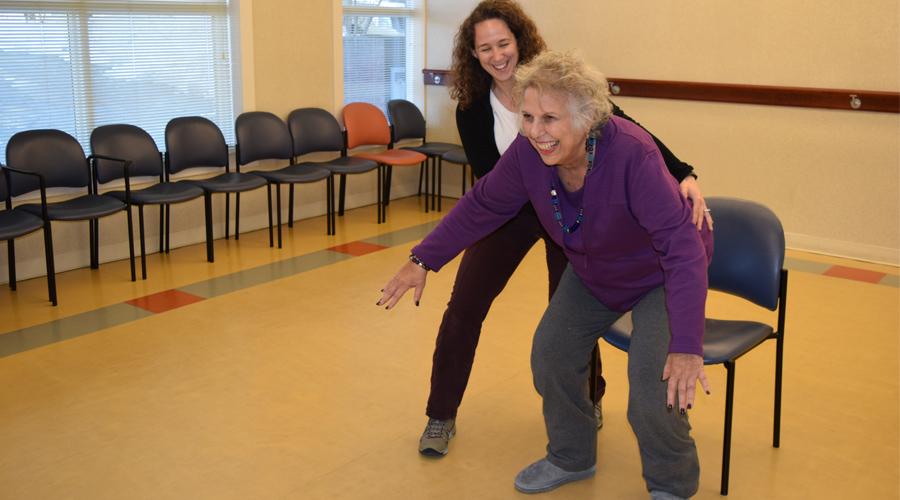
National Falls Prevention Awareness Day comes on the first day of fall every year. For older adults especially, it’s a pressing issue.
Falls threaten your safety and independence. And, even if you never experience a fall, oftentimes even the fear of falling can be limiting.
For instance, some older adults who fear falling will avoid activities or social engagements outside of the home. This inadvertently can lead to isolation, loneliness, depression, or further physical decline. However, falling is NOT an inevitable result of aging. Through regular exercise, you can improve your balance, flexibility, and stamina – all needed for fall prevention.
Making small lifestyle changes can also have a positive effect (like keeping your home free of clutter, regularly visiting your doctor, or avoiding broken sidewalks when walking outside). Additionally, overcoming your fear of falling is vital.
What to do if you fall
A sudden fall can be upsetting. If you do fall, first take a few moments to relax and recover from the shock.
You can also use this time to evaluate whether you’re badly hurt. If hurt, you should phone 911 or have a loved one do so. If you or a loved one lives alone, you might consider purchasing an emergency response system, which lets you push a button on a special necklace or bracelet to contact emergency services.
If you think you can get up safely without help, do so slowly (getting up too quickly or in the wrong way might cause injury).
The Wisconsin Institute of Aging suggests to first roll on your side. Then, use one elbow to push up into a crawl position (hands and knees). Wait a moment to assure your balance or catch a breath. Next, crawl to a chair or table. You can then use the chair or table to pull yourself to a standing or seated position. A printable PDF with illustrations on how to get up from a fall is available here.
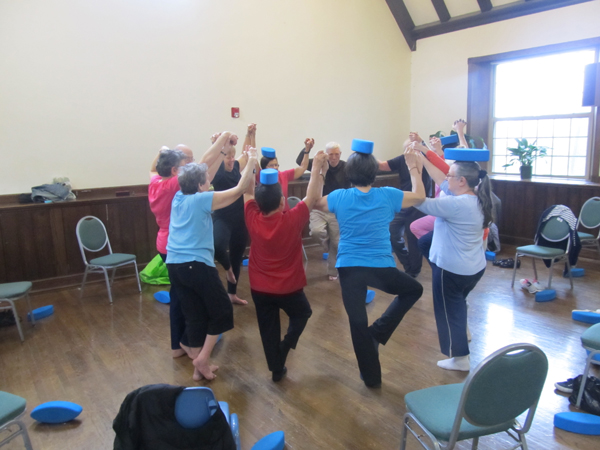
Although falls are dangerous, they are not certain. All of us can take steps to reduce our risk of falling, or reduce the risk for a loved one. To help you get started, visit Iona for one of our excellent group exercise classes, including yoga, Tai Chi, and Qi Gong. Learn more here.
This week marks the 6th annual Malnutrition Awareness Week. The week serves as a way to draw attention to malnutrition for both health professionals and the public.
Though Malnutrition Awareness Week addresses many different populations and demographics, for me it is incredibly important to highlight senior malnutrition, as it is often a hidden reality and goes unnoticed.
For instance, did you know that nearly one of every two older Americans is at risk of malnutrition? And disease-associated malnutrition in older adults costs, both in health care settings and in the community, an estimated $51.3 billion annually.
The statistics on senior hunger and malnutrition are shocking and unacceptable.
In fact, between 2001 and 2015, the proportion of older adults facing hunger doubled. And while senior hunger plateaued in recent years, 14.7% of seniors nationwide face the threat of hunger. In Washington, DC, that statistic rises to a dismal 18%. Nearly one in five DC seniors lacks sufficient access to enough food to eat to maintain not only their health and functioning, but also their dignity and quality of life. DC ranks 15th overall in terms of state-level estimates of the threat of senior hunger in 2015.
Here at Iona, the “hidden hungry” are a reality (though not so “hidden”to us). They are some of our clients — like the 84-year-old man with lung cancer who spent his time alone in a hot, rundown house. Or an 84-year-old woman (who weighed just 82 lbs.) with severe lung disease. She lived with her husband, who has dementia. It’s the 90-year-old man, referred to Iona by the manager of his apartment building. He lost 25 lbs. over a two month period and sat in the lobby all day, saying he didn’t want to die alone in his apartment.
Senior malnutrition is complex, and is affected by a number of issues such as poor appetite, unintentional weight loss, frailty syndrome, decreased mobility, lack of transportation, acute and chronic diseases or conditions, psychosocial and mental health issues, isolation, poor oral health, cognitive decline or reduced capacity, and food insecurity. Access, or lack thereof, is a key concept when you consider causes of senior hunger.
Simply put, many older adults lack the ability to plan, procure, prepare, and consume healthful meals and snacks.
So, what can you do to help yourself or others?
Ask your doctor or a registered dietitian nutritionist (RDN) for help if you or a loved one have any unplanned weight loss, loss of appetite, feel weak or tired, are not able to eat or only eat small amounts and lack access to sufficient food.
Here in DC, the DC Office on Aging has community dining sites and home delivered meals and other food and nutrition programs and services for seniors, which you can find here.
Additionally, the Capital Area Food Bank website has a Get Help link to an extensive database of resources. Just plug in a zip code and select the kind of food and other resources needed to see what’s available near you or elsewhere.
You can also check out the infographics on the National Council on Aging website to increase your awareness and learn more about senior hunger and malnutrition and why it’s important not just to individuals, but to our communities:
Finally, in honor of Malnutrition Awareness Week, you might also consider making a donation to Iona, so that we can continue to do our work and expand our services to hungry, malnourished seniors in our community.
By Rose Clifford, RDN, MBA
Rose Clifford, RDN, MBA has practiced as a registered dietitian nutritionist in the Washington, DC area for over 30 years. Her current primary work as the Nutrition Program Manager for Iona Senior Services focuses on helping older adults maximize their nutritional health so they can live active, full lives in their own homes. Rose is an active member of the DC Office on Aging Nutrition Task Force and is FY17 co-chair of the Food & Nutrition sub-committee of the DC Senior Advisory Coalition.
By now, you’ve likely heard about the Equifax data breach, and how it might potentially harm you or a loved one. What can you do to protect yourself or an older family member?
First, the Federal Trade Commission (FTC) recommends that individuals monitor their current credit card and bank accounts for unauthorized charges, and file tax returns early.
Any unauthorized changes to your credit or bank accounts could indicate that your identity has been stolen. Other warning signs of identity theft, according to the FTC, include unauthorized bank withdrawals, your bills no longer sent to your address, or businesses no longer accepting your checks.
You may also consider reviewing these other resources on what the government and others are saying about how you can protect yourself.
1. According to the FTC, and others, Equifax has set up a website, where you can check if you were one of the 143 million Americans, whose personal data was compromised. On the website, you can also sign up for free credit-monitoring by Equifax. Visit the website here.
a. However, the Chicago Tribune reports that users have entered “fake names” and fake social security numbers, and still have gotten a response from the website.
b. Also, initially it was reported that when people signed up at the Equifax site, they automatically waived their right to sue Equifax. According to Time Magazine, Equifax has since retracted on that matter.
a. A “Fraud Alert,” according to the CFPB, will require creditors and credit card companies to take extra precautions “to verify your identity” before they can open a new credit card/account for you or someone pretending to be you. To open a Fraud Alert, individuals need only contact one of the three major credit bureaus; the credit bureau contacted is required to notify the other two. Fraud alerts are good for 90 days, but can be extended.
b. A “Credit Freeze,” according to the CFPB, locks your credit report so that creditors are unable to view it, which makes it unlikely that a creditor would be willing to open a new account in your name. A Credit Freeze, the FTC reports, lasts until you remove it. To initiate a Credit Freeze, individuals must contact all three credit bureaus and pay the required fee. Equifax, however, has waived its fees, according to the New York Times. One thing to be aware of with a Credit Freeze is that individuals must remember a PIN number, assigned to them by each credit bureau, in order to lift the Freeze.
3. The FTC also recommends that individuals continue to monitor their credit on their own by annually accessing their own credit report for free by visiting annualcreditreport.com. The federal CFPB website includes information about private pay credit- and identity monitoring services.
Leland Kiang, LICSW is manager of Iona’s Information & Referral Helpline, whose staff answers questions about senior services throughout the DC metro area. Leland also has written articles for BIFOCAL, Unite Virginia, and the National Resource Center on LGBT Aging.
According to happiness expert Gretchen Rubin, September is the new January. She writes, “September is the other January — a clean slate, a fresh start, a chance to use new pencils, fresh notebooks, and begin again.”
Maybe it’s the change of season. Or, maybe it’s because you’re getting back into a routine after a summer vacation. But, either way, there’s just something about September – it’s a great time to set new goals and get organized. And that’s true for your aging plan too.
This September, I encourage you to take advantage of this fresh start in the year, and take a moment to reflect on where you are in planning for your successful aging and what you need to do next.
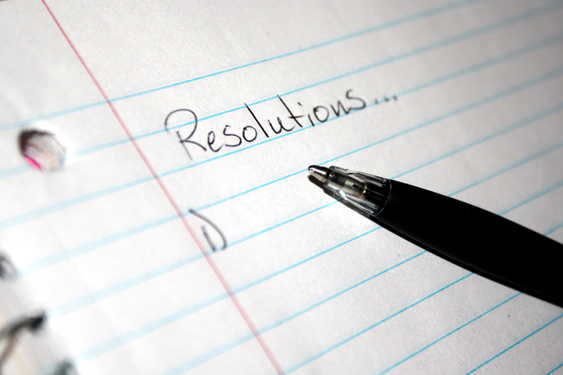
To get you started, here are some successful aging resolutions:
1. Get your key legal documents in place or review what you already have
5. Meet with a financial planner or care manager for a consultation
Of course, making resolutions is challenging enough, and keeping them is even harder! But, Iona can help.
This September, Iona’s Take Charge/Age Well Academy is offering our popular workshop series Take Charge of Your Aging 101. The six-week series covers the questions and challenges you should consider while planning for your later years. You’ll get tools, strategies, and support on:
What’s your September successful aging resolution? Let us know in the comments!
By Deb Rubenstein, MSW, LICSW
Deb Rubenstein, MSW, LICSW has been on staff at Iona for over 20 years. She has worked as a care manager, psychotherapist and support group facilitator, and has served as Director of Iona’s Consultation, Care Management and Counseling Services since 2005. In her current role, she oversees a staff of social workers and nurses who provide direct support to older adults and their families. Deb also leads workshops in a variety of settings, including workplaces, for the public, and professionals on a wide range of topics from “How to Help an Older Adult Who Doesn’t Want Your Help” to “Legal and Financial Planning for Retirees and Caregivers.”
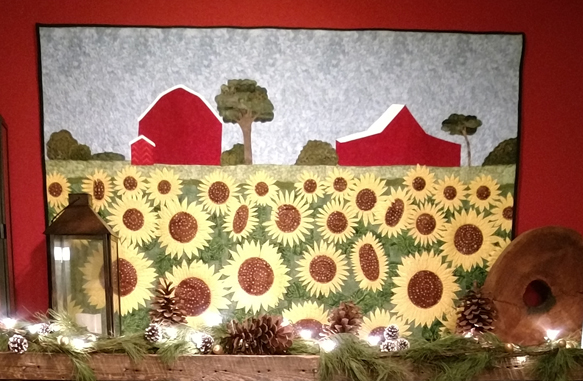
Like her grandmother, Executive Director Sally White is a passionate quilter.
I have always treasured the ties to my past, perhaps because I am an only child with a small extended family.
I never knew my Father’s parents. My Grandfather died before I was born and my Grandmother when I was two. My parents took me to Kansas before she died so she could meet me. Unfortunately, I was too young to remember her.
My father tells me many stories about her. The one I like the most is how she remembered seeing her first oil lamp as a child. “Arthur,” she told my father quietly, intensely, “it was the most beautiful thing I had ever seen.” My own grandmother, only two generations back, lived long before electricity was brought to Clay Center, Kansas. It’s still hard for me, in my 36th year in 1995, to believe.
When my Aunt went into a nursing home many years later, long after my grandmother died, a box arrived for me in the mail.
In it were four finished quilts, all crafted by my grandmother years earlier. One was a double wedding ring in soft pastels with a curved border of pink following the rings. The batting was so flattened with use and age that it almost appeared not to have any. The second was a red, white, and blue large star pattern made from beautiful small print fabrics. In contrast to the wedding ring quilt, this one appeared like new with fluffy batting and no signs of wear. A third, made up of flower baskets with a lavender background included such beautiful, bright fabrics I realized then where my father, a lover of azaleas of all colors, got his love of color.
As long as I can remember my father has filled my world with flowers. The woods around the house where I grew up are filled with thousands of azaleas and hundreds of daffodils. We had a contest every spring to see who could spot the first blooming daffodil and each year he planted a pink dogwood for me on my birthday. With the impatience of a child, I could not comprehend how he could put so much effort into taking cuttings from azaleas which would take so many years to become mature plants. Today, walking down an alley of azaleas started from those cuttings and now fifteen feet high, I marvel at their beauty and at his vision.
My father had painted his world with azaleas; his mother painted hers with quilts.
In the bottom of the larger box sent from Kansas was a smaller one. QUILT TOPS it said in red magic marker. In it were ten quilt tops in various stages of completion, some complete tops, several with a few blocks to be attached and one a pile of squares.
Small pieces of newspaper from the Kansas City Star, 1935, proved to be the pattern for a nearly completed quilt top of large bright stars. There were also scraps of fabrics from several of the quilts and a very large pieced green fabric. It looked faded and the green color was uneven. The fabric was thin and soft, almost flimsy to me. Opening it up, I realized that it was intended to be the backing for a quilt. It was pieced together sugar sacks, stamped “Fine Granulated Table and Preserving White Satin Sugar” from the Amalgamated Sugar Company in Ogden, Utah.
I sat with the box for hours, pulling out each top, marveling at the handiwork, and thinking about my grandmother.
I wondered whether the dresses in the Sunbonnet Sue quilt tops (all three of them!) were from her dresses, and were the bolder fabrics in the pinwheel top from my grandfather’s shirts? I knew a lot more about her from that box: I knew that she was patient and skilled and creative; I knew that she had a love of color and could match most any fabric. And most of all, I believe, she had faith that in doing things you liked to do, it would all work out in the end. I was certain then where my father got that from too.
“The world is your oyster,” she used to tell my father. “You can do anything you want to do.” She meant it…and he did it. The only one in his family to go to college, my father was so sure of what he wanted to do that when he got to Washburn College in Topeka, Kansas, he went straight to the Dean of the law school. He knew he wanted to be a lawyer, he said, so couldn’t he just skip college and go straight to law school?
My grandmother herself didn’t have an easy life. She was the oldest girl of fifteen children, born on the Kansas prairie. She raised her own children through droughts and floods, fires and tornadoes, the dust bowl and depression. She lost a young son when a doctor gave him the wrong drops for an earache — a doctor who was then run out of town.
She was terrified of twisters, because of the deaths she had seen them cause. She always made her family move down into the well-stocked cellar to wait out any storm. As a boy, my father claims he was more terrified of the cellar than the storm. Apparently my grandfather’s bottles of home brewed beer had a tendency to explode when there was too much movement in the cellar.
And yet, through it all, she had hope, she had strength. What I marveled at as I looked through the quilt box, remembering my father’s stories, was her obvious need to be creative despite the day-to-day hardships, her appreciation for beauty, and her ability to make beautiful things out of what many others would consider to be discards.
What I wondered about as I looked through the box was why so many unfinished tops, and were there more quilts she made and gave away? I got a partial answer to the first question years later talking to one of my father’s relatives.
“She quilted all the time when she was older and the kids were gone,” she said. “She had all of us saving fabric scraps for her for years.”
When I asked why there were so many tops unfinished, she explained that my grandparents moved into a smaller house and there wasn’t room to set up a frame. She liked piecing the tops, so she just kept working on them.
What I didn’t ask, but have thought about a lot in the ten years since the quilt box arrived, was how she could keep creating these beautiful quilt tops and fold them up and put them away. She must not have expected to finish them herself — she was getting older and wasn’t likely to move to a house any bigger than the one they were in.
None of her children did any quilting. Her one daughter developed a love for embroidery and crochet. Her two grandsons showed no interest and she had no granddaughters before I came along, and I was late in the picture.
So now I ask myself as I begin to work on finishing the seventh quilt, when she was picking out the patterns or patiently piecing a block, did she think a grandchild or great grandchild of hers would someday pick up where she left off? Somehow now, I know she did.
I know she had that kind of hope and faith in the future. She couldn’t know how or when; but it has happened.
That quilt box has changed my life, and given me a grandmother I never knew. And I thank her, with all my heart.
By Sally S. White
Sally joined Iona as an intake specialist in 1986. Since that time, she has worn many hats including deputy director of programs and services, director of Iona’s adult day health center, director of quality management and — since 2009 — executive director. With a strong commitment to advocacy and improving the quality of life for all older residents of the District and beyond, Sally is instrumental in the leadership of the city-wide DC Senior Advisory Coalition, which she co-chairs, and the DC Coalition on Long Term Care.
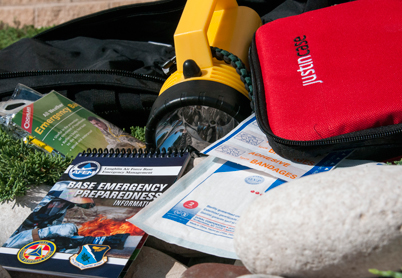
By now you’ve seen photos of the devastation in Houston caused by Hurricane Harvey. And you may now be reading about emergency preparations underway in Florida in advance of Hurricane Irma. Perhaps you wonder what you might do, or how a loved one might cope, were an emergency to occur here.
Even here at Iona, we have our own Emergency Preparedness Plan in case there is ever an emergency at our site or in the community. And we want to make sure you are prepared too.
To honor this month, we’d like to encourage you to create your own emergency plan for you or a loved one. Take a look at these free resources to help you get started.
Do you know of other helpful resources to help you prepare for an emergency? Let us know in the comments.
By Leland Kiang, LICSW
Leland Kiang, LICSW is manager of Iona’s Information & Referral Help Line, whose staff answers questions about senior services throughout the DC metro area. Leland also has written articles for BIFOCAL, Unite Virginia, and the National Resource Center on LGBT Aging.
“Age Well. Live Well.” That’s our tagline here at Iona. It refers to our belief in successful and healthy aging — that the negative portrayals we’ve all seen of frail, sick, or confused older adults does not have to be a reality! And, in fact, there are plenty of positive aspects of growing older.
But how do you “age well, live well?” Well, sometimes all it takes is a little planning. And you can start with Iona’s Healthy Aging Toolkit.
Iona’s five steps (and accompanying tools) to age well and live well
1. See Your Doctor
Seeing your doctor may be one of the most important things you can do to stay healthy or get healthy. Did you know many qualities often mistakenly associated with normal aging are in fact due to treatable medical conditions? These include frailty, fatigue, confusion, and incontinence. Your doctor can help you develop a therapy plan. Your doctor also can help you avoid future disease. One of the simplest ways to protect yourself from disease is to get a vaccination. A flu vaccination, for example, can reduce your risk of developing bronchitis or pneumonia. The National Institutes of Health (NIH) recommend older adults receive annual flu vaccinations, as well as routine vaccinations for tetanus, shingles, TDAP, and pneumococcal. NIH also recommends women age 50+ receive health screenings for certain diseases such as breast cancer, cervical cancer, osteoporosis, and diabetes. For men age 50+, NIH recommends health screenings for high blood pressure, colon cancer, and diabetes among others.
Playing isn’t just for children. Research suggests engagement in pleasurable activities may lengthen your life, improve your memory, and protect you from depression. The type of activity you do does not matter as much as how much you enjoy it, and how much of a sense of purpose you derive from it. Senior recreation today bears little resemblance to the bingo and shuffleboard games of previous generations. Today, senior centers and other organizations offer elder-friendly opportunities for fitness, travel, music, academic learning, volunteering, and creative aging to name a few. Here at Iona, we offer personal growth education, arts, exercise, and volunteering. If you live locally, you can find other recreation listings in our free Resource Guide, which also describes other elder services throughout the DC metro area. If you live outside of DC, consider clicking on the activity-specific links above, or contact the Eldercare Locator to learn more about elder services in your area.
At the end of the day, aging should be on your terms. At Iona, we can help you make a plan, get fit, learn to eat healthy, play, or connect to other services. We hope this toolkit inspires you to make your own plan to age well and live well.