
From Iona House to Today

Thirty years. Thirty years. Thirty years? No matter how I say it, to myself or to others, it seems incredible to me that I’ve been working at Iona for thirty years. I really don’t know where the time went. It makes me afraid to blink.
Sally S. White has been on Iona's staff since 1986.
Sally S. White has been on Iona’s staff since 1986.

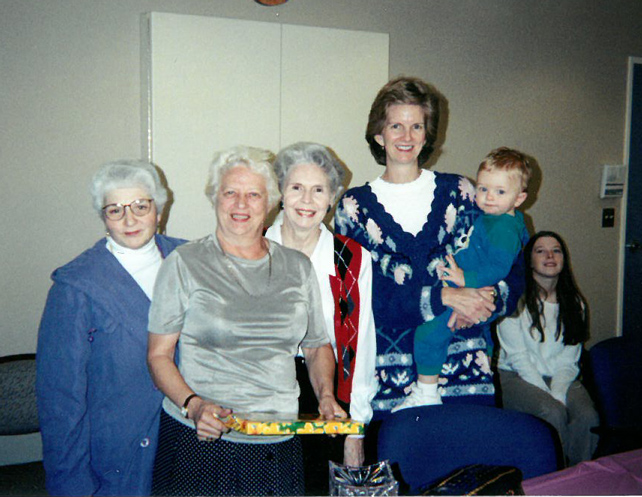
When I first came to Iona, my office was in a converted bathroom in the former parish house of St. Columba’s Episcopal Church. There was a wooden platform covering the tile floor. The sink and toilet and showerhead had been removed, and I had a working window looking out towards the church. The desk fit perfectly into the shower stall, my clock fit in the soap dish, my bulletin board hung from the towel rack, and I felt so lucky being at Iona that I didn’t mind at all (and we had another staff member working out of a closet, which wasn’t as nice as my converted bathroom). We were called Iona House, which was a bit problematic. People either thought they could move in with us (we’ve never been a residential facility) or that “I own a house.” “Oh,” a woman said to me one time when I said the name, “You live in the neighborhood.”

So what’s different and what has stayed the same in my thirty years?

The commitment of the staff to provide the best care, support, and opportunities to older adults and family caregivers has not changed. The belief that all people have strengths and that we should build on those strengths is and always has been central to our core. The understanding that good people who had good jobs can end up in dire situations because of rising expenses vs. fixed incomes is still a given. And we continue to be a “lead agency” through our very important partnership with the DC Office on Aging, serving as the anchor organization for the Office on Aging supported services in Ward 3 and parts of 2 and 4.

And what has changed?

Outside resources are often scarce, such as funds to provide emergency rental assistance for someone at risk of eviction; and the process of enrolling in public benefits such as Medicaid for our most low income clients is much more complicated — just to name a few.

But, there are good changes too. First, Iona has become more nimble, reaching more broadly into the community with our services, and better responding to changes in the ways people want to age and the needs they are experiencing by creating new programs. Just a few years ago, we launched our popular Take Charge/Age Well Academy for Baby Boomers, and we continue to expand our consultation offerings for adult children seeking guidance as they try to help aging parents and for older adults themselves who want to better prepare for their future. And I feel too that the world is catching up to Iona. For so many years it seemed like a struggle to get people to understand our services and their importance, but now I feel more energy and urgency around services for and needs of older adults and family caregivers.

The biggest changes in these past thirty years, however, might be my own! I am aging in place at Iona — as my colleagues don’t hesitate to remind me. I feel very certain that my path with Iona has been the right one for me, and hopefully for Iona. It may sound like a boring path to many of you out there, and there certainly have been ups and downs along the way, but it has been exciting and interesting and at the end of every day, I get to go home knowing that the staff and volunteers at Iona have done good work, that they brought relief to a stressed out caregiver, delivered a meal to a hungry, isolated older adult, worked on an art project with a person with dementia and much, much more. I can’t imagine wanting more than that.

By Sally S. White

Sally joined Iona as an intake specialist in 1986. Since that time, she has worn many hats including deputy director of programs and services, director of Iona’s adult day health center, director of quality management and — since 2009 — executive director.  With a strong commitment to advocacy and improving the quality of life for all older residents of the District and beyond, Sally is instrumental in the leadership of the city-wide DC Senior Advisory Coalition, which she co-chairs, and the DC Coalition on Long Term Care. 

Oral History Project: Tell Your Story

Everyone has a story (or two!) to tell. Now is the time to tell yours.

oral-history-word-cloudIona Senior Services, in partnership with oral historian Rose Levine, is offering you the chance to transform some of the most memorable events in your life into print, to be long cherished by your friends, children, grandchildren, and generations to come.


“My father has enjoyed the experience immensely,” one customer wrote. “It gave him a chance to look back on his life and recall all his rich blessings.”

You can enjoy a similar experience and help Iona at the same time! The cost of the oral history package is $499* and if you mention Iona when you sign up, they will receive a donation of $49.

The oral history package includes:

  • A half-hour telephone pre-interview to learn a little about your life and what you would like to focus on in your interview.
  • A two-hour in-person taped interview.
  • Transcription and copy editing of the interview, returned to you for your approval.

Once the oral history is approved by you, a variety of printing options are available at an additional charge.

For more information, please contact Rose Levine at jay3026@msn.com or 202-363-3502.

* $200 is due at sign up and $299 due upon completion.

Home for the Holidays

getting-organizedThe holiday season is in full swing. For many, that means visiting with family and friends, enjoying home-cooked meals, or reveling in much-needed peace and quiet. However, if you’re traveling back home for the holidays (and visiting older relatives), the season might also bring-up some anxieties about checking in and ensuring they are aging safely.

Fortunately, a visit home doesn’t need to be a source of stress. Instead, think of it as a chance to organize important documents and setup your loved one’s space to make it easier to locate personal items. And remember: your presence shouldn’t be one where your parents or older relatives feel like everything is being changed, but instead should emphasize how these small steps can help them be prepared, and continue to live independently.

Here are simple tips to help get you started this holiday season for ensuring your loved one is organized for the New Year.

Medications

It can be very challenging to manage multiple medications that come with specific instructions. Here are some tips to ensure proper medication usage and storage:

  1. Have the physician print out a list of medications with clear, bolded instructions. By doing this, it minimizes or prevents any confusion around what time to consume the medication, along with any other restrictions. Once the list has been created, keep it in a visible place that is easily accessible (like on the refrigerator) or store inside of a folder.
  2. For easy access, medications should be stored in a clear container or box that is labeled “Medications,” unless the medication needs to be refrigerated or has other special storage instructions. By storing medications in a labeled container or box, you can prevent medications from being lost and cut down on the amount of time spent searching for medication bottles. As a rule of thumb, it’s always best to have a designated storage place for every item in the home, even the smallest items.

Papers

Many older adults have an abundance of paperwork — ranging from medical to personal documents. Paper clutter can become very overwhelming if it’s not managed quickly and efficiently. That’s why it is important to file these documents properly, so that they’re easy to retrieve when needed. I recommend using filing systems that will effectively organize documents and make it easy to retrieve when necessary.

  • File sorters that hang on the wall make it easy for papers to be filed and retrieved because they’re stored at eye-level. Each file sorter should be labeled, which makes it easy to identify which documents are bills, medical-related or “follow-up” paperwork.
  • Desktop sorters can be stored on a desk or table. Like the file sorters, the sections of the desktop sorters can be labeled to help you identify documents much easier.

Ultimately, the goal is to eliminate clutter, but also make it easier for you to find and sift through documents when you need them.

Hooks

I recommend maximizing vertical storage space within a home by utilizing hooks and shelving units. As many older adults are prone to falls, making sure walkways are clear can reduce or even prevent unwanted accidents. Installing shelves is one great way to move décor pieces off of the ground and place them up on display instead.

Additionally, it’s also helpful to place hooks in close proximity to the front door. These hooks can help create a habit to place keys there after entering the home, and serve as a reminder to grab the keys before leaving the home. The hook should be large enough to hold keys to the home, car, and mailbox. There are great removable hooks that do not damage the wall, as well as decorative hooks on the market.

While these tips may be small, they can have a large impact in your loved one’s home by providing a sense of order and system of organization (not to mention, ensure they can maintain their independence!) Additionally, as a family member, helping to implement these tips will give you peace of mind that your older relative is safe in their home.

Good luck and happy organizing!

By Jakia Muhammad

Jakia Muhammad is Iona’s Home Delivered Meals Coordinator. She also has a passion for and love of all things organization and systems. 

Don’t Play the Numbers with the Flu

It's not too late to get a flu shot!

flu-shotRemember when you were in school, and scoring 90% meant earning an “A.” Well, 90% is not a good number when it comes to older adults with the flu. That’s because 70% to 90% of flu-related deaths occur among elders age 65+. For older adults with dementia, their risks may be even higher.

One reason is because normal age-related changes to the body’s immune system makes older adults more vulnerable to complications. These complications can include bronchitis, pneumonia, and heart attacks. Other groups at high risk of developing flu-related complications are people with heart disease, diabetes, cancer, and HIV.

But the numbers are not all bad. Research shows that flu shots, or flu vaccinations, reduce infection rates by 50% to 60%. Among elders (age 65 to 74), in one study, flu vaccinations lowered flu-related hospitalizations by 61%.

Flu shots work by helping the body’s immune system develop antibodies that fight the flu before it becomes serious. While the vaccine won’t cause someone to get the flu, it can cause temporary side effects, including fever and muscle pain. The federal Centers for Disease Control and Prevention recommend that most adults and children receive an annual flu shot. Exceptions include those with egg allergies and certain medical diagnoses.

In addition to getting vaccinated, older adults and caregivers can reduce their risk of getting the flu by healthy eating, reducing contact with people who have the flu, and washing their hands regularly—especially before touching their own or someone else’s face.

Remember, Medicare and most health insurance policies cover the flu vaccine. To find a place that provides flu shots, go to the HealthMap Vaccine Finder.

By Leland Kiang

Leland Kiang, LICSW is manager of Iona’s Information & Referral Help Line, whose staff answers questions about senior services throughout the DC metro area.  Leland also has written articles for BIFOCAL, Unite Virginia, and the National Resource Center on LGBT Aging.

Check your Long Term Care Insurance at the Door…

Do you or a loved one have a Long-Term Care Insurance (LTCI) policy, or are considering purchasing one? Well, if you have an insomnia problem, reading any insurance policy will solve it in very short order. Then how can you tell if yours is worthwhile or, more importantly, will meet your needs?

a-woman-and-older-man-sitting-at-a-tableFirst and foremost, LTCI is designed like all insurance, to protect you against a financial hardship caused by a loss. LTCI is protecting you from the future costs of long-term care in exchange for your premium payments until that need or loss occurs. This coverage will help preserve your accumulated assets and often afford you a wider range of long-term care options. But it comes at a cost and to some it can be prohibitively expensive. When making a decision to get LTCI you should consider now and for many years to come your ability to afford the premiums.

Of course, in evaluating an existing or new policy, basic questions can affect coverage and also cost. It is wise to not get hung up on only having the absolute best coverage when good is tremendously better than NO coverage at all.

There are no two people or financial situations exactly alike, but you must start somewhere. Let’s first start with a few care questions you should consider before evaluating a LTCI policy:

  1. Who will or is likely to care for me when I need it?
  2. How will I cover care costs when I need it?
  3. Will I be able to stay in my home when I need care?
  4. In my area, what are typical care costs (low & high)?

As you can see, there are many variables which you and your loved ones should explore while you can. The more questions you ask now, the better prepared you will be for the future.

What questions should be asked for any LTCI policy?

Again, there are endless options available, so we will focus on those most common to all policies. We do need to remember the policy’s cost (old or new) is primarily determined by the age of the insured, but the options you choose also affect your costs.

Here are some items to review in each policy to help you out:

  1. What is the daily benefit amount? This amount often ranges from $50 to $350 per day for covering care costs, typically it is $150 or $200 per day
  2. How long will the benefits be paid? This can range from 2-6 years or up to a lifetime, typically it is 3-5 years.
  3. What is the elimination period? This is the number of days you will have to pay for care “out of pocket”, before the LTCI policy starts paying for care. Think of it like a deductible, except it ranges from 0 to 360 days, generally it is 90 days.
  4. What kinds of care will the policy cover? This can be as restrictive as only skilled nursing homes or include assisted living facilities, home care, adult day care center and even at home non-skilled care.
  5. Does the policy have inflation protection? A policy with this feature will increase your benefit amount by some percentage to hopefully keep up with the rising care costs. Most are 3% or 5% compounding on the benefit amount.

These are not all the options available, but they can be found on most policies in some form or fashion. What is key to know is that you can adjust any or all of these features to build a policy that helps meet your care needs while working to make it affordable now — and in the future. At the same time remember, if you have a current policy and the premiums are being raised you can look at changing some of these features to make it more affordable and still provide care coverage you can live with.

You are not an expert just yet, but you are far ahead of most by taking the time to learn and plan for you or your loved ones long-term care needs. Continue on your educational journey by attending seminars at Iona Senior Services, visiting your local library or Area Agency on Aging in your community, or come back here each month for more articles related to financial planning for long-term care needs.

by Rick Gow, CSA
Certified Senior Advisor & Wealth Management Advisor
with Lara, May & Associates, LLC. Member FINRA/SIPC

Rick Gow is a seasoned Wealth Management Advisor, a member of the Society of Certified Senior Advisors®, facilitator of the Meaningful Future Process™ and nationally recognized speaker on many senior related long term care financial planning topics. He primarily works with seniors, their caregivers and family members, related to all aspects of financial planning for long term care needs. He helps develop all-encompassing long term care plans, tax efficient wealth transfer structures and retirement strategies.  Most plans start with his Long Term Care Financial Assessment that addresses various components: from income generation, Medicaid & Veteran’s Administration compliant insurance products to real estate transfer strategies and principal protection, just to name a few.

Feedback for Iona