Older inspires our community!

#OlderInspiresMe is a campaign to recognize and celebrate the many ways older adults contribute to our lives.

Older people are sometimes seen as out of touch with the times, boring, or useless. At Iona, we know that’s not true. Here, everyday our staff witnesses the vibrancy, creativity, curiosity, and agency of older adults.

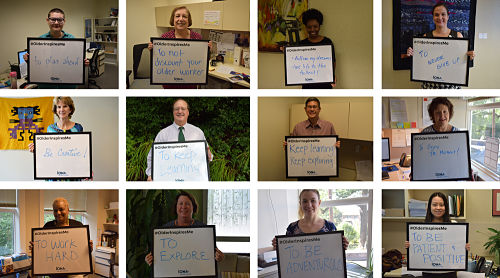
In celebration of the many ways  older people make a difference in our communities,  we asked staff, volunteers, participants, and community members to share how #OlderInspiresMe.

Here are some community responses:

“Always give back. The leadership of my senior village demonstrates how valuable wisdom is and how important it is to always give back to others. They inspire me by showing what women in their 70’s and 80’s look like – strong, active, smart, and passionate.” – Denise S.


“Always keep seeking knowledge. My grandmother [was] orphaned by the Spanish flu. She raised two children alone after being widowed in the Great War. She only went to the sixth grade, but always revered learning. She told me when I was a child that I had to be educated.” – Carol M.


“To take care of our families. My grandmother watched over her daughter who was disabled all her life. Her daughter is living in a group home now where there is a church across the street. I think that would mean a lot to my grandmother.” – Kelly D.


“Stay active. My mother, born in 1931, who still enjoys line dancing almost as much as all-she-can-eat crab legs!” – Laree M.


“Keep striving + thriving. My neighbors ride bikes, do home improvements + are holding down jobs. I’m also inspired by the Back to Work 50+ Program.” – Carlyn C.


“Keep a sense of perspective and humor. [My friend], a retired teacher and former mentor, faces challenges with declining vision and mobility, but she never complains. She’s quick to share a joke, wry observation about politics, or a line from her favorite poet. [She] is a dear friend and inspiration.” – Chhaya R.


“To appreciate the many things they are. All older people inspire me. They are wise historians and preservers of the past. Teachers of the present. Guides to the future. I respect and admire all older people because of the many things they have and offer.” – Edda S.


“Record memories of my grandparents.” – Helene K.


“I am inspired by a fellow member of my congregation. She is a retired teacher/mother of 2 sons, and at least 3 foster children (that I know of), and a mother/grandmother figure to SO many of us in our congregation! Her careful, considered caring has touched all of our lives… with my own family, when my wife needed 2 operations, she insisted that she go and stay with her to convalesce, so that I did not have to miss work, as a sole proprietor. She observed our birthdays by having a “family dinner” at which she would serve the favorite menu of the birthday celebrant. She is a shrewd judge of determining what people need, and how she can reach out to them and care for them, in a mutually dignified manner. In short, she lives by the Golden Rule.” – Norman S.


“Take a step back and think. My mom inspired me to embrace novelty in food, food products, and utensils with caution. I was reading labels before it was fashionable, and careful with plastic containers before concerns were raised!” – Joana R.


“Keep being creative. I have had many older women in my life inspire my love of art and being creative. My mother was a wonderful knitter and used to make beautiful hooked rugs when I was little. My grandmother was a milliner and made my wedding veil.” – Jill T.


“Live in the moment and reach out to others. I’m inspired by everyone around me. I’m challenged to widen my head and heart to new ideas, to reach out to new friends and to remember longtime friends and family with more love, keeping in touch and smiles.” – Le R.


“Take chances. My grandmother graduated from Columbia Dental School in 1922 and then went on to become one of the first orthodontists. On the side she studied business law at night, got a degree in interior design and had four children!” – Wendy B.


“Go from aging to saging. Use the wisdom life lessons has taught you; share and embrace the friendships, aspire to always know more.” – Martha H.


“Be completely me.” – Linda J.


“Stay independent as long as I can. One of my all-time best friends was a woman 30 years older than I was. We were so much alike. When she told me about her life experiences, I felt as though I was looking into a crystal ball showing what my own future could be like if I could be as brave.” – Ann H.


“Be a angel to others. There is a senior neighbor who has cancer and he still wants to help others in any way he can.” – Cedric B.


“Follow your heart. My mother, “Age is only a number on the Calendar. You are as young as you dare to feel.” No wonder all her life people thought she was my sister.” – Raji T.


“Listen and be kind.” – Doug B.


“Soar. As a young social worker, my supervisor at my first very challenging job was an older, joyful woman with much wisdom. She was inspirational to me. I always found myself fascinated with the interesting stories and endless discussions of life and its turns.” – Kris L.

Add your voice

Want to join the movement? Tell us how an older person inspires you by filling out this form. We’ll print any responses, and post them in our lobby and online community in deep gratitude to the older people who have shaped our lives for the better.
Share your inspiration

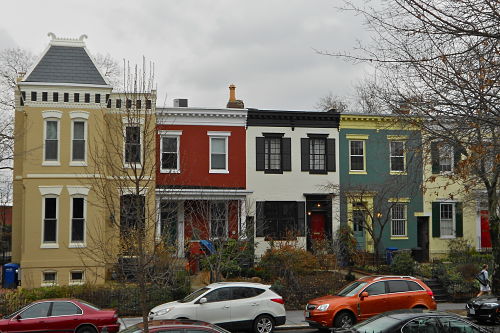
Finding low-cost housing in the District

Rents in Washington, DC are expensive. On average, a one bedroom apartment can go for more than $2,000/month. That’s more than $800 higher than the national average. Unfortunately, if you’re seeking low-cost housing, your options can be scarce.

Assessing your need:

Meeting your budget might require some changes to your housing criteria. For instance, you might have to change your ideal location because rents tend to be higher downtown and in NW DC. You might also need to choose a smaller space, get roommates, or cut back on other spending.

When looking for housing, you might have success on the open market. Free magazines, like Apartment Guide and Apartment Showcase often can be found at metro stops. Other online sources include Trulia and DC Housing Search.

DC’s Housing Lottery

If you can afford $1,000 to $1,500 per month, you might find relief through DC’s Inclusionary Zoning Affordable Housing Program. In this program, housing is assigned by lottery. To enter the lottery, you must take a class and complete an online form. Find the form at the website of the DC Department of Housing and Community Development (https://dhcd.dc.gov/service/inclusionary-zoning-affordable-housing-program).

Inclusionary Zoning Affordable Housing Class Providers

GREATER WASHINGTON URBAN LEAGUE
2901 14th St., NW
Washington, DC 20009
202-265-8200

HOUSING COUNSELING SERVICES
2410 17th St., NW
Washington, DC 20009
202-667-7006

LATINO ECONOMIC DEVELOPMENT CENTER
641 S St., NW
Washington, DC 20009
202-588-5102

LYDIA HOUSE
4101 Martin Luther King Jr. Ave., SW
Washington, DC 20032
202-373-1050

MARSHALL HEIGHTS COMMUNITY DEVELOPMENT ORGANIZATION
3939 Benning Rd., NE
Washington, DC 20019
202-650-5604

UNIVERSITY LEGAL SERVICES
3939 Benning Rd., NE
Washington, DC 20019
202-650-5631

UNIVERSITY LEGAL SERVICES
220 I St., NE, Suite 230
Washington, DC 20002
202-547-4747

UNIVERSITY LEGAL SERVICES
1800 Martin Luther King Jr. Ave., SE
Washington, DC 20020
202-889-2196

Other Housing Options

The government offers several programs to help older adults with low income or people with disabilities afford rent. However, all of these programs have waiting lists. Residents of these programs pay about a third of their income in rent.

Many buildings offer these programs, and each building keeps its own waiting list. Nationwide listings can be found online. The local nonprofit Bread for the City also keeps a list. Phone them at 202-265-2400, and ask for their Housing Access Program.

Help for Urgent Housing Needs

If you’re behind on your rent, you may receive financial help from DC’s Emergency Rental Assistance Program (ERAP). This program helps renters with short-term needs. To qualify, you must have low income. Four nonprofits partner with the city to offer this service.

CATHOLIC CHARITIES
The Southeast Family Center
2812 Pennsylvania Ave., SE
Washington, DC 20020
202- 338-3100

SALVATION ARMY
National Capital Area Command
1434 Harvard St., NW Suite B
Washington, DC 20009
202- 332-5000

HOUSING COUNSELING SERVICES
2410 17th St., NW
Washington, DC 20009
202-667-7006

VIRGINIA WILLIAMS FAMILY RESOURCE CENTER
920 Rhode Island Ave., NE
Washington, DC 20018
202-312-5510

If you’re facing eviction, a lawyer may also help stop slow the eviction process. Slowing the process gives renters more time to find other options. Both free and low-cost legal aid is available. See our Fact Sheet on Legal Assistance for resources.

For older adults needing housing now, options are scarce. Homeless shelters make up the bulk of emergency housing for older adults. Survivors of elder abuse may find alternate emergency housing, but only if there are openings. Find homeless shelters by calling the city’s Shelter Hotline at 1-800-535-7252. Survivors of elder abuse who need housing may contact Elder Safe at 202-541-3950, or Kuehner Place at 202-797-8806, ext. 1311.

Help for Veterans Experiencing Homelessness

Veterans may find help via the HUD-VASH program. This program also has a waiting list. To qualify, the veteran must be experiencing homelessness. Veterans must receive their health care from Veteran Affairs or qualify to do so. A veteran also must need and accept help from a case manager. To apply, call the National Call Center for Homeless Veterans at 877-424-3838.

Thanks to a grant from the DC Office on Aging, Iona has a new Fact Sheet that outlines low-cost housing options in DC (as of October 2018).

Download, save, or print them here:

For additional fact sheets on critical topics like memory loss, legal services, and more, visit our Resource Library.


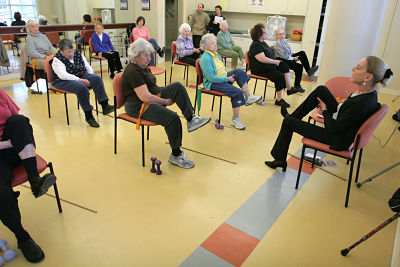
Three seated body movements to help your brain health

One of the major injuries that the brain can suffer is alterations to its blood circulation, which we commonly call strokes. Although strokes have multiple causes and contributing factors, recent research has shown that accumulation of fat around the waist line was significantly associated with new strokes in women between 50 and 74 years of age. Interestingly, abdominal obesity measures were not independent predictors of new stroke in men from the same age groups.

One way to help your brain health is by incorporating more exercise into your life. But getting to the gym can be difficult, especially if you lack time or energy, have difficulty standing, or simply dislike the gym.

Instead, start small by integrating these three easy movements into your daily seated activities:

  1. When attempting to sit down, do it slowly by bending your knees and keeping your back as straight as possible. Ideally, your thigh would be at a 90-degree angle from your body, and 90 degrees to your legs. Sit at the edge of the chair first, then scoot to the back. This simple way of sitting down will not only help strengthen your abdominal muscles, but it will also help tone your back muscles. Of course, feel free to rise and sit as many times as you wish!
  2. When seated, cross your thighs alternating the right over the left and then the left over the right. This movement exercises the flimsy muscles at our lower abdomen.
  3. When seated for a while, simply bend forward, keeping your back as straight as possible. Your legs should be uncrossed, and your feet firmly planted on the ground. Let your arms hang loosely towards the ground. Your goal is to touch your knees with your forehead – don’t worry if you can’t do it at first try, it will get easier with repetition. Again, repeat as many times as you feel like.

These movements are small ways that you can begin incorporating activity into your life. That said, you won’t reduce your risk factors for stroke overnight.

Rather, these baby steps can get you started into the mentality of movement, to set your mind to move your body more frequently, more effectively, and at occasions you haven’t considered before. Hopefully, this will be your beginning to address your potential risk factors for stroke, thus protecting the health of your brain.

What else can you do to increase the amount and the frequency of your movements while doing what you always do? Learn tips at “Making the Best Lifestyle Choices for a Healthy Brain” on October 17. Details below!

Iona’s Take Charge/Age Well Academy is offering a FREE forum for older adults and caregivers on brain health. Join us for one, two, or all three sessions covering critical topics on a healthy brain like lifestyle choices, understanding memory loss, and work/life balance when caring for someone with dementia. Learn more and register for one, two, or all three presentations here.


By Dr. Joana Rosario, MD

Dr. Joana Rosario has had an unusually extensive personal caregiving experience with multiple loved ones with dementia, which is ongoing today. This rich personal experience is allied to her professional experience as a neurologist specialized in dementia. Today, she makes it her mission to share her knowledge, especially to help caregivers who are struggling to optimize the care of their loved ones without sacrificing their careers.

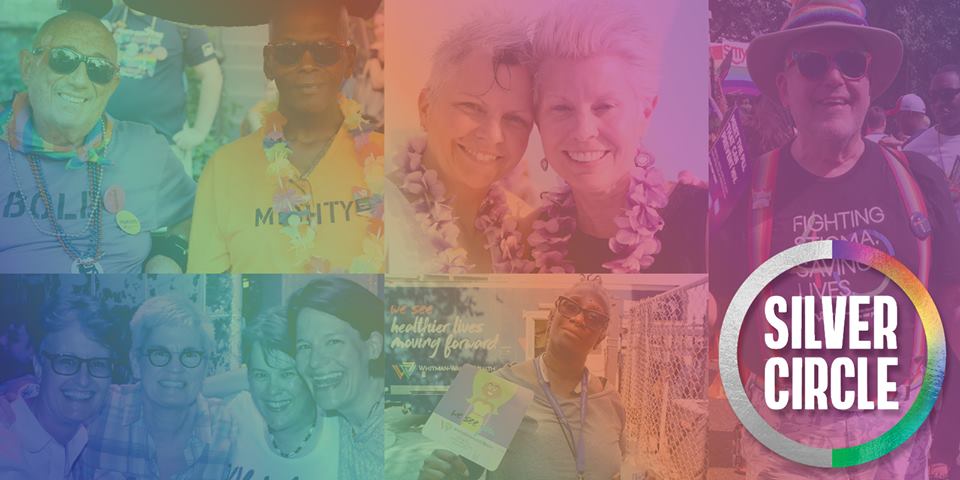
6 Reasons You Should Join Silver Circles

I know it can be daunting to think about trying something new. What will it be like? Who will be there?

Let me give you six reasons to join one of Iona and Whitman-Walker Health’s Silver Circles, which are peer-led groups for LGBTQ folks over 60.

1. It’s a way to meet new people!

As we age, our circles can shrink, for a variety of reasons. Joining a Silver Circle will expand your network. AND, we plan some fun social activities that will bring folks from all the different Silver Circles together.

2. The peer support leaders have been trained to create a safe and welcoming space for you.

Trust me when I say they are really eager to have new folks join the conversation!

3. Aging doesn’t have to be a lonely experience.

There are tons of us going through it at the same time.

4. Iona offers a wide range of services that you might want to connect with at some point.

Being in a group makes it easier to find out about them.

5. There’s a lot of laughter, and a lot of important sharing, that takes place in this twice-monthly meetings.

Come find out if it’s right for you. It might just be!

6. These groups are funded by the DC Office on Aging (DCOA).

Let’s show DCOA that there is a demand for LGBTQ-focused funding.

To join a group, contact Michael Mitchell of Whitman-Walker, who does all the intake phone calls. He will help you figure out which of our five groups is best for you. His email is mmitchell@whitman-walker.org and his phone number is 202-939-7646.


By Susan Messina

Susan is Iona’s Deputy Director. She holds three master’s degrees, including two from Bryn Mawr’s Graduate School of Social Work and Social Research. Susan has presented on many topics affecting the LGBTQ communities, including what factors contribute to aging well, aging in place, health advocacy, and more. Susan also manages our Silver Circle program.

Grandma’s Secrets: 5 Questions for Thoughtful Conversation

Editor’s Note: Carolyn Miller Parr, J.D., is a former judge and elder mediator. A great-grandmother and caregiver for two close family members, today Carolyn writes articles on aging and intergenerational communication with her co-mediator, Sig Cohen, at www.toughconversations.net. Below, she shares creative and thought-provoking questions—as well as her personal responses—to ask your older family members or friends. We hope these questions spark engaging conversation and new discoveries!

People in the last third of life have dynamic inner lives that their grownup children or grandchildren might never imagine. Next time you have an hour, here are some questions to ask your elder loved one. You may be amazed at the response.

1. How old do you feel in your spirit?

An elder’s inner age does not comport with chronology. Inside, I’m permanently about 34 years old. It’s how I feel as I go about doing life. That’s about the age of the female characters in my dreams. When I was that age, my children were young and law school was still on the horizon, but coming into view. Today, I’m a great-grandmother and a retired judge. But I’m still shocked every time I look in the mirror.

2. What’s your greatest challenge now?

Old people won’t usually discuss it with young people, but we’re constantly dealing with loss: career, health, physical strength, driving, memory, and even people we love. We take time to grieve and regret, but we can’t dwell in that space. To avoid falling into depression or ennui, we must develop resilience. We may become more introspective as we search for the meaning of our suffering, of our lives. Our losses can become material for deepening our inner growth.

3. What do you dread most about growing old?

Some people might say “helplessness,” or “Alzheimer’s,” or “being a burden on my children.” To me, those are specific manifestations of an underlying loss of control. For as long as I draw breath, I want to be able to make my own decisions about where, how, and with whom I will live and how I will die. If I have a stroke or dementia, or another serious debilitating health issue, that won’t be possible. Then, I pray I’ll be able to accept my changed reality with grace and peace.

4. What’s your greatest fear?

Fear is a kissing cousin of dread, but more acute. Elizabeth O’Connor, an author, personal friend, and member of my faith community, used to say she thought everyone’s greatest fear, no exceptions, was the fear of abandonment.

Initially, I disagreed. Having been a caregiver for two close relatives with dementia, I had thought my deepest fear would be to lose my mind. I didn’t worry about abandonment because I have a husband and children I believe would care for me. If not at my home or theirs, they would at least be my advocate in an assisted living residence and visit often.

But many elders are single and childless or live far from family members. And even the most careful plans can go astray. (Mike Tyson reportedly said, “Everyone has a plan till they get punched in the jaw.”) My 89-year-old friend, “Annie” bought a house on the same block as her two married children. The children planned to share Annie’s care as she needed more help. Now she walks very slowly and painfully with a cane. But, incredibly, both of her 50-something children or their spouses have cancer, and Annie has become the default cook and caregiver for the others, to the extent of her strength.

5. What’s the best thing about being old?

Age, when we don’t fight it, comes bearing gifts.

People are less prone to judge me. Since I don’t have to impress anyone, it’s easy to give up my false self and be real. If I want to wear white after Labor Day, I just do it. Others may think, “She doesn’t know better,” and that suits me fine. If I nod off during a boring lecture, someone may nudge me if I start to snore but nobody is scandalized. I recognize trash talk when I read or hear it and am unafraid to call it out.

The older I get, the more comfortable I feel in both my skills – and my ability to say “no” if I want to. Some people may be surprised that I can work a Samurai Sudoku or travel unaccompanied, or grow beautiful flowers, or keep a tidy house. It’s okay for me to bring carryout to a potluck dinner. I’m invited by others without being expected to reciprocate. I can be excused from chores I don’t want, like making coffee for church fellowship. “I don’t have the energy” suffices as an excuse.

The longer I live, the more occasions I have to be grateful. When I’m having a good day I notice, instead of taking it for granted. People are less competitive and more generous or kind. I’m often the recipient of unearned graces: Young women as well as men offer me a seat on the Metro, or hold doors open for me or carry my packages. When I thank them sincerely we both feel blessed.

I can reinvent myself. Anyone who lives into the last third of life has overcome some hard things. My children give me pleasure and pride. I feel the satisfaction of a life well lived, of friends and family I have loved and lost, of giving and receiving forgiveness. And I still have a future, however limited it may be. Every day is more precious than the one before. But there is still time to create new friendships and deepen the ones I have. To read good books. To explore a road not taken. Still time to comfort others, to pray for others, to learn from others and maybe to share a little wisdom. I treasure my future more than I ever could when I was young, just because I know it’s limited.

So next time you’re with an older relative or friend, find a quiet corner, share a cup of tea, and settle in for a great conversation!

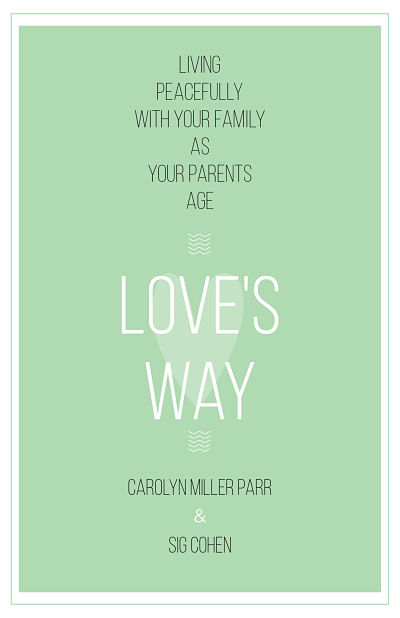
Carolyn Miller Parr, J.D., is a former judge and elder mediator. She writes articles on aging and intergenerational communication with her co-mediator, Sig Cohen, at www.toughconversations.net. Their book, “Love’s Way: Living Peacefully With Your Family as Your Parents Age” is coming January 1, 2019 and can be pre-ordered now. See www.amazon.com/author/carolynmillerparr.

Older inspires staff to be…

#OlderInspiresMe is a campaign to recognize and celebrate the many ways older adults contribute to our lives.

Older people are sometimes seen as out of touch with the times, boring, or useless. At Iona, we know that’s not true. Here, everyday our staff witnesses the vibrancy, creativity, curiosity, and agency of older adults.

Despite stereotypes, we know that older people are taking charge, learning new things, creating, sharing wisdom and experiences, seeking new adventures, building connections, striving for wellness, and advocating for themselves and others. They’re redefining how society perceives getting older. They aren’t still doing something despite their age—they never stopped.

We want to celebrate the many ways in which older people make a difference in our communities. That’s why throughout the month of October, we’re asking staff, volunteers, and friends like you to share how #OlderInspiresMe.

Add your inspiration

View our photo gallery for staff responses, and stay tuned for updates on how older adults inspire our entire community.

Add your voice

Want to join the movement? Tell us how an older person inspires you by filling out this form. Throughout the month of October, we’ll print any responses, and post them in our lobby and online community in deep gratitude to the older people who have shaped our lives for the better. Learn more about how you can join the movement.
Feedback for Iona