
5 Tips to Keep You Organized in Quarantine

Just a few weeks ago, we were able to move about freely outside, congregate with 10 or more people, dine-in at our favorite restaurant, or even catch a matinee movie on a calm Saturday afternoon. Now, our “new normal” consists of sheltering-in-place for an extended period of time to help ensure everyone stays safe.

While it’s not quite possible to control what is currently happening in the world, you can control and take charge of what’s inside of your home. During this time in quarantine, you may find that it’s comforting to organize and tackle projects, tasks, or spaces that tend to get overlooked. It’s also Spring, which is a great motivator to purge your space of outdated items and refresh your space.

Tip #1: Tackle Your Clutter

There is always one area in the home that can be a magnet for clutter. It could be your closet, drawer, nightstand, or bathroom. So, before organizing , you will want to clear out the clutter from the space. Next, you will need to inspect each item and be very honest with yourself whether the item is functional, should be kept but stored elsewhere, discarded, or donated. If you are donating items, then be sure to store the items inside of a bag or bin until you’re able to drop if off.

Tip #2: Organize Your Workspace

The shelter-in-place order means that many of us are now working from home. There can be many benefits to working from home such as saving on gas or not having to sit in traffic while commuting to work. You might find yourself multitasking and doing some errands while you work, like putting in a load of laundry, but there can be challenges too. When working from home, it’s important to set up a designated, organized space to ensure that you can effectively perform the tasks expected of you. To prevent a cluttered desk-space (whether a true desk or kitchen table), try to store documents inside of labeled folders, binders, or files. This will help you to quickly retrieve the documents when needed. Contain pencils/pens, paper clips, staples inside of a storage product. If you don’t have any on hand, then you can search your home for a mason jar, old jars, empty cans, shoe boxes, or cups that you may no longer be using. Lastly, when working from home, it can be easy to get distracted, so use your calendar or a to-do list—to promote productivity and ensure that you stay on task and prevent missing any deadlines.

Tip #3: Take Control of Your Inbox

Due to being home for an extended period of time, email communication has increased because it’s an essential source of how information is being relayed, especially for those who are working from home. So, it’s important to locate your emails instead of having them get lost in an abyss of emails that may not be as important. This can be an overwhelming task! We recommend that you tackle it in small steps. Start by setting a timer for just 30 minutes (or 5 minutes…or 10 minutes—whatever feels manageable to you) which will keep you focused on the task at hand. During the set time, you can delete outdated emails, create folders to store and organize emails that are alike, and follow-up with emails that you have been putting off. Try this a few times throughout the week and you will be surprised by how much progress you can make.

Tip #4: Organize Your Kitchen Space

We are all stocking up on shelf-stable food items—so much so that our pantries might becoming a bit chaotic. For organizing your fridge or pantry, we recommend that you take everything out as a first step. Discard or compost items that have expired or spoiled. Then place the items you decide to keep back inside by organizing and grouping like-items together. For example, fruits/vegetables should be kept together, condiments should be kept together and so forth. This makes it easier to locate items when it’s time to create a meal. If you find that you have a few too many times, consider donating unopened, non-perishable (and not expired) items to a food pantry or other nonprofit.

Tip #5: Organize Kid’s Space

This is a challenging time for all of us, and for those with children at home, the challenge could feel compounded. Now that everyone is home together all of the time, try to create a designated space where children can feel that they have their own space to work or play. By doing this, you can prevent a pile-up of toys and other children’s items taking over the space and it’s one less thing that will have to be cleaned up. It should be encouraged that children know where their toys should be stored and that’s where they should be replaced after using them. Remember, the goal is to control what is within your household and limit chaos where you can.

During this very chaotic and uncertain time, we hope that taking small steps to organize and personalize your space helps you feel light and as stress-free as possible. Please keep in mind that this is just one option! Some find great comfort in organizing; others do not. That is OK! Should you become overwhelmed or anxious, stop your task, take a deep breath, and move on to something else. But, we hope that these tips provide some practical advice while you are staying at home.


By Jakia Muhammad

Jakia Muhammad is Iona’s Home Delivered Meals Manager. She also has a passion for and love of all things organization and systems. 

Technology to Stay Connected through COVID-19

With COVID-19 continuing to advance, and the order from national and local governments to stay home, many of us are not getting the same level of interaction with peers and loved ones. You may find yourself becoming bored or feeling lonely. Fortunately, there are a number of online and mobile resources that can help keep you connected and engaged virtually.

Here’s a list of online platforms that you can use to stay in touch with friends and loved ones. The table below includes information on available mediums and devices, compatible operating systems, associated costs (if any), and where you can find it to download. 

APPLICATION NAME

KEY FEATURES

AVAILABLE PLATFORM/DEVICE

COST

WHERE TO FIND IT

What’s App
Text message, video, and audio technology.
• Video and audio calls—can contact people in other countries
• Document sharing
• Record voice messages/notes
• End-to-end encryption for safety and privacy
• Mobile (iOS & Android) FREE Desktop (for Windows or Mac)
Apple Store (for iOS)
Google Play Store (for Android)
Zoom
Enterprise video conferencing with real-time messaging and content sharing. Please note: There have been some privacy concerns with Zoom that the company is working to resolve. For advice on how to best secure your call, try these best practices.  
• HD video and audio
• Unlimited 1 to 1 meetings
• 40 mins limit on group meetings
• Unlimited number of meetings
• Online support
• Recording and transcripts
• Group Collaboration Tools & Features
• End-to-end encryption
• Web
• Mobile (iOS & Android)
Basic Version: FREE Online
Apple Store (for iOS)
Google Play Store (for Android)
Messenger
A simple way to text, video chat, and plan things all in one place.
• Video and audio calls
• Chat
• Video conferencing features
• Location sharing
• Money sharing features
• Voice message options
• Web
• Mobile (iOS & Android)
FREE Apple Store (for iOS)
Google Play Store (for Android)
Google Duo
Simple, high quality video calls for smartphones, tablets, computers, and Smart Displays like the Google Nest Hub Max.
• Video and audio calls
• Has Knock Knock feature (live video preview of person calling you)
• Calls stay private with end-to-end encryption
• Web
• Desktop
• Mobile (iOS & Android)
FREE Web
Mobile (for Android & iOS)
Skype
Video-conference tool
• Video and audio calls
• HD video conferencing
• Get a Skype number to disguise personal number
• Call recording and Live subtitles
• Screen sharing
• Desktop
• Mobile
• Web
• Xbox
FREE to send messages and have audio and video calls with groups of up to 50 people. Desktop (for Windows or Mac)
Apple Store (for iOS)
Google Play Store (for Android)
Web
Facetime
Make video and audio calls from your iPhone, iPad, or iPod touch.
• Video and audio calls
• Use FaceTime Audio with Call Waiting
• Create your own or Memojis or use theirs
• Use FaceTime Live Photos
• Mobile (iOS & iPadOS) FREE Apple Store (for iOS & iPadOS)
Marco Polo
Texting, social media, and video chats.
• Video and audio calls
• Unlimited, and ad-free
• Group or 1:1 conversations
• Unlimited video storage
• Mobile (iOS& Android) FREE Apple Store (for iOS)
Google Play Store (for Android)

For more information on these tools, and others, read this fact sheet from the National Council on Aging.

Ways to Celebrate World Art Day from Home

Promoting healthy aging through the arts and creative expression is an important aspect of our work at Iona. During this pandemic—as we all experience heightened emotions, stress, or anxiety—we know that turning to art can be a wonderful tool to inspire, motivate, and uplift spirits.

In celebration of World Art Day on April 15, we’re sharing online art and art-related attractions that you can engage from your home. Whether it’s taking a museum tour online, attending a virtual play or concert, or doodling at lunch, we hope you will take time and enjoy the pleasures of art. Take a look at the following online art attractions and activities.

Virtual Tours:

  • Visit artsy.net to browse artworks within different art genres. And in case you’re looking to add some art to your home, you can purchase art here too.
  • Powered by Google Street View technology, tour these top museums with Top10.com. Read brief descriptions for each museum to get an idea of what you can expect to see as you browse the free virtual tours offered and follow the link to start your tour.

Art-Making You Can Do at Home:

  • Grab some paper and pencils, pens, or crayons and join LUNCH DOODLES with Mo Willems. Mo invites YOU into his studio every day, virtually, to draw, doodle and explore new ways of writing. New episodes are posted each weekday at 1:00 p.m. ET and then remain online to be streamed afterwards.
  • Join Around Town DC for an online beginner drawing course via Zoom. In this series, you’ll learn how to draw using proper techniques, and discover how to represent what you see through studies in contour drawing, perspective, positive/negative space, and value. Please note that in this series, once you register for the class you will receive an invitation for the rest of the series each week. Register here. If you have not used Zoom, please read: Preparing for Your Zoom Meeting.
  • Take a free mini art lesson with Art in Action. This free mini lesson series is open to all ages, and has a list of options for you to choose from, like presidential portraits or designing your own dinosaur. You can even access archived mini lessons from previous months if you do not see a current lesson that interests you.

Concerts and Shows:

Of course there are many more ways to celebrate World Art Day. Let us know how you’re celebrating or share other ideas with the community in the comments below.

Happy World Art Day!

Food Pantry Plus Results – Thank You to Our Community


Last week, we sent an urgent call to the community to help us restock our Food Pantry with canned goods, cleaning supplies, and other home products. We’re in awe and grateful for the community response!

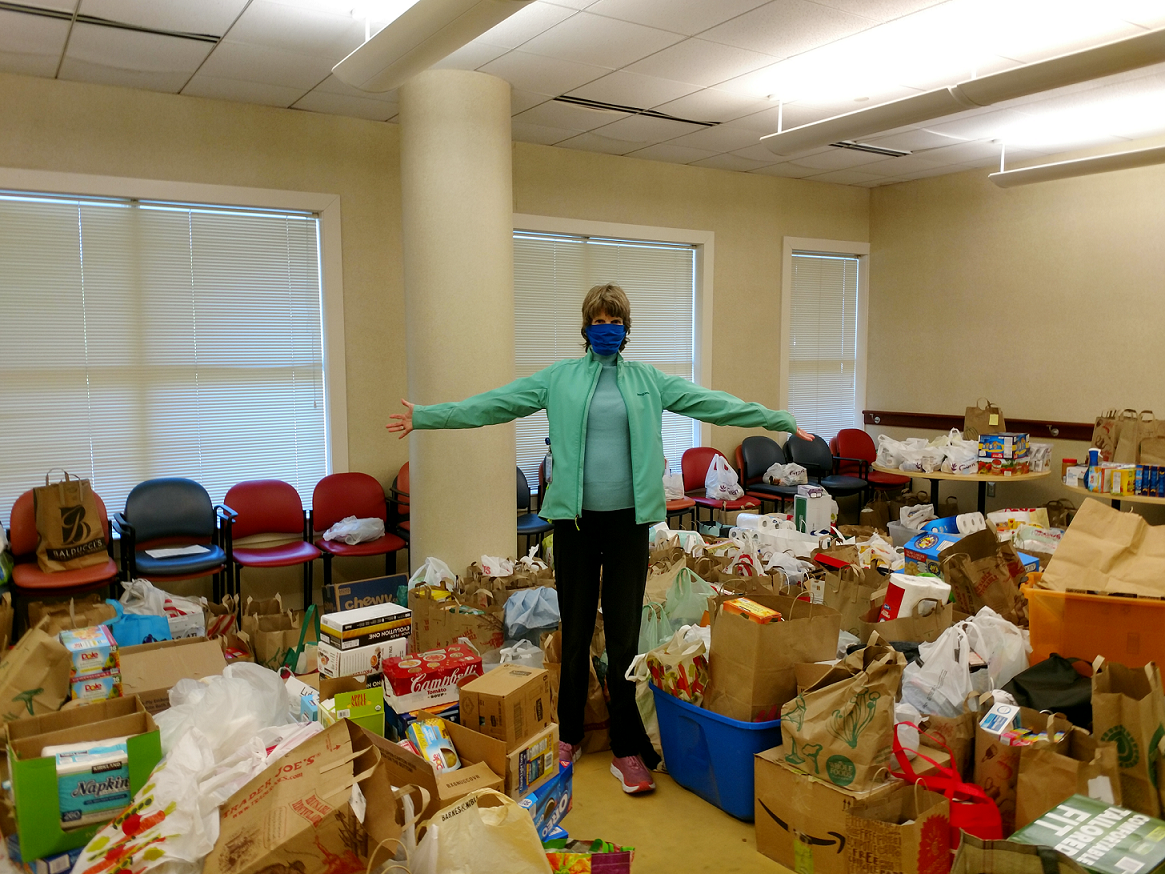
We’re so thrilled to share that we had more than 200 cars drop off items at Iona on Saturday. It was amazing! Our fitness room is FULL with food and household items to be sorted and distributed to our clients’ doorsteps. Thank you so much to those who donated, the staff who organized these efforts, and to the volunteers who helped us collect the items while practicing good social distancing. It is comforting to know that we can lean on caring friends like you to get us through these unprecedented times.

Many of you have asked if you can still donate items to our pantry—as you can see from the photos, we are at full capacity! Because we don’t yet know how long we will be in this crisis, or the extent that it will impact the community we serve—we may hold a pantry drive again in the future. We will communicate about future drives via email and on our social media. You can also contribute to our work by making a donation online here.

Thank you for your kindness and generosity!

10 Mental Health and Wellness Quarantine Tips

It’s a new world out there—one that has many of us working from home for the first time, staying in as much as possible, and balancing many responsibilities at once. It’s normal to feel stressed, anxious, or overwhelmed. Remember, we’re all in this together.

Eileen M. Feliciano, Psychologist, PsyD, MSEd, shared some excellent tips for maintaining your mental health through the coronavirus crisis. In honor of Stress Awareness Month, we wanted to pass along some of our favorites.

You can read her full list here. 

Here are 10 tips that resonated with us that we hope will help.

  1. Dress for the social life you want, not the social life you have.

    Get showered and dressed in comfortable clothes, wash your face, brush your teeth. Take the time to do a bath or a facial. Put on some bright colors. It is amazing how our dress can impact our mood.

  2. Find some time to move each day, again daily for at least thirty minutes.

    If you do not feel comfortable going outside, there are many YouTube videos that offer free movement classes, and if all else fails, turn on the music and have a dance party!

  3. Reach out to others, you guessed it, at least once daily for thirty minutes.

    Try to do FaceTime, Skype, phone calls, texting—connect with other people to seek and provide support. Do not forget to do this for your children as well. Set up virtual playdates with friends daily via FaceTime, Facebook Messenger Kids, Zoom, etc—your kids miss their friends, too!

  4. Stay hydrated and eat well.

    This one may seem obvious, but stress and eating often do not mix well, and we find ourselves over-indulging, forgetting to eat, and avoiding food. Drink plenty of water, eat some good and nutritious foods, and challenge yourself to learn how to cook something new!

  5. Give everyone the benefit of the doubt, and a wide berth.

    A lot of cooped up time can bring out the worst in everyone. Each person will have moments when they will not be at their best. It is important to move with grace through blowups, to not show up to every argument you are invited to, and to not hold grudges and continue disagreements. Everyone is doing the best they can to make it through this.

  6. Everyone find their own retreat space.

    Space is at a premium, particularly with city living. It is important that people think through their own separate space for work and for relaxation. For children, help them identify a place where they can go to retreat when stressed. You can make this place cozy by using blankets, pillows, cushions, scarves, beanbags, tents, and “forts”. It is good to know that even when we are on top of each other, we have our own special place to go to be alone.

  7. Expect behavioral issues in children, and respond gently.

    We are all struggling with disruption in routine, none more than children, who rely on routines constructed by others to make them feel safe and to know what comes next. Expect increased anxiety, worries and fears, nightmares, difficulty separating or sleeping, testing limits, and meltdowns. Do not introduce major behavioral plans or consequences at this time—hold stable and focus on emotional connection.

  8. Notice the good in the world, the helpers.

    There is a lot of scary, negative, and overwhelming information to take in regarding this pandemic. There are also a ton of stories of people sacrificing, donating, and supporting one another in miraculous ways. It is important to counter-balance the heavy information with the hopeful information.

  9. Find something you can control, and control the heck out of it.

    In moments of big uncertainty and overwhelm, control your little corner of the world. Organize your bookshelf, purge your closet, put together that furniture, group your toys. It helps to anchor and ground us when the bigger things are chaotic.

  10. Reach out for help—your team is there for you.

    If you have a therapist or psychiatrist, they are available to you, even at a distance. Keep up your medications and your therapy sessions the best you can. If you are having difficulty coping, seek out help for the first time. There are mental health people on the ready to help you through this crisis. Your children’s teachers and related service providers will do anything within their power to help, especially for those parents tasked with the difficult task of being a whole treatment team to their child with special challenges. Seek support groups of fellow home-schoolers, parents, and neighbors to feel connected. There is help and support out there, any time of the day—although we are physically distant, we can always connect virtually.

    We will add that Iona is here for you too! If you’re caring for an older loved one at home right now…worried about a family member afar…or are an older person yourself looking for resources and support, please reach out. Contact 202-895-9448 and press 1 for our Helpline, or email info@iona.org.

And thanks again to Eileen M. Feliciano for creating this list. To read her full list of advice, click here.

COVID-19 Safety Tips for Helping Others

Coronavirus (COVID-19) is affecting individuals at alarming rates across the United States and globe. While practicing social distance and staying at home are both critical actions to slowing the rate of transmission, there may be instances when that’s not possible for you. You may have someone in your life—a friend, a relative, a neighbor—who is especially high risk because they are immunocompromised or an older adult, and you may need to support them.

If you’re considering volunteering or assisting someone in your life during this crisis, it’s important that you still follow safety precautions to lessen the risk of spreading the virus. While you may be “low risk,” it’s important to understand that there is still a risk. You may be an unwitting carrier or become sick yourself. Anyone can be infected with the virus.

How is COVID-19 Spread?

COVID-19 is a new virus, and therefore we learn more about it every day. According to the CDC, the virus is believed to be transmitted:

  • By having close contact with a person who has the virus (within ~6 feet) through respiratory droplets produced when an infected person coughs or sneezes
  • By touching a surface or object that has the virus on it, and then touching your own mouth, nose, or eyes.

Other points to know:

  • It’s believed that the Coronavirus can live for up to three days on various surfaces (as low as 1-24 hrs. for cardboard and fabric, longest for non-porous surfaces like metal).
  • People are thought to be most contagious when they are most symptomatic (the sickest). They may also be contagious 1-14 days before any symptoms show, and may be contagious with no visible sign of symptoms.
  • Infected persons can continue to be contagious during recovery, believed to be between 8 and 37 days.
  • Thorough hand washing (with soap and water, or alcohol based sanitizer) should be done frequently, and always done after touching the face, using public transportation, or touching the same items as others.

Safety Practices:

  • Closely monitor your health. If you begin to show symptoms, such as fever or coughing, follow CDC guidance and stop your volunteer work right away.
  • Avoid crowded spaces like public transportation and maintain 6 feet distance with others.

General sanitation guidelines for when helping others during the COVID-19 outbreak:

  • Take your temperature before making any food delivery or other volunteer outing. If you have an elevated temperature or any symptoms, do not volunteer.
  • If you have ANY symptoms of ANY kind, or any known contact with people who are symptomatic, stay home and help with tasks that can be done online.
  • Clean all surfaces (use a CDC-approved disinfectant) before doing anything with food, even if the food is packaged and sealed.
  • Wear plastic gloves while handling food. Use a fresh pair for each and every delivery.
  • Use hand sanitizer if no running water is available (during deliveries) every time you put on a fresh pair of gloves while delivering food.
  • Cover your nose and mouth at all times while interacting with food (because masks are hard to come by, you can use a bandana or other DIY method).

If you’re assisting with food packaging or delivery, please note the following tips:

  • Pick up supplies at off-peak times and avoid public transportation.
  • Thoroughly wipe food and food prep areas with CDC-approved disinfectant and a disposable towel.
  • Cover your nose and mouth before entering food and food prep areas (a bandana is suggested).
  • After covering your mouth and nose, wash hands with soap and water immediately for 20 seconds before entering food and food prep areas.
  • Wear fresh, sterile gloves when in food and food prep areas.
  • While wearing your gloves, do not touch anything that was touched by people who have not washed their hands (i.e. doors, light switches, fridge/freezer doors, etc.). If you do, wash hands again, and put on a fresh pair of gloves.
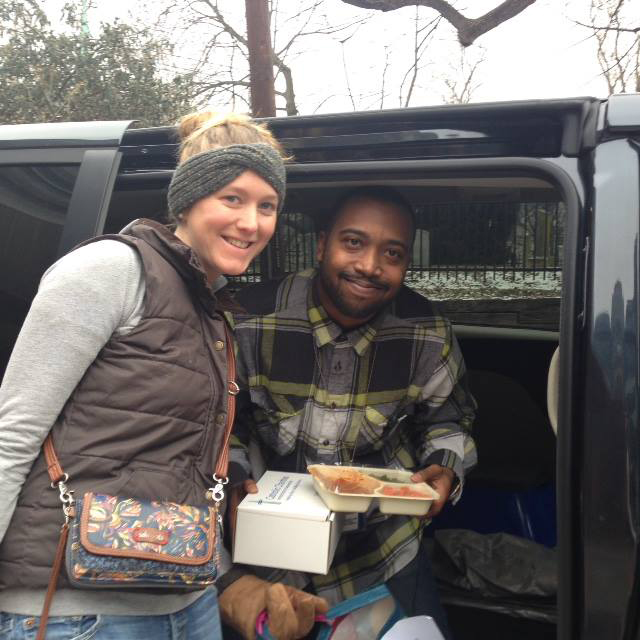
  • When making deliveries, try not to touch anything except the bags. Place the bag on the doorstep, knock, and then return to your car. Do not stay on the doorstep and talk with the person; only talk from a distance of at least 6 feet. Avoid entering the person’s home.
  • Remember that your phone is a hotspot for germs. If you touch your phone with your gloves, throw gloves away, wash/sanitize your hands, and put on a fresh pair before touching food bags.

If you’re looking for ways to support your neighbors —whether financially, donating your time, or dropping off supplies, the following list of organizations/efforts may be looking for assistance.

At Iona, we’re navigating uncharted waters and face significant funding gaps. If you’re able to, we would be grateful for any financial assistance.

Your contribution will go towards supporting older adults and families during this crisis—providing food to homebound seniors, offering virtual wellness and fitness programs that address isolation, continuing support groups and psychotherapy online, answering calls on our Helpline, coordinating care for vulnerable older adults, making wellness check-in calls, and performing other essential services.

Donate to Iona

Other organization efforts:

  • Bread for the City – Accepting monetary donations for groceries, diapers, and medical supplies to give clients during open hours. Please consider making a donation to support their efforts here.
  • Capital Area Food Bank – They are experiencing a shortage of volunteers, and are in critical need of help sorting and packing food in their warehouse and assisting at their offsite food distributions.  To learn more and sign up, visit volunteer.capitalareafoodbank.org.
  • DC Mutual Aid – Neighbors Helping Neighbors efforts to organize by pods. Opens spreadsheet of efforts (click through all tabs)
  •  DMV Neighbors Helping Each Other Through COVID-19 – A Facebook group connecting neighbors to assist each other during COVID.
  • Dining at a Distance – Support restaurants while practicing social distancing. Here is a list of local restaurants and business who are operating delivery and carry-out, as well as ways to support local business during temporary closures.
  • Feeding America Meal Connect – Restaurants can sign up and donate their surplus food (tax deductible) to food banks in the area. Restaurants can schedule a pick up time for food banks to pick the food up.
  • Food & Friends– Free meal and grocery delivery available to people living with life-challenging illnesses. Clients must be referred by a healthcare provider. They are in urgent need of extra volunteers throughout the coming weeks. There are two volunteer opportunities, food preparation and packaging and meal and grocery delivery. More information found here.
  • Food it Forward – Help keep DC restaurant jobs, and help feed DC families in need by buying a meal package. Martha’s Table has teamed up with Clyde’s Restaurant Group, amongst others, to deliver meals to those in need — while helping keep restaurant workers employed.
  • Martha’s Table –  Volunteers may be needed to help prepare and bag food.
  • Miriam’s Kitchen– In need of financial donations to help neighbors experiencing homelessness receive access to a sink or have a home to stay when they are sick.
  • So Others Might Eat (SOME) – SOME is in need of items to support their clients who may be ill.
  • The Table Church – The Table DC is organizing volunteers to help at-risk members of the DMV community who should not leave their homes during this crisis.
  • We Are Family – Volunteer to deliver groceries to seniors

Related Resources and Sources:

  1. Centers for Disease Control and Prevention (CDC)
  2. Food Handling During Outbreak
  3. QueerCare Resources for Support Care In and In Response to the COVID-19 Gobal Pandemic
  4. Safety Practices for COVID-19/Coronavirus Mutual Aid Projects

Feedback for Iona