I’m often asked what I do in my role as Iona’s licensed dietitian nutritionist. Many think I spend my days telling people to eat this, but not that. “Not quite,” I say. Although I am Iona’s Nutrition Program Manager, I primarily work as a senior hunger advocate – a warrior in the tireless fight against senior food insecurity and malnutrition.
While no one should go hungry or lack access to sufficient healthy food, all older adults are particularly vulnerable to the effects of food insecurity, especially now during this public health crisis. Pre Covid-19, the District had the highest food insecurity rate among seniors in the country (14.3%). This rate has risen steadily in recent years, from 9.6% in 2016 and 11.1% in 2018. DC is ranked #1 in terms of the worst in the United States for the threat of senior hunger. Imagine that.
On March 16, 2020, all the Community Dining sites for seniors city-wide shut down and all in-person social, fitness, and wellness activities were suspended through the end of September 2021. Many seniors are still afraid or unable to go out and shop or have their usual home health aides come into their homes to assist them with shopping, cooking, cleaning, or personal care. This and other Covid-19 related factors have made it even harder for older adults to feed, nourish, or care for themselves adequately.
I know what you’re thinking: “But, what about Ward 3? There can’t possibly be hungry, isolated seniors in our tidy, mostly well-off Ward 3 neighborhoods?!?!” My response? This is a problem that affects all of DC. In fact, my team and I spend our days tirelessly fighting on the front lines of senior hunger right here in Ward 3. Covid-19 has increased the number of seniors needing food and nutrition assistance from Iona by over 250%. City-wide, there are about 6,600 seniors receiving home delivered meals with over 1.2 million meals served since mid-March.
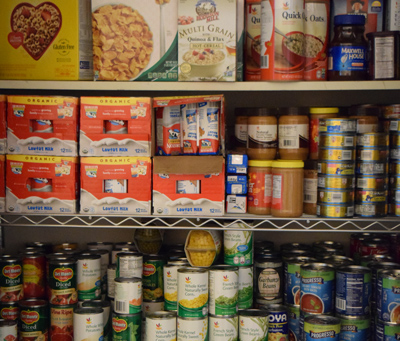
Iona currently serves 399 home delivered meals clients, up from an average of 175 pre-Covid. Our little pre-Covid food pantry “closet” has expanded into a “mini-mart” of shelf-stable food, cleaning, and hygiene supplies that fills our former fitness studio at Iona. Under the able daily coordination by Tania Sechriest, our new Food Pantry Plus program has made 652 total deliveries to 227 clients across all 8 wards, including delivery of 510 cases of nutrition supplements.
Who is a typical nutrition client served by Iona? Take for example, a current longtime client who is an 81-year-old male. He was initially referred to me because he experienced an unintentional 63-pound weight loss over 6 months. He looked haggard, weak, and underweight. He’d had all kinds of sophisticated, invasive, and costly medical tests and procedures to rule out everything from an undiagnosed malignancy to gastrointestinal disease. All of the testing was inconclusive and provided no cause for his unintentional weight loss. Imagine his anxiety level and distress, just trying to survive each day in this weakened state. I wish this was an unusual situation or referral, but in Iona’s work, it’s common.
Did anyone think to investigate his nutritional situation or ask this man if he had enough food to eat before thousands of dollars were spent on medical tests? Such a simple, basic human need and right – to have sufficient good-quality food to eat in order to maintain health and a good quality of functioning and life. Yet, here is an older adult who recently had only $7.00 left of his monthly income to last him the 10 days before he would get another social security check deposit in his bank account. In fact, he was so low on funds that he literally did not have enough money to buy food after the middle of the month.
Senior malnutrition is often a “hidden secret” with devastating individual suffering and societal consequences. The estimated annual cost of disease-associated malnutrition in older adults in the US is $51.3 Billion. Food and nutrition issues are so important to good health and life quality for older adults, but are often poorly understood or go unrecognized.
But, back to my client. Today, he has a steady weight, a better sense of well-being, a community of friends, and a good level of energy and functioning. How did Iona step up to the plate to help him? First, he was enrolled in our home delivered meals program, and receives 10 fresh Mom’s Meals delivered every two weeks. He also participates in our Covid-19 Emergency Meals Program, receiving 7 frozen meals weekly, a program well-liked by most of our clients. He receives several cases of a high calorie/high protein Boost Glucose Control liquid nutrition supplements and deliveries of additional shelf stable food and supplies through the Food Pantry Plus program monthly, delivered by Iona volunteers. He is also enrolled in and receives a monthly SHARE Food Network grocery package, also delivered by Iona volunteers. His amazing Iona social worker helps him maintain his SNAP (food stamp) and other benefit enrollments and got him new dentures so he can eat better.
It is important to understand that senior hunger and malnutrition is not limited to low income seniors but is a complex phenomenon that cuts across all income spectrums and is often an access issue. Factors such as poor appetite, unintentional weight loss and frailty, isolation, decreased mobility, cognitive decline, psychosocial and mental health issues, nutrient deficiencies, poor oral health, and lack of transportation are common contributing factors to senior food insecurity and malnutrition. For these and other reasons, older adults or their caregivers are often unable to plan, procure, and prepare adequate, fresh, and nutritionally-balanced meals. The public health emergency caused by Covid-19 has only exacerbated this situation.
Putting an end to senior hunger and food insecurity in Washington, DC requires a coordinated effort by multiple stakeholders – please help us in our tireless efforts to set the table for our seniors.
Rose Clifford, RDN, MBA