
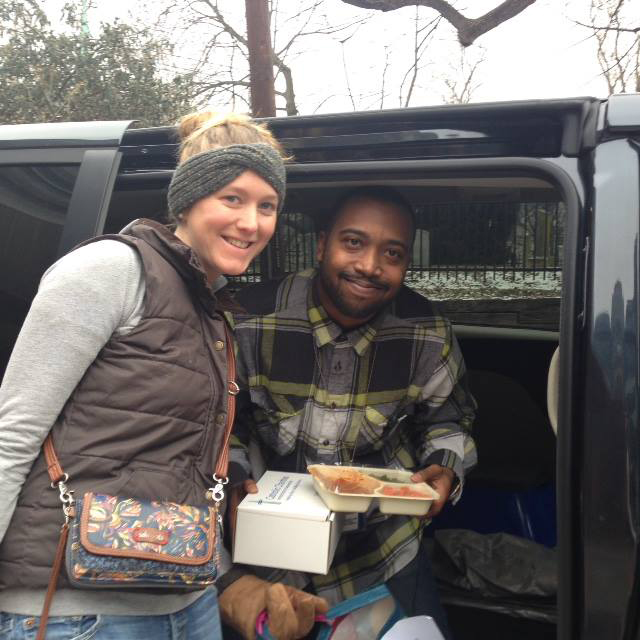
Meet our Driver: Reggie Hutchinson

Here at Iona, we prepped for the winter blizzard by getting our home-delivered meals out early. Special thanks to our nutrition team and delivery crew for putting in that extra effort to ensure our older neighbors have food, no matter the weather forecast.
Pictured above: Van Driver Reggie Hutchinson poses with Farm to Table Coordinator Ashlea Steiner before delivering our home-delivered meals last winter.

Our van driver, Reggie Hutchinson, spends two hours every day driving participants to our Center. Meet the man behind the van in this Q&A!

How long have you been working in the Wellness & Arts Center?
Almost two years.

What is your job?
Program Assistant, Van Driver, and Kitchen Assistant.

What is your favorite part of your work?
Interacting with our participants – they are too funny!

Do you have any favorite memories to share? 
I remember once, I walked in and a participant said, ‘Oh, he is so handsome – that’s my boyfriend!’ And she gave me a kiss on both cheeks. I couldn’t do anything but smile and just thank her. In the van, sometimes we’ll have sing-a-longs. I’ll sing my interpretation of opera to them and everybody in the car will start laughing. They’ll say to me, ‘Oh, Reggie, you have such a beautiful voice!’ And, I’ll say, ‘Are you sure?’ I love my job. You get a good feeling, working here.

Do you have a favorite song to sing in the car?
“Sunshine,” by The Temptations

How long does transportation to our Center typically take?
About an hour, but it depends on where I’m going, and how many participants we’re picking up that day.

Why does your work matter to you?
For me, it’s important to give back because without [older adults] we wouldn’t be where we are. They went through hardships and adversity, and now we can take care of them. There are Veterans in our program that fought in WWII. There are nurses. There are all of these people under one roof, and all you can do is take care of them and thank them. It’s our God-given duty to give back to the elderly.

And some families might be struggling. They might need that time away from their family member so they can unwind and have a little time for themselves. That’s why we’re here.

You get a good feeling when you can bring a smile to someone’s face. It might not seem like much, but the little things we do actually make a big difference for families. So, transportation is a big part.

Tomorrow is #GivingTuesday, a global day to celebrate generosity and to give back. This year, we’re raising money to provide special transportation scholarships to our Wellness & Arts Center. These scholarships are a lifesaver for families who would otherwise be drowning in the oftentimes complex daily logistics of bringing their loved one, who might have Alzheimer’s, dementia, or a physical disability, to our enriching adult day program. Honor caregivers this holiday season by making a gift to Iona.


Donate now!

Roasted Carrots with Orange, Honey, and Dill

holiday-carrotsMy Roasted Carrots with Orange, Honey, and Dill is a family favorite. It’s easy to make, delicious, AND healthy. Plus, it adds some beautiful colors to your plate (and only requires a few ingredients). Enjoy it this holiday season!
Ingredients:

1 pound of carrots (try to find a bunch or bag of multi-colored carrots), washed, peeled, and cut in half lengthwise
1-2 tbsp extra virgin olive oil
1 tbsp honey
¼ tsp kosher salt
1/2 tsp black pepper
1 tsp fresh orange rind (optional)
1 tsp dried dill or 1 tbsp fresh dill, chopped
Squeeze of fresh lemon juice

Steps:

1. Heat oven to 400 degrees F.
2. Place prepared carrots in an even layer on a baking sheet.
3. Mix the honey with the olive oil and orange rind (if using) and drizzle over the carrots, tossing carrots to coat evenly. Sprinkle the carrots with salt and pepper.
4. Roast in the oven for about 15-20 minutes. Remove from the oven, toss, and continue cooking for about 5-10 minutes until the carrots are nicely browned. They should be soft on the outside but still a little crunchy inside.
5. Sprinkle with dried or fresh dill, and a squeeze of lemon juice. Taste for salt and pepper and adjust to your taste.
6. Enjoy!

By Rose Clifford, RDN, MBA

Rose Clifford, RDN, MBA has practiced as a registered dietitian nutritionist in the Washington, DC area for over 30 years. Her current primary work as the Nutrition Program Manager for Iona Senior Services focuses on helping older adults maximize their nutritional health so they can live active, full lives in their own homes. Rose is an active member of the DC Office on Aging Nutrition Task Force and is FY17 co-chair of the Food & Nutrition sub-committee of the DC Senior Advisory Coalition. 

Self Care for Caregivers: Why is it so important?

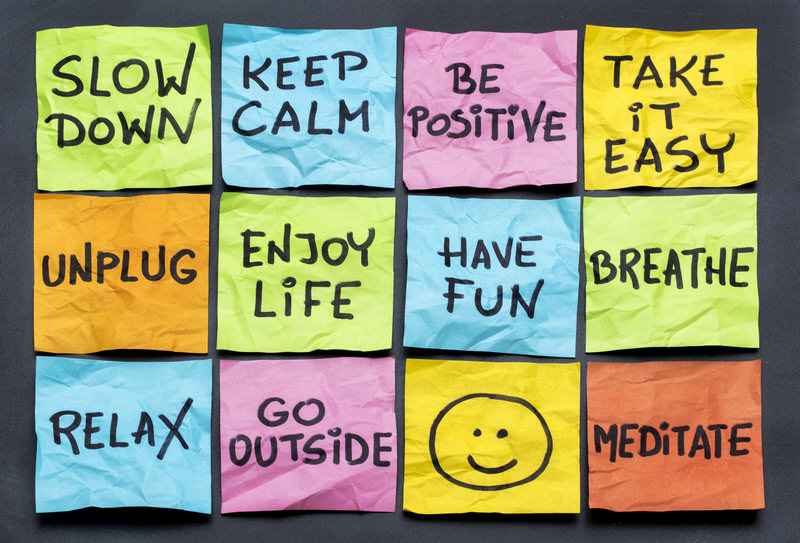
slow down, relax, take it easy, keep calm and other motivational lifestyle reminders on colorful sticky notesAs anyone who has ever been responsible for the care of another can attest, being a caregiver can be a physically- and emotionally-challenging task, and one that can upend the balance of our lives.

It’s easy to ignore your own needs when somebody else’s seem so much more present or overwhelming. In fact, you might even feel like you’re acting selfish when you attend to your own needs (you’re not!). The truth is, when you forget to take care of yourself first, your effectiveness as a caregiver only diminishes.

Think about it — it is no accident that flight attendants instruct parents to put their own oxygen masks on first and then care for the masks of their children. If our physical and/or emotional reserves are compromised, how can we properly and effectively care for someone else?

Self-compassion is simply giving the same kindness to ourselves that we would give to others. ” – Christopher Germer

Ok. I understand why I should practice self-care, but how do I do it?

  1. Get adequate sleep. Most of us know we should try to avoid screens (computers, tv, phones) one – two hours prior to going to bed and cut out the caffeine later in the day, but did you know that certain foods can actually help you catch your zzz’s. Studies have shown that foods such yogurt, fish, tart cherry juice, jasmine rice, and even kale can lead to a better night’s sleep.Experts also suggest that trying to keep a consistent bedtime can be helpful, as well as including activities in your bedtime routine such as: taking a warm bath (with lavender), reading in bed, or listening to soft music.
  2. Check in with yourself and your emotions…and get support. Being able to share your feelings and experiences with others can be one of the most valuable things you can do for yourself. While you may feel like you don’t have the time or that you are getting your emotional needs met from family and friends, sharing your experiences with people who are going through similar struggles, such as those in a caregiver support group, can make you feel less isolated and alone.According to a 2011 review in the International Journal of Geriatric Psychiatry, caregivers who attended caregiver support groups, reported feeling less depressed and burdened and had an improved sense of overall well-being.
  3. Exercise. There is no question that exercise can make a tremendous difference in your overall health and well-being and your loved one’s as well. Whether you do a full workout in the gym, engage in a home based fitness routine or even just a walk around the neighborhood is irrelevant; the important part is that you move.Research suggests that even just 15 minutes a day of exercise can make a difference in your physical and mental health as well, reducing stress, depression and even helping with sleep.
  4. Breathe. Deep breathing is a well-known and well-researched relaxation technique with numerous benefits, including: releasing tensions, reducing blood pressure, aches and pain and promoting healthy sleep. When you practice deep breathing, you focus on the the “now,” the present, not all your responsibilities and problems.Have you ever noticed that in times of stress, your breathing becomes rapid and shallow? By slowing down your breathing and taking deep, deliberate breaths, you can begin to experience relaxation and calm. One very simple breathing exercise that can be done almost anywhere (doctor’s waiting room, in line at the grocery store or in bed) and ideally multiple times a day is to: 1) Inhale through your nose for the count of 5, focusing on expanding your belly 2) Hold your breath for a count of 3 3) Exhale slowly through your mouth for 5. For more breathing exercises, visit here.
  5. Accept help when it is offered and ask for it when it is not. Even though you may be tempted to turn away help when it is offered because you think you “should” be able to manage it all yourself or it is just “easier” to handle it on our own, take it. It will give you a much needed break to get other stuff done or allow you time to focus on just caring for yourself. It may be helpful to compile a list of tasks that others can assist with and if you aren’t getting offers of help, reach out to those closest to you and ask for help. One helpful resource for organizing caregiving assistance is sharethecare.org.

Practicing self-care does not have to be an hours-long activity. Sometimes all it takes is a few minutes, a few times a day to make a difference in your state of mind, your day, and in turn what you can offer others.

By Danielle Mazur, LICSW

Danielle Mazur is a Helpline Specialist and case manager at Iona. As a specialist, she helps older adults (or those calling on behalf of an older adult) connect with a variety of resources. In case management, she assists older adults manage aging-related challenges and ensures they get the support they need to live safely and successfully at home. Danielle has a Masters of Science in Social Work from Columbia University in New York.  

Feedback for Iona