Traveling for Thanksgiving: Five Tips when Traveling with Dementia

The holidays can be a busy and intense time. You may be traveling far distances, and dealing with traffic or a busy airport. If you’re living with dementia or caring for someone who has it, those typical travel challenges can be even more stressful than usual. You might be thinking, “is it worth doing?”

Ultimately, only you can decide if you’re not feeling up to travel. Just as it’s important to be able to say “Yes” to invitations to get together with others or requests to do things during the holidays, it’s also important to be able to say “No.”

That said, staying socially active is good for your brain and your mood. So, if celebrating the holidays is something you’ve done in the past, consider continuing to do so.

Planning ahead and being realistic about what’s possible can make the holidays meaningful, enjoyable, and less stressful.

1. Pack an emergency bag.

This bag should include medications and current medical information like dosages, insurance information, a list of emergency contacts, a list of allergies, photocopies of important legal documents, and your travel itinerary. If you’re traveling by air, make this bag your carry-on and also include an extra set of clothing, snacks, and activities.

2. Keep a list of important contact information.

Have your doctors’ names and contact information, as well as the names and contact information of friends and family members to call in case of an emergency.

3. If you’re staying in a hotel, call ahead of time.

Contacting the staff before you arrive and sharing any specific needs ensures they can be better prepared to help you.

4. Avoid tight connections.

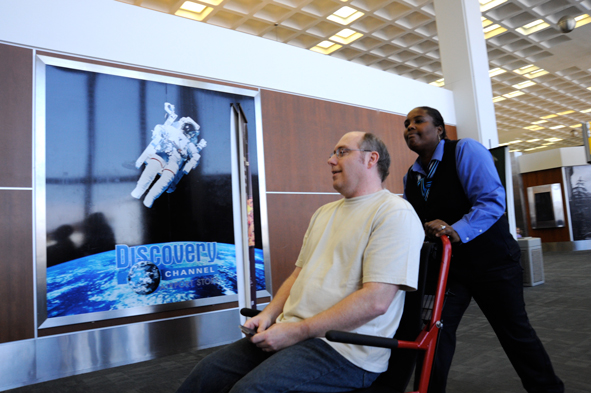
Air travel can be confusing for someone with dementia. You’re going to want as little stress as possible! Leaving time to make your flight or connection is one simple way to reduce anxiety. Additionally, you might consider requesting a wheelchair (even if mobility is not an issue) so that an attendant can help you navigate the airport.

5. Look for a companion restroom.

Airports are crowded and distracting. A companion restroom ensures you do not have to leave the person unattended, and can make it easier to assist if they need help using the restroom.

Overall, when it comes to traveling with someone with dementia, the best rule of thumb is to go with the option that will cause the least amount of stress or anxiety (for you and them).

Happy holidays!

Have you taken a trip with someone with dementia? Share your advice for safe travel in the comments.

What do caregivers need for daily survival?

I’m a caregiver. I’m also a mother. I’ve raised five children well into adulthood. I have 17 grandchildren of whom I am immensely proud, and now, I live with my 99-year-old mother. She has some memory loss and relies on me for company and to run the house, arrange for caregivers, and provide her with a social life.

And while some people might think being a mother has prepared me for taking care of my own mother…it hasn’t. Because helping your aging parent is a whole lot different from raising your children.

Caregiving for an aging parent is different from raising children.

Living with or near an aging parent with special needs or dementia exhausts us a lot faster than running after little children. With children, there is always a sense of hope because we know they will grow up. They will grow out of whatever misbehavior is driving us crazy at any one time. With your older parents, however, you might feel a sense of despair because you know it will only get worse. At least, that’s how I feel.

Also there is a time limit when we deal with our own children. We know they will only be a toddler for a year or so. We know they will eventually stop having tantrums in the market. We know they will learn to read and write. We know that one day somewhere within a 20 year span or so, they will graduate and move out of our house and be on their own.

Dealing with aging parents offers new challenges. We have no idea how long each phase will last. And each one leads to a loss of function and increased dependence, rather than growth and independence.

The reality is that when you’re caring for an aging parent, it can be hard to remain hopeful.

My caregiver survival kit

I’ve been a caregiver for my mother these last two and half years. It’s exhausting, overwhelming, and a lot of times I do fall into that spiral of despair. That’s why over the years, I’ve developed my own “survival” kit. These points help me get through the lows, so that I can enjoy the highs with my mother.

What you need for your own survival:

1.Sense of humor
This may be the most important thing of all. Laughing at adversity has a proven track record. It will make you healthier and happier. You may not have this talent innately, but you can learn to make light of your situation. Look for the humor in every action that may at first bring tears to your eyes. The funny combination of clothes your father assembled to wear when going out. The way your relative dribbles food down her chin when she eats  The paranoia your family member exhibits about the strangest things. You can smile or you can cry. It is your choice.

Do you have a favorite funny movie? Was there a TV show that always made you laugh? You can watch these on TV or through a service such as Netflix or Hulu. Do it. You need to laugh out loud often.

2. Friends of your own

It is vital to have friends or a support group with whom you can share your feelings. Do not stuff your feelings inside. And do NOT feel guilty for negative thoughts or feelings. You are going through Hell. It is hard. It is sad. And you have no idea when it will be over. You need help in processing your fear and anger and uncertainty.

If you don’t have local friends, find a group that will understand. There are many support groups such as those at Iona, for adult children who are caregivers. If you cannot find one where you are, join a group such as Rotary, the Lions Club, or Toastmasters. You need people to socialize with and people who understand. That is why the support groups designed especially for caregivers are best of all. Find one and join it right away.

3. Imagination

You may be forced to give up parts of your life. You might move in with your parent. Or you could move across the country to be near them without actually living in the same house. In many ways your life will be turned upside down. So it is very important to have an idea of what you will do next. You need to envision a life in your future. You can begin to plan with words written in a journal or perhaps with a “Vision board”. I’ve been keeping a journal for three years now, and it has been a source of comfort in my life. It helps me process my feelings and reflect on the daily changes in my life. And looking back, it is fun to read. I enjoy writing in it very much because it is something proactive that I can do for myself.

You will get through this. So be inventive about ways to enjoy life now. Be brave about planning for the future. The future will come.

4. An inner life

Are you a member of a faith community? Do you have a strong spiritual belief? Are you a Buddhist or a Yogi? Do you like to read about Quantum Physics? What ever it is, practice it. If you are religious, go to your place of worship. If not, then try to find something that resonates with you. Meditation works magic for many people. There is great peace in knowing that we are not alone. There is solace in knowing we are part of something greater than ourselves.

Or, you might prefer going for a walk or simply taking time to read, rest, or meditate. Either way, I encourage you to find a way to explore your own inner life. Sometimes this happens most easily by studying the lives of others who have written about it.

5. Patience
You can wish for it. You cannot buy it. You must learn it. Good luck!

Do you have other caregiver survival tips? Please share in the comments!

By Bonnie B. Matheson

Bonnie B. Matheson is a mother, grandmother, and daughter. She is an author, life coach, and insatiably curious person. Bonnie graduated from George Mason University with a B.A. in psychology in 1998 at the age of 56.  Her book, Ahead of the Curve: an intimate conversation with women in the second half of life, is available for sale on Amazon. Today, Bonnie lives in her old room at her mother’s house in Washington, DC (Bonnie’s house is in Charlottesville, VA). Her two small dogs, Lord Byron and Magnus, keep her company.

Daughter cautions to other adult children: ‘Don’t wait until a crisis’

After helping her mother with a health crisis, Iona board member Jennifer Disharoon cautions other adult children: start planning now!

Never in my wildest dreams could I have predicted that at age 45 I would be dealing with a caregiving crisis involving my mother. By most standards, my 69-year-old mother would be too young to experience the type of health issues that force an older adult to seek outside help.

Unfortunately, this is exactly what happened.

Sleepless nights and frantic questions

My mother had suffered all her life from mental health issues and obesity, which morphed into mobility issues and other health concerns as she aged. When I got the call that every child dreads informing me that my mother was in the hospital and gravely ill, I was completely unprepared.

I wish I could have back all the sleepless nights and avoided the stomach-churning stress I experienced while helping my mother make important decisions regarding her care. What should I do about her finances? Is assisted living the right option for my mother? How will we pay for the additional care she desperately needs?

After the dust settled and my mother had moved into assisted living, I wished that I had taken steps earlier and understood the programs and options available to the aging.

That is what drew me to Iona.

Connecting with Iona

My first introduction to Iona Senior Services was through my employer. My firm bid on providing accounting services which allowed me to understand more about Iona’s mission as well as the services and programs they provide to the community.

If only I knew about Iona Care Management, one of Iona’s many services, earlier! I could have saved myself a number of headaches and a great deal of confusion as I explored options for my mother who could no longer care for herself.

Iona’s community impact

After spending countless hours on the phone and in meetings with various agencies and institutions and trying to figure out what to do for my mother, I have truly come to appreciate the role Iona plays in our community.

I have since recommended Iona to colleagues and friends with aging parents who need adult day services, fitness classes, nutrition services and information to help with a difficult transition. Iona even provides support for caregivers who often feel overwhelmed by the enormous challenge of juggling the responsibilities associated with an aging parent while also managing a career, a household, and children.

Today, I am very pleased to serve on Iona’s board of directors and participate as a volunteer for weekend meal delivery. I see the positive impact that Iona has had on the people they serve with my own eyes every time I deliver a meal or visit Iona’s building. Now that I am familiar with all the resources available from Iona, I find myself seeking out the resources on their website and engaging with the programs and services offered.

Don’t wait — plan ahead!

I am happy to report that my mother is thriving in a wonderful assisted living community, she is receiving the necessary healthcare, and her financial situation is stable.

Following my own experience, I tell friends, family, and colleagues that it is never too early to start thinking about caring for aging parents or other family members. Even an introduction to the programs and services available to aging adults, as well as the areas that seniors and their caregivers need to be prepared to address, goes a long way toward making the transition easier and less disruptive for all involved.

If you or your family is starting to question what happens when mom and dad can no longer manage on their own, I encourage you to talk with Iona. Do not wait for a crisis – plan ahead!

To speak with an expert social worker, contact Iona’s Helpline at (202) 895-9448, or email info@iona.org.

By Jennifer Disharoon

Jennifer Disharoon, MBA serves as Marketing Director at Gelman, Rosenberg & Freedman CPAs. She has 20 years of experience in professional services marketing including branding, campaign management, and business development, and she has held a number of leadership positions in the professional services industry. Her interests and volunteer work include support for women and children affected by domestic violence, women with cancer, and aging adults.


Five tips for communicating with someone with memory loss

Everyone needs to feel that they’re understood, secure and cared for, and not alone.

For individuals living with memory loss due to Alzheimer’s disease or another type of dementia, however, these emotional needs can become more necessary and yet be harder to communicate effectively. They may experience anger, confusion, sadness, stress, and feelings of isolation as their sense of self, connection with others, and abilities change.

As a family member or friend of someone with memory loss, you can be a reassurance. Additionally, with your support, the person can maintain their independence and confidence, as well as their self-worth and esteem.

Effective communication is just one way that you can support a family member or friend with memory loss. Remember, communicating with someone with memory loss is very different from other forms of communication. You may feel that you are being clear and direct. But, the disease has affected how your family member or friend processes information.

While you cannot control the progression of disease, you can control your reaction to it. If you’re caring for someone with memory loss, these five communication tips may help.

  1. When speaking with the person try to avoid correcting, arguing, or using logic. Instead, accept their reality, validate their feelings, provide reassurance, and redirect them to another topic or activity.

    Here’s an example from the Alzheimer’s Association:
    Patient: “I didn’t write this check for $500. Someone at the bank is forging my signature.”
    Don’t: (argue) “What? Don’t be silly! The bank wouldn’t be forging your signature.”
    Do: (respond to feelings) “That’s a scary thought.” (reassure) “I’ll make sure they don’t do that.” (distract) “Would you help me fold the towels?”

  2. Break questions and tasks down into multiple parts if needed. In doing so, you’ll avoid overwhelming the person.
  3. Keep background noise to minimum. This helps to hold their attention and limits distractions.
  4. Limit choices.
  5. Communicate through touch. Touch can be an important form of communication because it can express affection, comfort, and reassurance. Additionally, in the late stages of dementia, the person may not be able to communicate verbally, and touch may be one of the few ways they can communicate. Find what type of touch is meaningful and comfortable for the individual. Some forms of touch include hugging, holding hands, or placing your hand on their shoulder.

And, of course, another way to support a loved one with memory loss is to practice self-care.

This means learning to forgive your loved one, as well as yourself, for all of the ups and downs that happen during the memory loss journey. Remember: there is no such thing as the perfect caregiver.

In addition to practicing patience and kindness towards yourself, speaking with experts and peers experiencing similar challenges can also be a huge help and relief.

On Monday, November 6, 2017 from 6:30 to 8:00 PM, licensed social worker Bill Amt will be leading a workshop on supporting a person with memory loss. His presentation will cover:

  • Ways you can better understand what memory loss is like for your loved one
  • More practical tips for communicating effectively, including how to have a conversation about driving
  • How to help with activities of daily living• Available community resources
  • Caregiver respite
  • And more!

This is a FREE workshop offered in partnership with Brighton Gardens of Friendship Heights. For more information, please click here.

How joining a support group changed my life

The author, Bonnie Matheson, shares how joining a support group has benefited her caregiving journey.

Do you ever look back on a particular event in your life or a decision you’ve made, and think, “That changed the course of my life?”. This has happened to me several times during my 75 years – and, most recently, I realized it had happened again.

My attitude and, better yet, my whole life have changed completely. When I began going to a support group for caregivers at Iona Senior Services everything got better.

The decision to go to a support group was made casually, and yet, desperately.

Looking back, I now see how brave it was of me to venture out into the world and admit I needed help taking care of my mother. I knew I was running out of steam on my own.

So, I looked for “support groups for eldercare caregivers” on Google. Eventually, I narrowed my search down to Iona. But even then some of their groups were full and I was waitlisted. Fortunately, I eventually found one that had room for me.

I was scared. But I went.

My mother is 99 and I am 75 years old. It was pretty apparent to me immediately that most of the people in the group were closer in age to my adult children. Their ailing parents were often my age or even younger.

However, there were a few people there whose parents are in their 90s. And, regardless of the age gaps, immediately everyone made me feel as if this group was the perfect “fit” for me.

When I told my story, everyone seemed to understand. That made me feel vindicated and less guilty.

I believe guilt is one of the big “no-nos” in life. Yet so many of us caregivers feel guilty. We feel we should be doing more. Or we feel guilty because we don’t want to do more. Or we feel guilty for wanting to know how long it may be until caregiving will be over.

Those feelings of guilt, anger, or fear are all difficult to say aloud anywhere else. But within the group, I found a safe space to hear others’ deepest, darkest fears and to tell my own when I was ready.

Since that first day, I’ve received helpful suggestions based on experience. I’ve built strong bonds, and I’ve shared special moments of healing. Now, I cannot wait for the meeting, so that I can find out how everyone is doing.

After more than a year of being a member of this group, I know I am “home.”

When I am at a low point, I remember words I have heard at some meeting, or experiences of someone else that make me grateful for my own good luck. I now practice meditating, which has helped me immensely in gaining perspective when viewing my life to date.

Every day, I use some trick or method that I learned in my Iona support group to help me deal with my caregiver role. Taking the first step and asking for help can be so hard. Believe me, I get it! But, based on my experiences, I cannot recommend it enough.

To help get you started, here are five lessons learned from a caregiver.

1. First of all find a group! Finding a support group can be challenging. You can start by calling Iona at (202) 895-9448. Even if one of their groups has a waitlist, they can provide information about other local groups.

2. Go to the first meeting. Iona has professional social workers who are expert moderators and can help guide participants. The groups are warm and welcoming.

3. Tell them how you feel. I was frank and told my true feelings. Everyone understood. The support group is safe, and I felt comfortable telling my whole story, including my own negative feelings.

4. Listen. When I heard everyone’s stories, I realized that I am NOT alone. Perhaps the greatest gift is that knowledge that you are not alone. You can seek out support and ask for help. You can be honest and unafraid even though you are so vulnerable.

5. Live it. Take the tools you learn at meetings and use them to build a better life for yourself, your family relationships, and your aging loved one.

My outlook is so much more positive now that I started attending a support group. I have accepted the changes in my life with good humor (finally). I am still looking forward, but now I am living very much in the present.

To learn more about Iona’s support groups, call (202) 895-9448. 

By Bonnie B. Matheson

Bonnie B. Matheson is a mother, grandmother, and daughter. She is an author, life coach, and insatiably curious person. Bonnie graduated from George Mason University with a B.A. in psychology in 1998 at the age of 56.  Her book, Ahead of the Curve: an intimate conversation with women in the second half of life, is available for sale on Amazon. Today, Bonnie lives in her old room at her mother’s house in Washington, DC (Bonnie’s house is in Charlottesville, VA). Her two small dogs, Lord Byron and Magnus, keep her company.


Aging & Caregiving Glossary of Terms: A Comprehensive Guide

The terminologies and language we use to describe aging services are complex and confusing. Sometimes, it seems, understanding the language of aging can be the first big barrier to getting the help you need.

For someone looking for care, planning ahead, or managing a health crisis, getting caught up in the jargon should be the least of their concerns. And yet, families and older adults are often expected to be literate in aging and health terms.

There are acronyms to memorize. Word variations that essentially mean the same thing. And terms defined by legislation, insurance coverage, and more.

While there’s no simple way to ensure communication and language results in true understanding, professionals at the very least should explain all the terms they use.

That’s why we’ve collected and defined common words associated with caregiving and aging. We hope that you will find this glossary helpful. As this is a long list, one simple way to search for a specific term is to press “Ctrl+F” for a search bar in the right corner of your screen.

Aging & Caregiving Glossary of Terms

Area Agency on Aging (AAA):

These local (usually government) agencies oversee the delivery of certain federally-funded services (including case management, transportation, and nutrition) authorized by the federal Older Americans Act.

Activities of Daily Living (ADLs):

Basic skills a person must have to remain independent. These skills include walking, eating, dressing, bathing, toileting, and transferring (getting in and out of chair, getting in and out of a bed, or sitting up in bed). Sometimes people use the term “ADL” to collectively include both ADLs and IADLs, or Instrumental Activities of Daily Living.

Adult Protective Services (APS):

This local government agency employs social workers to help older adults who may be victims of abuse, neglect, and exploitation. Adult Protective Service agencies in DC, MD, and VA also help in cases of suspected self-neglect.

Advance Directives:

A term that collectively refers to certain legal documents used to protect self-determination when a person (for whatever reason) is unable to communicate their own desires regarding healthcare decisions. There are two basic types of these legal documents: Living wills (see Living Will) and powers of attorney (see Powers of Attorney).

Aging Life Care Expert:

Alternative term for case manager.

Assisted Living Facility (ALF):

A long-term care housing option, which provides housing and some personal care for older adults. Residents may live in their own apartments or (in group homes) may have their own room and share common space.  Services offered by assisted living facilities typically include: personal care, meal preparation, medication management, housekeeping, transportation, and social activities. Some assisted living facilities offer additional care for adults with memory loss.  In the spectrum of long-term care housing options, assisted living is the middle step between independent living and nursing homes.

Care Manager:

An alternative term for “case manager.”

Case Manager:

Case Managers may help their clients in a variety of ways, including: assessing client needs, preferences, and budget; educating clients about available services; linking or referring clients to those services; helping eligible clients apply for public benefits; and monitoring and tweaking those services over time.  In the DC metro area, almost anyone can call themselves a case manager.  At Iona, all of our case managers are licensed social workers or registered nurses.

Certified Nursing Assistant (CNA):

This is a professional designation. CNA’s typically work as Personal Care Aides (PCAs) or Home Health Aides (HHA’s). The specific assistance that they can provide is legally determined by state jurisdiction.

Certified Residential Facility (CRF):

Group homes, certified by the city, to provide housing and sometimes care to specific populations. In a group home, a resident will have their own room and share common space.  CRFs may offer independent living or assisted living.

Co-insurance payment:

A term used for certain types of health insurance policies. A health insurance provider may require a patient to make a co-insurance payment for certain covered services.  That is, the provider pays for a percentage of the service cost and the patient pays the remaining percentage.  Because co-insurance payments are based on percentages (and not set fees—like co-pays), the actual amount of the co-insurance payment will vary depending on the service cost.

Co-pay:

A term used for certain types of health insurance policies. A health insurance provider may require a patient to make a co-pay for certain covered services. That is, the provider pays for part of the service cost and the patient pays a set fee for the remainder.  Unlike co-insurance (which is based on percentages), co-pays usually are set at an exact fee for certain covered services.

Combined Form:

This DC form is used to apply for Community Medicaid, Medicaid Spend-down, QMB, and SNAP.

Companion:

Similar to a personal care aide, but with less hands-on duties.  A companion, for example, may supervise and cue personal care, but would not physically assist with the care.  Companions usually cost less than a personal care aide.

Conservator:

A court appointed official who manages (and “conserves”) the finances of a person whom the court has deemed incompetent.

Continuing Care Retirement Facility (CCRC):

A long-term care housing option that provides multiple levels of care, from independent living through nursing home care, under one umbrella organization.  Depending on the facility, residents may reside in their own apartment through all stages of care.  CCRC’s often require residents to pay an expensive entry fee in addition to monthly fees.

Custodial Care:

Refers to services including personal care, housekeeping, meal preparation, medication reminders, and sometimes transportation.  The term is often used when making a distinction between these services (typically provided by family or an aide) and “skilled nursing care,” which would be provided by a nurse or a physical- or occupational therapist.  Skilled nursing care is often covered by health insurance, whereas custodial care rarely is covered.

DC Office on Aging (DCOA):

This office is DC’s Area Agency on Aging.

Delirium:

An umbrella term that describes a set of symptoms, including confusion and disorientation. Deliriums are caused by a variety of medical conditions, including infections, vitamin deficiencies, and medication interactions. In certain situations, delirium can require emergency medical care. It is sometimes confused with dementia.

Dementia:

An umbrella term that refers to any of several permanent and progressive diseases that cause memory loss, including Alzheimer’s, Huntington’s, Parkinson’s, and stroke.  It is sometimes confused with delirium.

Discharge Plan (D/C):

This is provided following a hospital or nursing home stay. A discharge plan specifies medical instructions and prescriptions with which a patient is advised to follow-up after they leave the facility. The plan also could include medical equipment, and referrals to services (like in-home skilled care or custodial care) intended to help the patient be safe after discharge.

Do Not Resuscitate Order (DNR):

A legal document informing medical personnel that a patient does not wish to be resuscitated under certain circumstances (usually life threatening).

Durable Medical Equipment:

Generally speaking, includes medical equipment that cannot easily be used up—like wheelchairs, walkers, crutches, etc.

Extra Help:

In terms of Medicare, this is extra financial assistance to help lower-income Medicare recipients afford premiums and co-insurance associated with Medicare Part D.

Formulary:

The list of medications covered by a particular health insurance plan.

Geriatrician:

A physician specialized in treating older adults.

Group Home:

Another name for Certified Residential Facility.

Guardian:

A court appointed official responsible for making healthcare and day-to-day decisions of a person whom the court has deemed incompetent.

Home Care Provider:

An agency (or person) that provides in-home custodial care, and sometimes in-home skilled care.

Home Health Agency:

In its strictest definition, a home health agency accepts Medicare to provide skilled and custodial care. Some Home Health Agencies also offer private pay services or Medicaid services.

Home Health Aide (HHA’s):

Home Health Aide is a Medicare-defined type of assistance. It refers to Aides who are paid by Medicare.  Medicare HHA’s only help with personal care (i.e. bathing, dressing, and grooming).

Hospice:

A type of care that provides comprehensive services at the end-of-life. Hospice care focuses on comfort care towards easing one’s dying process.  It may include personal care, skilled nursing care, and pastoral/counseling. Hospice is similar, but not the same as palliative care. To receive hospice care, patients must agree to stop seeking a cure for their diagnosis. Patients receiving palliative care may still seek a cure.

Housekeeping (heavy):

Heavy housekeeping (as opposed to light housekeeping) refers to labor intensive housekeeping tasks including laundry, scrubbing, mopping, and vacuuming.  Many home care providers will not do heavy housekeeping.

Housekeeping (light):

Light housekeeping (as opposed to heavy housekeeping) refers to housekeeping tasks that are not very labor intensive including washing dishes, dusting, and straightening.

Instrumental Activities of Daily Living (IADLs):

Refers to a set of skills that often are needed for a person to function independently. IADLs should not be confused with ADLs, which are more basic skills a person must have to remain independent. IADLs include: meal preparation, shopping, medication management, money management, use of telephone, heavy housekeeping, light housekeeping, and transportation ability.

Independent Living Facility:

A long-term care housing option that provides apartment housing for older adults (who do not need personal care), and may also provide services like meal preparation, transportation, and social activities. Some independent living facilities receive Department of Housing and Urban Development money, so that residents pay around one-third of their income in rent.  Other independent living facilities are not subsidized.  In the spectrum of long-term care housing options, independent living is the first level of care, followed by assisted living and nursing homes.

Lead Agency:

The DC Office on Aging funds five nonprofits, called “lead agencies,” to provide comprehensive services to older adults living in Washington, DC. Iona is one lead agency.

Level of Care:

Generally refers to how much care a person needs.  In terms of facility admissions, “level of care” may refer to the minimum amount of service a person needs to be eligible for admission into a facility.

Living Will:

A type of advance directive that specifies what kinds of end-of-life treatments a person wants or does not want.  The document is used when a person (for whatever reason) can no longer communicate their end-of-life preferences directly to medical staff.

Long Term Care (LTC) Facility:

A term that collectively refers to independent living facilities, assisted living facilities, continuing care retirement communities, and nursing homes.

Long Term Care (LTC) Insurance:

A type of insurance that covers long-term custodial care sometimes at home, and sometimes in a facility, depending on how the policy is written.  Some Medicaid sub-programs act as LTC insurance for low-income/asset older adults.  Medicare does not cover long-term custodial care.

Medicaid:

A federally- and state-funded health insurance (and long-term care) program for low-income/asset adults and children.  The program is administered on the state level. Eligibility requirements, and coverage, vary from one state to another. Medicaid includes several sub-programs.  Some of these sub-programs will also pay for long-term custodial care.

Medicaid Waiver:

Also called “Waiver” or “EPD Waiver,” this sub-program of Medicaid provides health insurance and long-term custodial care for low-income/asset older adults who also have certain level of care needs. Like other Medicaid programs, the Waiver is administered at the state level, meaning that eligibility requirements and coverage vary from one state to another. While offered in DC, MD, and VA, this program is not offered by all 50 states. Some states have “waived” out of providing this program.

Medicare:

A federally- funded health insurance program for older retirees and people with long-term disabilities. Medicare has four parts: Part A covers inpatient medical treatment; Part B covers outpatient medical treatment; Part C (also called Medicare Advantage) is an HMO option that combines Parts A, B, and D under a single provider; and Part D covers prescriptions.  To be eligible for Medicare, one must be an older adult (age 65+) or have a long-term disability. Parts B, C, and D also require that one has paid into the system — meaning that they had payroll taxes deducted from their paychecks for a number of quarters. The required number of quarters varies depending on the age of the applicant. Medicare does not cover long-term custodial care needs.

Medicare Savings Program (MSP):

Comprised of four sub-programs (QMB, QI, QDWI, and SLMB), this Medicaid-funded program helps low- and moderate-income Medicare beneficiaries pay for associated premiums and co-insurance associated with Medicare. NOTE: the four sub-programs provide different levels of financial assistance.

QDWI– stands for “Qualified Disabled and Working Individuals.”

QI – stands for “Qualifying Individual.”   See also Medicare Savings Program.

QMB – stands for “Qualified Medicare Beneficiary.”  See also Medicare Savings Program.

SLMB – Pronounced “slimbee.”  This acronym stands for “Specified Low-Income Medicare Beneficiary.”

Medication Administration:

Refers to the physical act of taking one’s own medication or physically helping another person to take his/her medication. For example, taking a pill from a bottle and handing it to a patient is medication administration.  Likewise injecting a patient with insulin is medication administration. The only professions which can legally administer medications are nurses, physicians, and physician assistants.

Medication Management:

An instrumental activity of daily living skill, which refers to a person’s ability to safely manage his/her own medications. Medication management includes such separate tasks as remembering to take one’s medications, physically administering medications, remembering to refill prescriptions, and picking up medication from the pharmacy.

Medication Reminders:

When a person reminds another person to take their medications, they are making a “medication reminder.” Medication reminders are considered custodial care and therefore may be performed by a Home Health Aide.  Home Health Aides cannot administer medication (see Medication Administration).

Money Management:

An instrumental activity of daily living skill, which refers to a person’s ability to appropriately use and handle their own money. Money management includes such separate skills as the ability to count and make change, knowing when and how to use money, paying bills on time and appropriately managing one’s bank accounts, etc.

Occupational Therapy:

An allied health therapy sometimes ordered at rehabilitation facilities or at home, which treats fine motor skills (e.g. movement of the hands, grasping, etc.).

Nursing Home:

A long-term care housing option that provides housing, skilled nursing care, and personal care. Nursing homes (sometimes called skilled nursing facilities or rehabilitation facilities) also provide short-term physical rehabilitation care. In the spectrum of long-term care housing options, nursing home is the final step following independent living and assisted living.

Palliative care (sometimes called comfort care):

Medical and psychosocial comfort care for patients who have certain types of disease-related, uncontrolled discomfort (including pain, fatigue, appetite loss, and insomnia).  Palliative care is similar, but distinct from hospice.  Unlike hospice, palliative care works in conjunction with curative treatments.

Pastoral counseling:

Faith-based counseling.  Pastoral counselors generally are trained in both counseling and theology.

Personal Care:

A term that collectively refers to bathing and grooming. It should not be confused with custodial care, which is a broader term (see also Custodial Care).

Personal Care Assistant/Aide (PCA’s):

Personal care aides primarily provide personal care (bathing, dressing, and grooming). Depending on how they’re paid (e.g. private pay or Medicaid), they also may provide assistance with other ADLs and IADLs. Sometimes just referred to as Aide.

Physical Therapy:

An allied health therapy sometimes ordered at rehabilitation facilities or at home that focuses on the functioning of large muscle groups (e.g. ambulation, transferring, etc.)

Powers of Attorney (POA):

A legal document that allows a person to appoint another person to act on their behalf.

Recertification:

Certain concrete benefits (e.g. Medicaid, Food Stamps, Supplemental Security Income, etc.) require recipients to periodically prove again (or “recertify”) that they are still eligible to receive those benefits.

Rehabilitation (physical):

Typically refers to skilled nursing care intended to improve a patient’s functioning so the patient can return to the community.  The term also is used in substance abuse treatment, but with a different meaning.

Rehabilitation facility:

Another name for Nursing Home.

Self-determination:

Refers to a person’s will, ability, or right to make their own choices regarding their life.

Self-neglect:

A term used to describe intentional actions that a person is taking, or is not taking, that results in the person failing to meet their own basic needs.

Skilled Care:

Refers to care that by law must be administered by a nurse, physical therapist, or occupational therapist.

Skilled Nursing Facility (SNF, pronounced “sniff”):

Another name for Nursing Home.

Social Security (SSA):

This federally-funded public benefit acts like a pension and provides life-time income for retirees. To be eligible, older retirees must be at least age 62, and have paid into the system—meaning that they had payroll taxes deducted from their paychecks for at least 40 quarters (or 10 years of full-time employment). Social Security payments are based on how much money a beneficiary paid into the system. Thus retirees who held higher income jobs receive higher Social Security payments.

Social Security Disability Income (SSDI):

This federally-funded public benefit provides long-term income for adults whose disability prevents them from maintaining long-term employment. To be eligible, an adult with a qualifying disability also must have paid into the system—meaning that they had payroll taxes deducted from their paychecks for a number of quarters. The required number of quarters varies with the age of the applicant. SSDI payments are based on how much money a beneficiary paid into the system. Thus, beneficiaries who held higher income jobs receive payments. When an SSDI beneficiary turns age 62, their SSDI payments automatically convert to Social Security payments.

Social Worker:

Social Workers are university-trained professionals who provide a variety of services to clients including discharge planning, psychotherapy or counseling, case management, linking clients to community resources, facilitating support groups, and educating clients about long-term care services.  Social workers are employed at hospitals, nursing homes, and at Iona. Some common accreditations include:

BSW – Bachelor degree in social work.

LGSW – “Licensed Graduate Social Worker.”  To be eligible for this license, a social worker must have an a master degree in social work.

LICSW – “Licensed Clinical Social Worker.”  Among social workers, only LICSW’s can practice psychotherapy. To be eligible for this DC or Virginia license, a social worker must have a master degree in social work or a PhD, and have completed at least two years of practice under the supervision of another LICSW.  Maryland’s equivalent of this licensure level is LCSW-C.

LSWA – “Licensed Social Work Associate.”  To be eligible for this license, a social worker must have a a bachelor degree in social work.

MSW – Master degree in social work

Speech Language Therapy (SLP – Pronounced “slip”):

An allied health therapy sometimes ordered at rehabilitation facilities or at home. Speech Language Therapists treat patients with speech, swallowing, and cognitive issues.

Supplemental Security Income (SSI):

A federally- and state-funded public benefit that pays income to low-income/asset retirees and/or certain younger adults with long-term disabilities. The purpose of SSI is to raise an individual’s monthly income up to the SSI payment level.  This payment level is determined on an annual basis. As of 2017, the SSI payment level is $735/month. Beneficiaries only receive the amount of money that will bring their current income up to the payment level.  In other words,  if  “Person A” receives $100/month income from any source, Person A will receive $635/month from SSI. Likewise if “Person B” receives $700/month from any source, Person B will only receive $35/month from SSI. If “Person C” receives $735/month or more from any source, then Person C will not receive any income from SSI.

Transfer (in terms of ADLs):

An activity of daily living that refers to a person’s ability to get in and out of chair, to get in and out of a bed, or to sit up in bed.

Do you have an aging or caregiving term that you need defined? Let us know in the comments. Additionally, if you need further explanation for any of these terms, call (202) 895-9448, and ask to speak with Iona’s Helpline. 

But I Don’t Need Your Help: Five Reasons Your Parents May Resist Your Support

Imagine this scenario: Your dad is having a difficult time doing basic household activities and errands. You’ve offered to drive him to appointments, pick up a few groceries, or help organize his bills. And yet, every time you make an offer, he refuses to accept your help.

You’re worried and maybe even a little frustrated that you can’t convince him otherwise. What should you do?

First, you should know that this situation is not uncommon! We often hear from adult children concerned that their older relative just won’t listen or accept their help.

Understanding the reasons why they might reject your offer, and finding ways to empathize with how they are feeling, is a good first step to overcoming your loved one’s resistance.

Five Common Reasons Why Your Parents Won’t Accept Your Help

1. They want to remain independent.

While from your perspective, offering to do a load of laundry doesn’t seem like that big of deal, your parent may see this as the first step to dependence. And dependence can bring up a lot of fears. Am I losing control? Do I still have authority? First laundry, then what? Additionally, while it’s one thing to think, “I’m getting older,” it’s very different to experience the reality that getting older can mean needing extra care.

2. They are afraid to admit they need help.

This fear often relates to wanting to remain independent. The thought is, “If I admit to needing help with this small task, will it lead to losing control over everything else?” Additionally, your relative may be in denial about an illness or denial about a change in their abilities. Admitting they need help requires acceptance first.

3. They don’t want to be a burden to others.

Your family member knows you have your own busy life and schedule, whether that’s work, childcare, or running your own errands. They don’t want to add to your already heavy load.

4. They are private, or don’t trust others.

This reason can be true if you’ve suggested some kind of in-home assistance. While your parents may be comfortable around you, the idea of a stranger in their home can be off-putting. They may also question why you can’t simply provide the care they need or why they have to hire and pay someone to do something you are “capable of doing.”

5. They are uncomfortable with the role reversal.

If their familial role has traditionally been the one in charge and the decision-maker, it can be extremely difficult to accept a change in dynamic. They may resist your help because they are “still the parent and in charge.”


Keep in mind that the reasons why your family member is rejecting or refusing help are not always apparent. In fact, often the reasons can be intrinsic parts of the person’s value system or personal/psychological identity. In that sense, accepting help may even make them feel like they are losing themselves, and that is frightening.

That’s why establishing the “why” behind their resistance is so important. You cannot begin the work of calming any fears until you know the reasons behind them.

If you’re unsure of how to determine the “why” behind their resistance, start by asking! One way to ease into a conversation is to avoid starting with “you” statements, for example, “You need X and I’m going to do Y.” Instead, you might ask, “What kind of help would you want if you weren’t able to do everything yourself and wanted to remain safely in your home?”

Helping a Family Member Who Doesn’t Want Your Help

Iona is offering a special workshop on October 25, 2017 on strategies for caregivers to help a family member who doesn’t want their help. Offered in partnership with Brighton Gardens of Friendship Heights, the class will be led by Donna Tanner, MSW, LICSW, and cover practical tips for getting your family member’s cooperation, as well as expert advice if they continue to say no.

Learn more and register here.

Are You Ready? Five Emergency Preparedness Guides for Older Adults & Caregivers

By now you’ve seen photos of the devastation in Houston caused by Hurricane Harvey. And you may now be reading about emergency preparations underway in Florida in advance of Hurricane Irma. Perhaps you wonder what you might do, or how a loved one might cope, were an emergency to occur here.

September is National Emergency Preparedness Month, a month-long time to focus on your planning on how you can take action when disaster strikes – where you live, work, and visit.

Even here at Iona, we have our own Emergency Preparedness Plan in case there is ever an emergency at our site or in the community. And we want to make sure you are prepared too.

To honor this month, we’d like to encourage you to create your own emergency plan for you or a loved one. Take a look at these free resources to help you get started.

Five Free Resources for Emergency Preparedness

1. Disaster Preparedness for Seniors by Seniors by the American Red Cross
2. Prepare for Emergencies Now: Information for People with Disabilities by the U.S. Dept. of Homeland.
3. The Calm Before the Storm: Family Conversations about Disaster Planning, Caregiving, Alzheimer’s Disease and Dementia by the Hartford Center for Mature Market Excellence.
4. Stay in Touch in Crisis Situations by the Eldercare Locator.
5. Pets and Disaster Safety Checklist by the American Red Cross.

Do you know of other helpful resources to help you prepare for an emergency? Let us know in the comments. 

By Leland Kiang, LICSW

Leland Kiang, LICSW is manager of Iona’s Information & Referral Help Line, whose staff answers questions about senior services throughout the DC metro area.  Leland also has written articles for BIFOCAL, Unite Virginia, and the National Resource Center on LGBT Aging.

Your Commitment Restores Hope in This Caregiver Son Who Never Gives Up

“I’m a fighter. We’re going to turn this thing around or die trying. That’s just how I’m built.”

An only child, Sergio Rozzelle does everything to support his mother, Margaret. Three years ago, friends and neighbors started noticing a change in Margaret’s behavior.

“She started having symptoms of dementia and some friends reached out to me and said, ‘I think you need to come back home,’” says Sergio, who had previously lived in Atlanta, GA for 24 years. At first, Sergio commuted back and forth from Atlanta to DC every few weeks. Then, as his mother’s symptoms progressed, it became clear that a move was necessary.

“I had this decision: do I move her to Atlanta or do I move here,” Sergio recalls. A trial-run in Atlanta, however, revealed just how difficult a move would be. “I flew her down to Atlanta for Thanksgiving, and it was an ordeal,” says Sergio. “And even when she was with me, she was not happy. I could see the symptoms were much more prominent because she wasn’t in familiar surroundings. She was confused. There was no way.” So, in December 2014, Sergio left Atlanta. “I just dropped everything and moved up here,” he says. Once in DC, Sergio’s fight for his mother’s care only deepened. “I have no reverse,” he says. “I’m going to do anything I can if it helps.”

For Sergio, that meant getting his mom to Iona’s Active Wellness Program at St. Alban’s.

Sergio first learned about our program from Vivian Harris, a family friend who worked for Iona. It seemed like a great fit for his mom. The only problem — Margaret refused to go.

“Mom was not interested in coming at all,” Sergio says. “It was like pulling teeth.”

But, Vivian had the perfect solution: why not frame the program as going to work? “The whole idea was that mom would be going to work with Vivian to help others,” says Sergio.

Margaret agreed to go with Vivian, and immediately fell in love with our program, and manager Courtney Tolbert. “Mom really, really loves Courtney. Courtney is absolutely amazing. She treats everybody, every single person, with the care and personal touch and interaction that they need.”

That first visit was nearly two years ago.

Today, Margaret attends the Active Wellness Program at St. Alban’s every day. “I drive her myself and we live all the way out in Southwest DC, but she’s attached to this program. She just loves it,” says Sergio. “It’s made her feel good about herself again. She’s not just sitting around, watching TV. She’s doing things and having new experiences on a daily basis. She’s excited to go every morning.”

Despite the distance, Sergio has no hesitation about making the drive. “The conversations, the activities, the field trips. It’s all worth it. That’s why I come up here every single day. I could get her into a program closer to the house, but it wouldn’t be Iona.”

The positive effects on his mom, Sergio says, have been plenty. “She’s not as anxious anymore. She has a sense of accomplishment because she’s contributing to a community again. And we have something to talk about in the evening.”

Sergio has also noticed positive changes in himself, too. “I feel comfortable,” he says. “Mom is here. I don’t worry about her at all during the day.”

Because of your generous donation, Margaret and other older adults have a wonderful daytime program full of activities and friends. You make it possible for otherwise isolated folks to have a warm and welcoming community.

Summer Vacation: Tips for Traveling with Dementia

A loved one’s diagnosis of Alzheimer’s or other dementia does not mean they can no longer participate or even enjoy traveling. In fact, in the early stages of dementia, the person with dementia may still even want to travel (especially if it’s a favorite activity, or they want to visit familiar places or people before the progression of disease).

Still, traveling does require some extra planning to ensure everyone is safe and equipped to handle a trip. For instance, you might consider traveling only to a known location that involves little changes to the person’s normal routine (like a short trip to see friends or family), or taking a “staycation” instead.

If you’re considering taking a weekend getaway, or even longer vacation, plan ahead with these tips:


traveling dementia

1. Pack an emergency bag.

This bag should include medications and current medical information like dosages, insurance information, a list of emergency contacts, a list of allergies, photocopies of important legal documents, and your travel itinerary. If you’re traveling by air, make this bag your carry-on and also include an extra set of clothing, snacks, and activities.

2. Keep a list of important contact information.

Have your doctors’ names and contact information, as well as the names and contact information of friends and family members to call in case of an emergency.

3. Plan the details of your trip.

Create a schedule with details like where you’re staying, travel times, and what activities or tours you plan to do. Give copies to emergency contacts at home, and keep a copy of the itinerary with you too.

4. Call your hotel ahead of time.

Contacting the staff before you arrive and sharing any specific needs ensures they can be better prepared to help you.

5. Avoid tight connections.

Air travel can be confusing for someone with dementia. You’re going to want as little stress as possible! Leaving time to make your flight or connection is one simple way to reduce anxiety. Additionally, you might consider requesting a wheelchair (even if mobility is not an issue) so that an attendant can help you navigate the airport.

6. Look for a companion restroom.

Airports are crowded and distracting. A companion restroom ensures you do not have to leave the person unattended, and can make it easier to assist if they need help using the restroom.

7. Do not hesitate to ask for help.

Anytime, anyplace! You might consider calling ahead and speaking with a TSA agent or other airport employee or hotel employee, as well as talking through your concerns with friends or family.

Overall, when it comes to traveling with someone with dementia, the best rule of thumb is to go with the option that will cause the least amount of stress or anxiety (for you and them).

Have you taken a trip with someone with dementia? Share your advice for safe travel in the comments. 


Feedback for Iona