
Tips to support someone with dementia during the holiday season

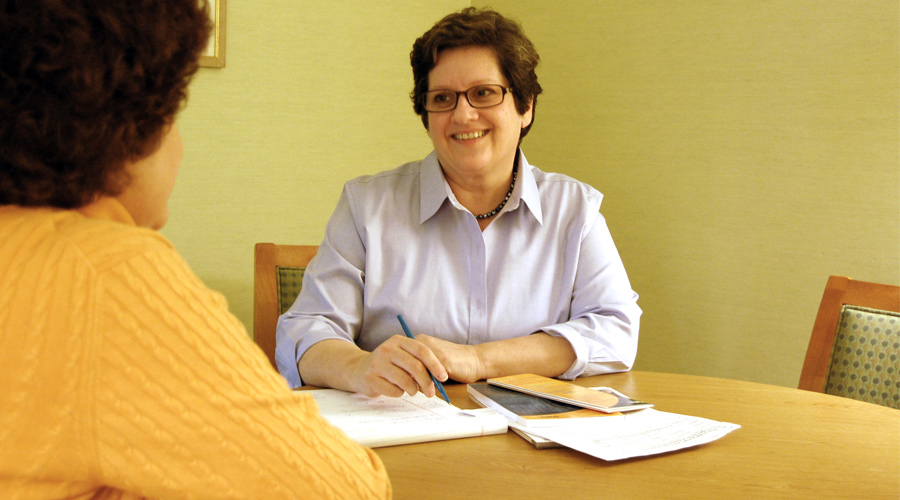
The holidays are a wonderful time to catch up and visit with family and friends you don’t regularly see. Large gatherings, however, can be stressful and overwhelming for someone who has Alzheimer’s disease or another form of dementia. If you have plans to attend or host different holiday gatherings this season, and you’re caring for someone with dementia, keep in mind these four tips to calm any uneasiness and keep the season merry.

1. Make the visit short and sweet.

It’s important to help your family and friends understand that your situation is different now, and you might not be able to spend as much time together as you once did.

2. Stagger visitors to your home.

If family is gathering in your home, see if smaller groups could drop by at different times of the day.

3. Give your person a break.

Keep in mind that people with dementia can get more anxious and agitated than the rest of us, especially when there’s a lot of external stimulation. Offer the person with dementia a break by asking a trusted family member or friend to accompany them to a quiet space in the home. Often 20 or 30 minute breaks to decompress is all it takes to be able to rejoin festivities.

4. Attend Iona’s Memory Café!

Designed  for individuals with memory loss and their caregivers, family members, and friends to get together in a safe and supportive environment, Iona’s Memory Café is a great way to have fun and enjoy special time with your loved one. Our next Memory Café is coming up on Friday, December 28 from 5:00-7:00 PM. We’ll be celebrating the end of 2018 and ringing in the New Year with a live musical performance by Jesse Palidofsky and Seth Kibel. Come sing, dance, or simply sway to piano, guitar, saxophone, and other musical stylings that touch the heart. Follow the link to learn more and register.

We wish you and your family a peaceful and blessed holiday season. And, should you need support during the holiday season, we encourage you to call (202) 895-9448, and ask for our Helpline or email info@iona.org. 
How to alleviate airport stress when travelling with someone with dementia

The holidays can be a stressful time. You may be traveling far distances, and dealing with traffic or a busy airport. If you’re caring for someone who has dementia, those typical travel anxieties can be even more taxing.

One way to alleviate stress now is to set realistic expectations about what’s possible for your holiday, and plan ahead with these four airport tips.

1. Pack an emergency bag.

This bag should include medications and current medical information like dosages, insurance information, a list of emergency contacts, a list of allergies, photocopies of important legal documents, and your travel itinerary. If you’re traveling by air, make this bag your carry-on and also include an extra set of clothing, snacks, and activities.

2. Keep a list of important contact information.

Have doctors’ names and contact information, as well as the names and contact information of friends and family members to call in case of an emergency.

4. Request a wheelchair.

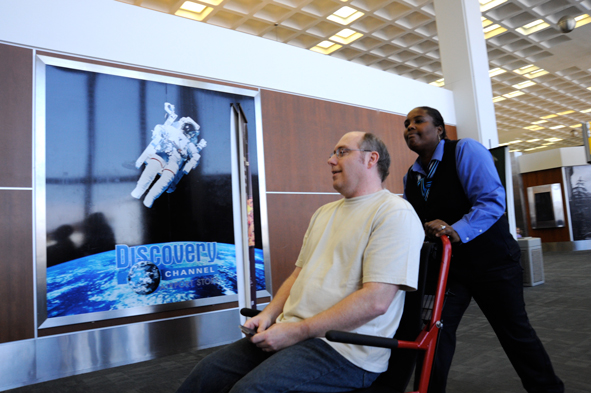
Air travel can be confusing for someone with dementia. You’re going to want as little stress as possible! You might consider requesting a wheelchair (even if mobility is not an issue) so that an attendant can help you navigate the airport.

5. Look for a companion restroom.

Airports are crowded and distracting. A companion restroom ensures you do not have to leave the person unattended, and can make it easier to assist if they need help using the restroom.

Overall, when it comes to traveling with someone with dementia, the best rule of thumb is to go with the option that will cause the least amount of stress or anxiety (for you and them).

Happy holidays!

Have you taken a trip with someone with dementia? Share your advice for safe travel in the comments.

Use Labor Day for Caregiver Self-Care

Though the original intent behind Labor Day was to honor the contributions of workers, we know that family caregivers are often overlooked, despite their growing numbers.

Caregiving requires a lot of energy. You’re putting in hours of physical and emotional effort by coordinating transportation, helping with personal care, managing finances, making sacrifices, and more—all while balancing other life responsibilities like your professional work and other family needs.

And, unfortunately, that often means that you aren’t taking the breaks you need. In fact, you’re likely even spending holidays like Labor Day with your loved one—especially if you’re unable to make other arrangements because of the holiday.

So, how can you find time to recharge in between care tasks? Practicing self-care doesn’t have to be an hours-long activity. Sometimes all it takes is a few minutes, a few times a day, to make a difference in your state of mind, your day, and in turn what you can offer others.

Start small with these ideas:

  1. Enjoy quiet time to read a magazine, newspaper, or chapter from your book.
  2. Take a warm bath with lavender or other calming essential oils.
  3. Go for a short walk. Research suggests that even just 15 minutes a day of exercise can make a difference in your physical and mental health as well, reducing stress, depression, and even helping with sleep.
  4. Practice deep breathing. When you practice deep breathing, you focus on the “now,” not all your responsibilities and problems. By slowing down your breathing and taking deep, deliberate breaths, you can begin to experience relaxation and calm. One very simple breathing exercise that can be done almost anywhere (doctor’s waiting room, in line at the grocery store, or in bed) is to: Inhale through your nose for the count of 5, focusing on expanding your belly, hold your breath for a count of 3, and then exhale slowly through your mouth for 5. For more breathing exercises, visit here.
  5. Check in with yourself and your emotions—and vent! Being able to share your feelings and experiences with others can be one of the most valuable things you can do for yourself. While you may feel like you don’t have the time or that you are getting your emotional needs met from family and friends, sharing your experiences with people who are going through similar struggles, such as those in a caregiver support group, can make you feel less isolated and alone.
  6. Investigate other support services. Services like adult day health services or geriatric care management can provide huge relief by taking on some of your responsibilities.

Unsure where to begin? Need help investigating other support services? Iona can help! Our Helpline is staffed by licensed social workers Monday-Friday, from 9:00 AM – 5:00 PM. Call (202) 895-9448 or email info@iona.org to get support. They can provide referrals to services at Iona or elsewhere, resources and support on planning ahead, communicating effectively with your loved one, finding respite, and practicing self-care.

Four purposeful activities to do at home with someone with dementia

In her popular training, “Filling the Day with Meaning,” Teepa Snow, a leading educator on dementia, says, “Meaningful days matter to all people. This need does not change for someone who is living with dementia.”

That’s a philosophy we all believe here at Iona. Our Wellness & Arts Center, an adult day health program, uses a person-centered model that focuses on individual strengths, preferences, and successes.

Because we serve individuals with a wide range of strengths and challenges, including folks with early memory loss and those in the later stages, identifying each person’s abilities and likes is key to our program. It helps us plan activities that give participants choices throughout the day, and focuses on what they can do, not what they cannot do. In doing so, everyone can have positive new experiences.

As a family caregiver, this philosophy is something that you can do at home too.

No matter the activity you do with your loved one, giving your person a sense of purpose can make a big difference in the success of the activity. This can be as simple as stating, “I’ve made a little mistake and need some help. Will you help me?”

Four activities that can help your family member feel valued, productive, and purposeful

1. A new program we incorporated at Iona that you can recreate at home is foolproof flower arranging. Together or independently, ask your loved one to help create beautiful centerpieces. All you need is an assortment of artificial flowers and a colander with large enough holes that the stems will fit inside. There is a sense of immediate gratification. As you add the flowers, the plain colander transforms into a work of art!

2. Due to the positive response of the “See Me at the National Portrait Gallery” there are now four museums hosting this program. They are: Freer/Sackler, Smithsonian American Art Museum, National Portrait Gallery, and National Museum of African Art. The programs take place during the week (Tuesdays and Wednesdays).

3. Spa Treatment at home. This program is so versatile. It can be done inside or outside, paired with lemonade, tea, coffee, or hot chocolate, depending on the season. And don’t stereotype– men can enjoy and benefit too! All you need is an emery board, polish (can be clear or colored), and some lotion. Provide your loved one with a gentle hand massage using some lotion and file. If desired, you might paint their nails. Here at Iona, we set the stage for a relaxing afternoon of spa treatment by turning on music and using flameless candles.

4. Spiritual renewal doesn’t necessarily mean religious renewal. For some, renewing your spirit can happen by spending time in nature. Finding a local park and sitting in the shade watching children play can be a wonderful way to recharge. Just remember to stay hydrated.

Have ideas for other successful activities to do at home? Let us know in the comments!

What is Geriatric Care Management?

nurse care managementIf helping an aging family member becomes overwhelming, stressful, or burdensome, it may be time to contact a geriatric care manager. But, if you’re not sure what a geriatric care manager is or does, it can be difficult to know if the service is worth it, and if it will meet your family’s needs.

Many of you have asked Iona’s Helpline questions about geriatric care management and how it can help you or a family member.

So, we asked Iona’s Care Management team, to respond with their thoughts.

What are geriatric care managers?

Geriatric care managers, also called Aging Life Care Professionals, coordinate care for older adults based on their individual needs.

They advocate on behalf of an older adult and/or their family in order to support the safety, integrity, and autonomy of the older adult, primarily through the recommendation and coordination of services.

They’re typically educated in social work, psychology, nursing, or gerontology. All of Iona’s geriatric care managers have master’s degrees in nursing or social work, are licensed by their professional boards, and have more than 10 years of experience working with older adults.

What do geriatric care managers do?

It depends on your needs. Geriatric care managers offer one-time comprehensive assessments, suggest next steps, and make referrals based on an older adult’s needs, wants, and resources. For example, a geriatric care manager can educate and assist clients by identifying cost-effective resources such as government benefits, in-home services, and housing options.

If preferred, geriatric care managers can put in place and monitor any needed services and report back updates or changes. They are problem-solvers, who you can run ideas by and contact on an as-needed or regular basis. As outside professionals, they can help mitigate the stress family members may feel as a relative ages and reduce the strain on familial relationships.

And, for those family members who live far away, geriatric care managers can be the local eyes and ears and be available when needs change. For example, they can help oversee medical emergencies and navigate the healthcare industry.

When should you call a geriatric care manager?

It is never too early to call! Many people don’t learn about geriatric care management services until a health crisis occurs. While that’s an appropriate time to contact a geriatric care manager, you might also consider calling when things are going well.

This is an ideal time because you and/or your family can learn what resources are available and the associated costs without the stress of an impending crisis. And, having a plan may prevent or delay a crisis and will definitely make navigating a crisis easier.

Other signs it may be time to call a geriatric care manager include:

  • You or a relative want to plan for changes that occur with aging e.g. questions about house renovations, downsizing, long-term care coverage, in-home care options, etc.
  • You notice a cognitive change in yourself or a relative e.g. trouble focusing, getting lost, not remembering to pay bills, etc.
  • You notice a mobility change in yourself or a relative e.g. difficulty walking, getting out of chairs, driving, etc.
  • You or a relative are repeatedly hospitalized over a short period of time
  • Your family or friends have expressed a concern about you or a relative
  • You don’t live locally and want reassurance that a relative is managing on their own

At Iona, we call our geriatric care management services, “Iona Care Management.” You can learn more about services offered and schedule an in-home, office, or phone consultation by calling (202) 895-9448.

Have another question about geriatric care management? Let us know in the comments!

Grieving the caregiver role when a loved one dies

When Suzanne Gentes’ husband passed away in May of 2015, she had anticipated feeling the deep grief of losing a spouse. What she didn’t expect was feeling an additional loss from saying goodbye to friends in Iona’s caregiver support group for spouses and partners of people with dementia.

Over several years, Suzanne had come to rely on the group as a safe space to vent, laugh, and cry with people in similar situations. “The group really helped a lot, and in a way, I had a circle of caregivers to take care of me,” says Suzanne.

After her husband died, it was difficult not to have that continued support. And, while she tried bereavement groups with other area organizations, there was always something missing. Suzanne found that few addressed her important caregiver role. Knowing that Iona had been there during her caregiving journey, Suzanne turned to Iona again in her grief.

Using feedback from Suzanne’s personal experience, along with best practices, Iona staff members  Bill Amt and Deb Rubenstein designed the After Caregiving Support Group. Its first meeting was in April 2016.

Sandi O’Neill and her husband, John, were married for 43 years. He died from vascular dementia in 2016.

Today, the group continues to help members process their grief, as well help them think about next steps. Additionally, it’s also a great space to share resources, literature, and success stories for self-care.

For members like Sandi O’Neill, it’s a blessing. Sandi credits the group with reducing her anxiety about grief. “When I first went, I kept saying, ‘Well I don’t think I’m grieving right,'” she says. “They put an end to my worry.”

She encourages any caregiver who has lost a loved one to join. “All feelings are accepted” she says. “You can’t talk that way with other people. Here, everyone knows what it’s like.”

Were you a member of a caregiver support group when your loved one was alive and would like the continued support of a group in this next phase of your life? Please join us!

The After Caregiving Support Group meets on the second and fourth Thursday of the month from 4:00-5:30 PM. Pre-registration is required. Please contact (202) 895-9448 to speak with the group facilitator.

Therapeutic fibs: What they are and why they are OK

“Don’t tell lies.” It’s a lesson your parents likely taught you at a young age. And yet, compassionate communication when interacting with someone with memory loss sometimes necessitates the need for “therapeutic fibbing.” Though controversial, therapeutic fibbing can help reduce anxiety or distress in a loved one.

What is therapeutic fibbing?

Therapeutic fibbing is lying, or bending the truth, in order to avoid increased agitation from a person with dementia. Here’s an example from the Alzheimer’s Association:
Family member: “What doctor’s appointment? There’s nothing wrong with me.”
Don’t respond by saying: “You’ve been seeing the doctor every three months for the last two years. It’s written on the calendar and I told you about it yesterday and this morning.”
Do say: “It’s just a regular check-up. I’m sorry if I forgot to tell you.”

Therapeutic fibbing is not about deceiving your relative. You are simply helping them to feel safe, secure, and comfortable. Remember, individuals with memory loss are often scared and acting out of fear. Imagine how frightening it would be to no longer recognize your surroundings or to believe your family members are strangers. As a caregiver, you can address and eliminate some of these fears.

In this context, a fib is an act of kindness, not deception.

Example of therapeutic fibbing:

Family member: “Where are my parents?”
Therapeutic Fib: “They’re not here right now, but I’ll let you know when they arrive. Let’s eat lunch before they arrive.”
In this example you are sparing your relative from grief (over the loss of their parents who died a number of years ago) and anxiety. You have also offered them comfort in its place.

Alternatives to Therapeutic Fibbing:

If telling a therapeutic lie induces feelings of guilt or stress, you may consider using distraction or choose not to respond at all.

Example of distraction:

Family member: “I haven’t heard from my parents in a long time.”
Distract: “I’m sorry you haven’t heard from them. It’s a beautiful day. I know, let’s go for a walk!”

What to do if you struggle with fibs:

The idea of telling a relative diagnosed with Alzheimer’s disease or related dementia “fibs” is understandably uncomfortable for many family caregivers. As a society, we’re taught that lying is wrong—so not being truthful can feel awkward or even upsetting.

Ultimately, as a caregiver your role is to love and reassure your family member. If these techniques make you feel guilty or uncomfortable, remind yourself that you’re using them with compassion and respect. Additionally, you might consider using other tactics first, or setting guidelines for when therapeutic fibbing is appropriate (for instance, only if your relative’s safety or well-being is at risk). Trust your intuition!

And, finally, remember to be kind to yourself too. You are doing the very best that you can.

For more information on Therapeutic Fibbing, take a look at this excellent Alzheimer’s Association PDF on Creative Communication Techniques.

Six Valentine’s Day ideas for celebrating with someone with dementia

For many of us, Valentine’s Day marks a special time dedicated to recognizing and appreciating our significant others.

However, if your spouse or partner has Alzheimer’s or other kind of dementia, the holiday might also bring about painful reminders of the aspects of your relationship that have changed.

While it can be difficult or even painful to celebrate Valentine’s Day when your partner is unable or unwilling to actively participate, for couples who regularly honored the day, it might be even more painful to pretend it doesn’t exist.

Despite  complications that come with the progression of dementia, there are still ways you can stay connected with your loved one, and appreciate your love for them, both past and present.

Show your love, past and present, with these 6 ideas to make your day special:

  1. If you’re married, go through photos or video from the day together
  2. Bake and decorate heart shaped treats
  3. Watch a romantic comedy, or other favorite film, together
  4. Reminisce on the day you met or how you fell in love
  5. Brighten up a space with a fresh flower arrangement
  6. Enjoy a special meal together from your favorite restaurant (and, remember, you can always order it to-go if you’re concerned about eating out)

Ultimately, acknowledging your partnership is the best you can possibly do for a partner with dementia — and for yourself. Remind them that they are loved, that they love you, and that you continue to share a connection.

New Year’s Resolutions for People Caring for Someone with Dementia

Happy New Year to family caregivers!

At the start of a new year, you may find yourself reflecting on many things: the passing of time, friends and family, making new goals for day-to-day living, and larger New Year’s resolutions.

One thing to consider as the new year begins is the idea of simply enjoying the moment or being in the moment. This approach is often very helpful for individuals caring for someone with Alzheimer’s or other dementia.

What “being in the moment” means is to go with what is happening at that moment, or being mindfully aware of what is happening right here and now. While it might sound simple, this practice is not easy to do. For family caregivers especially, your thoughts are likely going in many other directions. You need to get to work, make dinner, do the laundry, return phone calls, or run other errands.

However, practicing mindfulness may help you reduce stress and even connect with your loved one.

The idea of mindfulness is rooted in Buddhism. It is based on the idea of shifting our thoughts away from these usual preoccupations and worries, and move toward an appreciation of the moment. For example, you might try to step back and enjoy the moment, or enjoy what is at hand, such as a tasty cookie, a cold glass of juice, or a beautiful view out the window. Sharing these thoughts and moments with the person you are caring for also helps to maintain connections.

Additionally, practicing mindfulness can also help you better listen, understand, and give proper attention to what your loved one may be communicating in the immediate present. Making time to understand and meet the immediate needs of the person you are caring for can help to decrease stress and anxiety.

One excellent resource for caregiving is the Alzheimer’s Reading Room. This blog was started by Bob DeMarco, a caregiver for his mother. He and others write about all kinds of topics related to caregiving, including mindfulness.

Hopefully, the concept of being in the moment will be helpful to you in this new year. Caregiving is one of the most difficult and yet rewarding roles. We should all try to step back, enjoy the small pleasant moments in our days, and share them with our loved ones.

And, remember to be kind to yourself. As mentioned above, being a caregiver is very demanding, so be sure to give yourself a break and enjoy a few pleasant moments in each day.

Have other ideas or advice for practicing mindfulness when caring for a family member? Let us know in the comments!

This article was adapted from a Wellness & Arts Center Newsletter by nurse Ellen Feeney. 

Getting ready for the holidays when caring for someone with Alzheimer’s

The time is upon us once again to be thinking and planning ahead for the holidays. For so many of us, this is a stressful time of year even before taking into consideration our caregiving responsibilities. Large gatherings of family and friends can also be stressful and overwhelming for the person who has Alzheimer’s disease or another form of dementia.

All too often we put pressure on ourselves to keep all the family traditions going, and to make sure everything is as perfect and “normal” as possible. This is an unfair expectation to put on yourself and your loved one. If there is ever a time to practice some self-care and grace toward yourself, this is it.

Simplifying Your Holiday Traditions

Instead, we encourage you to begin thinking about how some of your favorite traditions might be simplified and/or modified. In Jolene Brackey’s book, Creating Moments of Joy, she recommends making a MUST LIST and SHOULD LIST.

For example, I MUST buy gifts for my children. I SHOULD bake some holiday treats, but I COULD buy them at a local bakery.

If you feel strongly that you MUST prepare the turkey, could others bring the trimmings? It is not easy to ask for help, but family and friends often want to offer assistance and are not sure what they can do practically. They might just appreciate knowing how they can help you! If you’re going to someone else’s home and usually bring your homemade apple pie, could you give yourself permission to buy it this year? (Yes, you can!)

Navigating Family Gatherings

It is important to keep in mind that people with dementia can get more anxious and agitated than the rest of us, especially when there’s a lot of external stimulation.

Large gatherings might not be the best setting for your loved one. If this is the only option, however, you might consider making the visit short and sweet. If family is gathering in your home, perhaps smaller groups could drop by at different times of the day.

Another option is to offer the individual with dementia a break from the external stimulation by asking a trusted family member to accompany him/her to a quiet space in the home. Often twenty or thirty minutes to decompress before rejoining the festivities can be helpful for your individual.

Practicing Self-Care

Lastly, treat yourself well during the holidays. It is important to help your family and friends to understand that your situation is different now. You may have to say “no,” or “we just can’t right now, but how about after the New Year,” and “thank you so much for understanding.” If at all possible, schedule some things for yourself that are restorative, whether it is taking a nap or a walk around the neighborhood.

We wish you and your family a peaceful and blessed holiday season. And, should you need support during the holiday season, we encourage you to call (202) 895-9448, and ask for our Helpline or email info@iona.org. 

By Sharon O’Connor

With more than 20 years of experience in the healthcare field and a primary focus on senior care, Sharon expertly leads Iona’s compassionate Wellness & Arts Center team. Prior to joining Iona’s staff in 2010, Sharon served as an associate executive director in the assisted living arena. Under her leadership, the Wellness & Arts Center has earned a Dementia Program of Distinction Award from the Alzheimer’s Foundation of America. She also facilitates support groups for older adults and their family members. Sharon holds a BFA from Virginia Commonwealth University. 

Feedback for Iona