How to Manage Your Anger When Caring for Someone with Dementia

Caring for someone who has Alzheimer’s or another type of dementia can be challenging and can sometimes lead to anger in both the person who has dementia and the caregiver. Today, I’m going to focus on caregiver anger that may arise and how to deal with it.

Dementia caregivers get impatient, annoyed, frustrated, and even angry for a variety of reasons, some of which include:

  • Things may not be happening as you’d like or are out of your control
  • You’re feeling overwhelmed in your role of caregiver, or feel like you do not have enough time for other aspects of your life
  • Others aren’t helping out and/or are criticizing your efforts as a caregiver
  • Unrealistic expectations of others, including the person who has dementia, and of yourself
  • The care receiver may be doing things that are irritating or scary to you (such as the inability to do “easy” tasks that are no longer easy for them, wandering and getting lost, asking the same question over again, wanting to continue driving when it’s no longer safe for them to do so, paranoia)
  • The care receiver may be angry about something, which can trigger an angry response from you, and the anger of both parties escalates from there
  • Resentment of having to care for someone you may not have gotten along with in the past
  • Role reversal resentment (such as having to do things that your spouse used to be in charge of, like managing the finances; or having to make sure your parent is safe and cared for if you’re an adult child)
  • Inaccurate thinking (such as telling yourself “The person with dementia is doing it on purpose to make me angry” or “The person with dementia should do everything I tell her to do the way I want it done”)

It’s natural to get angry, but it’s important to mindfully manage what you do with it. One reason is that people who have dementia are sensitive to your moods.  If they feel afraid of you, for instance, that could have a negative impact on the caregiving and care-receiving relationship that is ideally rooted in trust.

Another reason to mindfully manage your anger is that if left unchecked it can sometimes result in emotionally or physically harmful interactions with the person who has dementia or others — and you want to avoid that at all costs.

The following tips aren’t a guarantee you won’t get angry, but hopefully they’ll help you respond in an effective and healthy way.

First, it’s good to be aware of the signs of anger, such as:

  • Shortness of breath
  • Tense muscles, a tingly sensation in your body
  • Clenching your fists and/or jaw
  • Sweating, getting red in the face
  • Speaking in a louder voice
  • Maybe even wanting to hit the other person

If you notice some or all these arising in you, tell yourself, “I’m getting angry and I need to be careful about how I respond,” take several slow, deep breaths before responding, and even take a time out (see below for more tips).

Second, it’s good to be aware of the way(s) you usually express your anger:

  • Aggressively — such as yelling, talking over the other person, arguing, bossing, criticizing, shoving, hitting
  • Passive aggressively — such as taking longer to do things, abruptly hanging up the phone (though some may consider this aggressive behavior)
  • Passively — such as not responding, withdrawing
  • Assertively — stating your opinion, needs, or wishes while being respectful of the other person (this is considered the best way to respond)

When a caregiver loses their temper and becomes aggressive toward the person who has dementia or others, this is a warning sign that they have lost control, need help, and may need to take time off from caregiving responsibilities. And if the behavior becomes abusive or neglectful, then Adult Protective Services will need to get involved. On the other end of the spectrum, unexpressed anger can sometimes result in caregiver depression, which can also be dangerous and affect the health and wellbeing of the caregiver.

Again, you want to avoid these extremes. To do so, here are some healthy ways to deal with anger:

  • Be mindful of situations that typically make you angry
  • Educate yourself about the type of dementia the person has and caregiver tips. The Alzheimer’s Association website is an excellent resource
  • Learn techniques for how to communicate with someone who has dementia. The Alzheimer’s Association has a helpful brochure about this, and the Alzheimer’s Association Colorado Chapter has a tips sheet that includes examples of what to say and what not to say in various situations
  • Imagine what it must be like to have Alzheimer’s or another type of dementia and how you’d like to be treated
  • Remember that what will happen during your interaction with the person who has dementia is not always predictable, so it’s best to limit your expectations
  • Remind yourself that you can’t argue with a person who has dementia—you’ll never win; so pick your battles and maybe even agree with the person even if you disagree with what they’re saying
  • Take a time out—brief (such as leaving the situation for 5-10 minutes if possible to let yourself and the person you’re caring for calm down) or longer (such as respite time of several hours, days, or weeks)
  • Change the subject or activity if the current one is agitating
  • Strike while the iron is cool; try to avoid talking about potentially upsetting topics (such as stopping driving) or doing something stressful (like taking a shower) when you and/or the person who has dementia is already upset
  • Respond in an assertive way when appropriate (though not responding is sometimes the better response)
  • Practice relaxation techniques (such as deep breathing, spiritual practices, closing your eyes and visualizing being in a calm place)
  • Change your inaccurate thoughts; for example, “The person with dementia is doing it on purpose to make me angry” becomes “His brain is sick and he doesn’t realize what he’s doing; it hurts when he does that, but he’s not doing it on purpose;” or “The person with dementia should do everything I tell her to do the way I want it done” becomes “She’s sick and may not be able to do even ‘simple’ things the way she used to so I need to be patient”
  • Know your limits and that it’s OK — and healthy — to ask for help from family, friends, and/or professionals
  • Join a caregiver support group like those offered by Iona and the Alzheimer’s Association, and get individual counseling if needed
  • And last, but certainly not least, remember to take care of yourself by doing such things as eating right, getting enough sleep, exercising regularly, keeping up with hobbies, getting together with or calling family and friends, and keeping a journal.

What are some healthy ways you deal with anger? Let us know in the comments. 

By Bill Amt, LICSW

Bill Amt, LICSW, is a licensed clinical social worker and is the Mental Health Program Manager at Iona Senior Services. As a psychotherapist he works with older adults and caregivers who are coping with the emotional challenges of aging, and he also leads support groups for caregivers and people diagnosed with early-stage dementia. He has a Master of Social Work degree from The Catholic University of America.

The demands of caregiving: why child care and elder care are so different

Child care and elder careFamilies near and far are providing a variety of caregiving tasks, including bill paying, medication management, and personal care. With an unprecedented number of older adults requiring informal caregiver support, families across the nation are struggling to meet these demands, while tending to multiple competing responsibilities at home and in the workplace. There are nearly 40 million family caregivers in the US today, yet family caregiving remains hidden.

Unlike child care, which is often shared and even celebrated in our society, elder care is often shouldered by few and rarely discussed with others.

The demands of child care are not to be underestimated. However parents benefit from a wealth of support that is unparalleled in family caregiving.

Seasoned mothers are happy to impart wisdom on new moms. Parents gather at school pick up and informally support one another. Friends are eager to babysit, and employers are often forgiving when a parent needs to take time off time to care for a sick child. The demands of care typically get easier as the child ages, and many families plan the number of children and age separation between siblings, allowing for greater control over the caregiving demands.

On the other hand, family caregivers supporting an older loved one have a very different experience.

Most family caregivers don’t have a nine month preparation time for their new role. Friends and family do not throw a party and shower the new caregiver with gifts. Friends are often uncomfortable to offer respite. There are no implicit rules on roles, or clear-cut timing for when to assist in a greater capacity or when to call upon paid help. Many families find themselves caring for multiple family members at once and over a period of many years, with the demands of caregiving increasing over time. Other families disagree on the best way to support their loved one, eroding relationships over time. In many ways, family caregivers are forced to “wing it,” in a time when they need the greatest support.

The good news is that there is help for family caregivers.

Caregiver support groups are aplenty and provide helpful advice, validation, and connection to resources. There are senior service providers through the DC Office on Aging that provide free information and referral and offer ongoing guidance and support. Family leave laws have been instituted to help protect working family members who need to care for an elder.

These formal services and laws are helpful, but family caregivers can also support one another by simply talking about their situation. Conversations about caregiving help to normalize the role that is so common in our society. The isolation that often accompanies family caregiving is unhealthy and unnecessary.

It’s OK to ask for, and accept, help. Today’s family caregivers can be the voice for future caregivers.

What are other ways that child care and elder care differ? Share your thoughts in the comments!

By Stephanie Chong, LICSW
Stephanie Chong is the Executive Director of Northwest Neighbors Village.

Five best ways you can connect with an older adult this summer

If you’ve been meaning to connect with an older neighbor, the summer is your perfect opportunity! In the extreme summer heat, it’s important to make sure your neighbors (especially those who live alone) have the resources they need to be healthy and safe. Additionally, summer days provide a beautiful setting for visits, a shared pitcher of lemonade, and good conversation.

At the end of the day, we all need to be looking out for one another. It’s like what they say, ‘it takes a village!'”

Take a look at our list below for simple ways to connect with your neighbor this summer.

1. Say hello

The summer can be isolating for many older adults who live alone. Your visit might be the only company they have. Knock on their door, say hello, and stay for a chat.

Need a good conversation starter? Ask about summers from when they were young – you might even learn some tips on how to survive without air conditioning!

2. Enjoy a museum outing together

Get out of the house and enjoy all that DC has to offer. There are so many high-quality (and free!) museums right in our backyard. With air-conditioning and manual wheelchairs available for loan on a first-come, first-serve basis, a visit to one of the Smithsonian museums is a perfect morning or afternoon outing.

3. Offer to go grocery shopping

When temperatures rise, running errands like grocery shopping can be difficult, especially for older adults who might rely on public transportation. Next time you’re headed to the grocery store, ask your neighbor if you can give them a ride. Or, offer to pick up some items from their list on your next trip.

4. Keep hydration on the mind

Dehydration is a common health issue for many older adults, especially in the summer. And it can lead to bigger problems like low blood pressure, falling, and urinary tract infections. Why not share a cool beverage like iced tea or lemonade with your neighbor? Plus, you’ll both benefit from friendly conversation over summer drinks.
5. Volunteer

Giving back to your community has many benefits. You’re able to connect with individuals you may not have known. You get to share your time and talents in a valuable way. Plus, you feel good doing it!

At Iona, we welcome volunteers of all ages and backgrounds. Visit our volunteer page to learn more about volunteer opportunities. 

By Rosie Aquila

Rosie Aquila is Iona’s Communications and Marketing Manager. In her role, Rosie creates content for Iona’s website, blog, social media, email, and newsletter. A graduate of Kenyon College, Rosie joined Iona’s team in 2014. 

Ask a dentist: advice for caregivers on older adult oral health

In my last blog post, I wrote about long term care facilities and the all too often decline in the dental health of their residents due to incomplete, non- individualized oral care (you can read it here).

This decline can contribute to a variety of other conditions, such as aspiration pneumonia, heart disease, diabetes, and oral cancer.  

So, what are the barriers for better care? And what about older adults at home who are being cared for by children or others?

The first obstacle to overcome is faulty and inadequate information.

Perhaps the most pervasive common misbelief is that “older people lose their teeth because they’re old.” Actually, there is no reason to lose teeth because of advancing age. We lose teeth because of disease processes. These processes can for the most part be controlled. What changes is our ability to self-care due to physiological alterations that call for adaptations in that care.


I have seen rampant tooth decay in older adults incapable of self-care in an astonishingly short period of time. Often they and their caregivers are unaware of the situation until a severe infection brings them into the office for emergency treatment. These are scenarios no one should face.

Here are some general guidelines for an older adult’s oral care:

  • Everyone needs a dental examination by a dentist at least once a year to check for, among other conditions, cavities, periodontal disease, and oral cancer.
  • Dentures and partial dentures need to be removed each evening after the last meal, cleaned, and stored in water (not bleach or mouthwash. Polident-type products are OK) overnight.
  • Those not able to effectively self-clean their teeth need to be aided or have their teeth cleaned for them.
  • Be alert to changes in behavior while eating, puffy areas of the face, or indications of pain on chewing.

When I was taking a communication class in college, as an exercise, I was asked to explain in words to a fellow student how to tie a shoe lace. The result was a knot. With that in mind, here are links to some helpful YouTube videos that can demonstrate visually how to help older adults with their oral health better than a written description.

I also recommend contacting the District of Columbia Dental Society Foundation for helpful information at info@dcdental.orgThey can provide links to find dentists familiar with providing care for older adults and other resources.

Finally, once you have become familiar with what should be done for older individuals you care for, you need to make sure it is being done.

Monitor how your family members are able to handle the important functions of daily living, which includes oral self-care. If you have a family member in a long term care facility, monitor their care, and make it known to the caregivers the importance of individualized help for daily oral care.

By Sal Selvaggio, DDS

Sal Selvaggio received his Doctor of Dental Surgery (DDS) degree from Georgetown University and completed a General Practice Residency at Providence Hospital in DC. He had a private practice in general dentistry for 36 years. He has been a volunteer dentist at Catholic Charities’ Spanish Catholic Center for 32 years and currently chairs a committee for the District of Columbia Dental Society Foundation exploring ways to improve the oral health of our aging population.


Celebrating Valentine’s Day with a Loved One with Dementia

Valentine's-Day-Dementia-CoupleValentine’s Day: It’s a special holiday many of us spend recognizing and appreciating our significant others.

However, if you are caring for a loved one with Alzheimer’s or other kind of dementia, this day might also hold painful reminders of the aspects of your relationship that have been taken away by a cruel disease.

When your partner is diagnosed with Alzheimer’s, it can almost feel like you have received the diagnosis yourself because you must also adapt to new challenges each and everyday. Celebrating this holiday with your partner is one of these many challenges, and observing the holiday as best as you can is just part of adapting to the challenge.

While it can be difficult and painful to celebrate Valentine’s Day when your partner is unable or unwilling to actively participate, for couples who regularly honored the day, it might be even more painful to pretend it doesn’t exist.

Despite many complications that come with the progression of dementia, there are still ways you can stay connected with your loved one, and appreciate your love for them, both past and present.

For example, author Mara Botonis shared these touching words in a Valentine’s Day Promise to her loved one as a way to honor their relationship in all of its forms. One simple way you can say, ‘I love you’ to your partner could be to adapt Botonis’ words or share your own promise to them.

All else aside, acknowledging your partnership on this day of love is the best you can possibly do for a partner with dementia — and for yourself. Remind them that they are loved, that they love you, and that you continue to share a connection.

If you’re not sure exactly how you can celebrate Valentine’s Day with a loved one struggling with dementia, here are a few simple ideas to make your day special:

  1. Go through your wedding album together
  2. Bake and decorate heart shaped treats
  3. Watch a romantic comedy, or other favorite film, together
  4. Reminisce on the day you met or how you fell in love
  5. Brighten up a space with a fresh flower arrangement
  6. Enjoy a special meal together from your favorite restaurant (and, remember, you can always order it to-go if you’re concerned about eating out)

For even more Valentine’s Day ideas visit Alzheimer’s Society here.

By Ali Perry

Ali Perry is a Communications and Marketing Intern at Iona, and a former volunteer at our Active Wellness Program at St. Alban’s. She is a senior at The George Washington University studying Human Services and Social Justice, and intends to pursue a career in Nonprofit Management. 

Home for the Holidays

getting-organizedThe holiday season is in full swing. For many, that means visiting with family and friends, enjoying home-cooked meals, or reveling in much-needed peace and quiet. However, if you’re traveling back home for the holidays (and visiting older relatives), the season might also bring-up some anxieties about checking in and ensuring they are aging safely.

Fortunately, a visit home doesn’t need to be a source of stress. Instead, think of it as a chance to organize important documents and setup your loved one’s space to make it easier to locate personal items. And remember: your presence shouldn’t be one where your parents or older relatives feel like everything is being changed, but instead should emphasize how these small steps can help them be prepared, and continue to live independently.

Here are simple tips to help get you started this holiday season for ensuring your loved one is organized for the New Year.

Medications

It can be very challenging to manage multiple medications that come with specific instructions. Here are some tips to ensure proper medication usage and storage:

  1. Have the physician print out a list of medications with clear, bolded instructions. By doing this, it minimizes or prevents any confusion around what time to consume the medication, along with any other restrictions. Once the list has been created, keep it in a visible place that is easily accessible (like on the refrigerator) or store inside of a folder.
  2. For easy access, medications should be stored in a clear container or box that is labeled “Medications,” unless the medication needs to be refrigerated or has other special storage instructions. By storing medications in a labeled container or box, you can prevent medications from being lost and cut down on the amount of time spent searching for medication bottles. As a rule of thumb, it’s always best to have a designated storage place for every item in the home, even the smallest items.

Papers

Many older adults have an abundance of paperwork — ranging from medical to personal documents. Paper clutter can become very overwhelming if it’s not managed quickly and efficiently. That’s why it is important to file these documents properly, so that they’re easy to retrieve when needed. I recommend using filing systems that will effectively organize documents and make it easy to retrieve when necessary.

  • File sorters that hang on the wall make it easy for papers to be filed and retrieved because they’re stored at eye-level. Each file sorter should be labeled, which makes it easy to identify which documents are bills, medical-related or “follow-up” paperwork.
  • Desktop sorters can be stored on a desk or table. Like the file sorters, the sections of the desktop sorters can be labeled to help you identify documents much easier.

Ultimately, the goal is to eliminate clutter, but also make it easier for you to find and sift through documents when you need them.

Hooks

I recommend maximizing vertical storage space within a home by utilizing hooks and shelving units. As many older adults are prone to falls, making sure walkways are clear can reduce or even prevent unwanted accidents. Installing shelves is one great way to move décor pieces off of the ground and place them up on display instead.

Additionally, it’s also helpful to place hooks in close proximity to the front door. These hooks can help create a habit to place keys there after entering the home, and serve as a reminder to grab the keys before leaving the home. The hook should be large enough to hold keys to the home, car, and mailbox. There are great removable hooks that do not damage the wall, as well as decorative hooks on the market.

While these tips may be small, they can have a large impact in your loved one’s home by providing a sense of order and system of organization (not to mention, ensure they can maintain their independence!) Additionally, as a family member, helping to implement these tips will give you peace of mind that your older relative is safe in their home.

Good luck and happy organizing!

By Jakia Muhammad

Jakia Muhammad is Iona’s Home Delivered Meals Coordinator. She also has a passion for and love of all things organization and systems. 

Self Care for Caregivers: Why is it so important?

slow down, relax, take it easy, keep calm and other motivational lifestyle reminders on colorful sticky notesAs anyone who has ever been responsible for the care of another can attest, being a caregiver can be a physically- and emotionally-challenging task, and one that can upend the balance of our lives.

It’s easy to ignore your own needs when somebody else’s seem so much more present or overwhelming. In fact, you might even feel like you’re acting selfish when you attend to your own needs (you’re not!). The truth is, when you forget to take care of yourself first, your effectiveness as a caregiver only diminishes.

Think about it — it is no accident that flight attendants instruct parents to put their own oxygen masks on first and then care for the masks of their children. If our physical and/or emotional reserves are compromised, how can we properly and effectively care for someone else?

Self-compassion is simply giving the same kindness to ourselves that we would give to others. ” – Christopher Germer

Ok. I understand why I should practice self-care, but how do I do it?

  1. Get adequate sleep. Most of us know we should try to avoid screens (computers, tv, phones) one – two hours prior to going to bed and cut out the caffeine later in the day, but did you know that certain foods can actually help you catch your zzz’s. Studies have shown that foods such yogurt, fish, tart cherry juice, jasmine rice, and even kale can lead to a better night’s sleep.Experts also suggest that trying to keep a consistent bedtime can be helpful, as well as including activities in your bedtime routine such as: taking a warm bath (with lavender), reading in bed, or listening to soft music.
  2. Check in with yourself and your emotions…and get support. Being able to share your feelings and experiences with others can be one of the most valuable things you can do for yourself. While you may feel like you don’t have the time or that you are getting your emotional needs met from family and friends, sharing your experiences with people who are going through similar struggles, such as those in a caregiver support group, can make you feel less isolated and alone.According to a 2011 review in the International Journal of Geriatric Psychiatry, caregivers who attended caregiver support groups, reported feeling less depressed and burdened and had an improved sense of overall well-being.
  3. Exercise. There is no question that exercise can make a tremendous difference in your overall health and well-being and your loved one’s as well. Whether you do a full workout in the gym, engage in a home based fitness routine or even just a walk around the neighborhood is irrelevant; the important part is that you move.Research suggests that even just 15 minutes a day of exercise can make a difference in your physical and mental health as well, reducing stress, depression and even helping with sleep.
  4. Breathe. Deep breathing is a well-known and well-researched relaxation technique with numerous benefits, including: releasing tensions, reducing blood pressure, aches and pain and promoting healthy sleep. When you practice deep breathing, you focus on the the “now,” the present, not all your responsibilities and problems.Have you ever noticed that in times of stress, your breathing becomes rapid and shallow? By slowing down your breathing and taking deep, deliberate breaths, you can begin to experience relaxation and calm. One very simple breathing exercise that can be done almost anywhere (doctor’s waiting room, in line at the grocery store or in bed) and ideally multiple times a day is to: 1) Inhale through your nose for the count of 5, focusing on expanding your belly 2) Hold your breath for a count of 3 3) Exhale slowly through your mouth for 5. For more breathing exercises, visit here.
  5. Accept help when it is offered and ask for it when it is not. Even though you may be tempted to turn away help when it is offered because you think you “should” be able to manage it all yourself or it is just “easier” to handle it on our own, take it. It will give you a much needed break to get other stuff done or allow you time to focus on just caring for yourself. It may be helpful to compile a list of tasks that others can assist with and if you aren’t getting offers of help, reach out to those closest to you and ask for help. One helpful resource for organizing caregiving assistance is sharethecare.org.

Practicing self-care does not have to be an hours-long activity. Sometimes all it takes is a few minutes, a few times a day to make a difference in your state of mind, your day, and in turn what you can offer others.

By Danielle Mazur, LICSW

Danielle Mazur is a Helpline Specialist and case manager at Iona. As a specialist, she helps older adults (or those calling on behalf of an older adult) connect with a variety of resources. In case management, she assists older adults manage aging-related challenges and ensures they get the support they need to live safely and successfully at home. Danielle has a Masters of Science in Social Work from Columbia University in New York.  

Having the talk with a family member

The message on my voicemail was simply, “Call me when you can, I have a question to ask you.”

The caller was my aunt, just turned 70, who has relocated from the Northeast to the Southeast. She never married, and has no children. I’m the oldest in my generation, live the closest, and have expertise in aging issues by virtue of working at Iona for the last three years.

My assumption was that she wanted to ask me if I would be her decision maker if her health or memory ever failed enough where she needed help. So, I figured I should get ready.

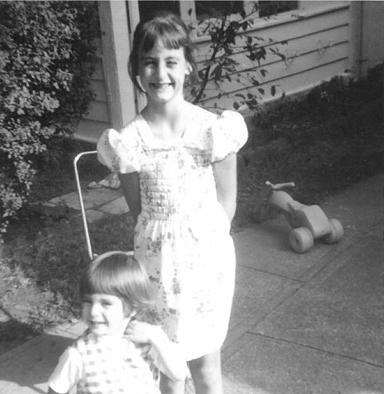
Iona’s Director of Development and Communications Susan Messina as a young girl.

Prior to joining Iona, I worked for seven years in fundraising for hospice. As a result, I feel I know a great deal about end-of-life decision making. I knew that people often needed help getting those conversations started and was a fan of Ellen Goodman’s Conversation Project and the excellent book, The Other Talk, by Tim Prosch, published by AARP. Both are top-notch resources that provide insights into how to engage family members in tough discussions about end-of-life wishes. I knew about advance directives (healthcare power of attorney and a “living will”) through the excellent resources offered by the National Healthcare Decision Day initiative and the National Hospice and Palliative Care Organization.

But, from working at Iona I also knew that for most people, death often follows years of illness, memory loss, physical frailty, or dwindling financial resources that pose significant challenges to older people themselves and, ultimately, their caregivers

So, I went to one of Iona’s geriatric care managers and asked her what else I should be prepared to discuss with my aunt, if this call were indeed the request I was anticipating. I learned that there was a lot more I needed to cover with my aunt and I needed to discuss a range of issues related to her finances. These included a general sense of her finances for long term care planning and a financial power attorney (POA).

The financial POA could be set up immediately, while my aunt is fully capable. Or, she could choose to use “springing language” in the document that would indicate that when doctors declare she no longer has the capacity to make financial decisions, the POA would go into effect.

We also discussed the value of my aunt and me potentially setting up joint accounts, so that both my name and hers would be on the accounts. In emergencies, a joint account would allow me to easily pay her bills. Down the line, I could also spot check her balances, if we felt that was necessary. I learned that one of the first capacities to be compromised by memory loss or cognitive decline is money management, and these simple changes can make a big difference.

So, armed with information and the desire to be a helpful niece, I called my aunt back, steeled for what could be an awkward conversation.

susans-aunt
When Susan Messina received a voicemail from her aunt (pictured in this great vintage photo), she immediately jumped into action, consulting with one of Iona’s geriatric care managers.

And guess what? To my surprise, her question was NOT about whether or not I would play these crucial roles! It was about a much more mundane piece of family business. I had to laugh. But, since I was all teed up, I took the plunge. I said, “Well, I thought you were going to ask me if I would help you with financial and medical affairs down the line.”

Fortunately, my aunt was really glad I had raised the issue. She hadn’t really thought through all of those issues and was happy to have been given the opening to address them. I’m impressed with her; she immediately called her lawyer and her financial advisor to get balls rolling, and I know we will continue to talk about next steps as they come up.

I’m grateful that her mysterious “Call me back” message got me thinking and she told me she’s very glad we had the conversation. Even more so, though, I’m grateful that my time at Iona has taught me so much about the challenges—and opportunities—of aging.

By Susan A. Messina

Susan is Iona’s Director of Development and Communications. She holds three master’s degrees, including two from Bryn Mawr’s Graduate School of Social Work and Social Research, and is a Certified Fund Raising Executive.

Caroline Scully

Two of us can’t do what Iona does

Photo courtesy of Gerlach Graphic

It’s hard enough taking care of one parent with a serious illness. Imagine taking care of two — while living in a different city. Caroline Scully was living in Massachusetts. Her parents were living in the District’s Glover Park neighborhood, next door to her brother. Then things began to unravel. Her mom, Bernice, was diagnosed with a rare neurological condition. At the same time, her dad, Richard, was developing memory problems.

Still in Massachusetts, Caroline began managing their medical care and overseeing their finances, along with her brother. “It became so stressful going back and forth, I decided it was better to be with them,” she said.

She left her home and partner in New England to move in with her parents. “My brother and I were focused on making sure our mother was comfortable and getting the best possible care and that our father was taking his medications and getting out.”

Looking back, Caroline realizes she didn’t understand the health care system. “It’s not set up for people to understand,” she says. “I thought my parents needed to move into assisted living. Iona’s staff convinced me they could get good care at home.”

Caroline hired Iona’s care managers to conduct a comprehensive in-home assessment and tailor solutions specific to her parents’ strengths and preferences, as well as their challenges and risks.

“Iona has been a hub of resources and services for us,” says Caroline who also has benefited from Iona’s social workers and support groups, and has participated in its advocacy efforts. After her mother passed away at home in October 2014, Caroline enrolled her father in the Wellness & Arts Center, Iona’s adult day health program for older adults with chronic health issues.

When Caroline picks up her father, she finds him having a conversation with a staff member, engaged in a small group activity, or in art therapy. His artwork has been displayed in several Iona exhibits. In addition, experienced nurses and nursing assistants monitor his health. Is his blood pressure high? Is he losing weight?

If he needs physical therapy, it’s available at Iona. “Team meetings are remarkable,” she adds. “My father gets wonderful feedback from the staff. They all have thoughtful things to say.”

At the end of the day, he’s energized — in contrast to when he’s home all day and tired. “That’s because two of us can’t do what Iona does,” says Caroline.

“Our family’s relationship with Iona started small with me calling every once in a while and not really understanding all that the organization has to offer,” she adds. Having tapped into most of its services and expertise, she has nothing but gratitude. So does her father who, at a recent team meeting told the staff: “As you go through life you don’t often find people interested in you. You all seem to have a secret training ground for compassion.”

Written by Janice Kaplan

Gavin Lawrence

A Light in the Midst of Darkness

Caregiver Gavin LawrenceIn February 2015, Gavin Lawrence’s 78-year-old mother — who has dementia — disappeared from her DC condo. Gavin — who lives in Chicago — credits Iona nurse practitioner Fiona Druy and social worker Catherine Paitz with getting him through that crisis and many other challenges.

“Mom was a trailblazer,” says Gavin. A native of Guyana, she was the first in her family to come to the U.S. where she earned her PhD, raised Gavin on her own, and taught literature and AfricanAmerican history at Howard University. “She’s always been independent,” he says.

That became more challenging when she had heart surgery in 1995, a minor stroke in 2000, and, over time, developed dementia. In 2008, she took early retirement from Howard.

At the same time, Gavin was struggling to care for her from his home in Chicago, where he also was raising two children. In addition, his work as a stage actor takes him all over the country. (You may have seen him in “Ma Rainey’s Black Bottom” at Arena Stage).

In November, Gavin and several relatives decided it would be best for his mother to return to Guyana, where her sister and a live-in nurse could care for her. That turned out to be “miserable for everyone,” says Gavin. His mother stopped eating and lost weight. She was unhappy, frustrated, and angry. “She thought she had been kidnapped,” Gavin says.

So the family moved her back to DC and, with Iona’s help, began looking for safe housing options. Still, that conversation always ended with her saying she wasn’t moving.

Then came the call every family member who has a loved one with dementia fears. His mother was missing. After a frantic search, relatives found her near American University, disoriented and alone.

In the weeks that followed, Gavin was plagued by questions such as: “Do I want her happy — or safe” and feelings of guilt that grew out of the fact that, in his culture, most elders live with their adult children until they die.

Throughout the experience, it was Iona’s staff that helped him to navigate these emotional and practical issues. “They have been nothing short of angels,” he says. “They spoke directly and frankly with my mother about the benefits of assisted living in a way that reinforced what I needed to do,” says Gavin, who moved his mother into a senior living community in June. “Until the move, Catherine and Fiona visited my mother in her condo twice a week. They were professional and personal, compassionate, and honest. They were the one little light in the midst of a lot of darkness.”

If you or someone you know needs help navigating eldercare issues, call Iona at (202) 895-9448, and ask for our Helpline.

Written by Janice Kaplan

Feedback for Iona