

On meals and more: reflections from Iona’s Executive Director

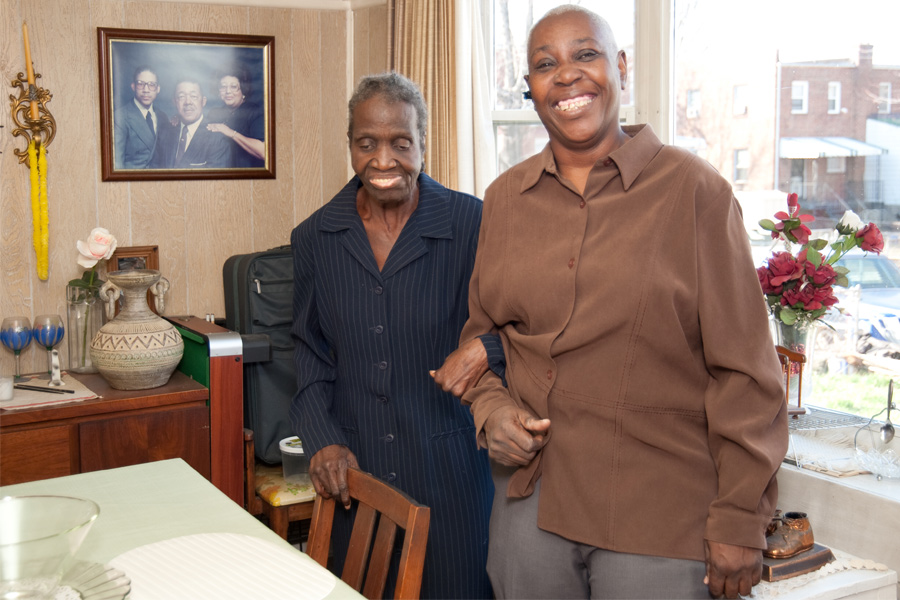
Matilda Davis worked for the DC government for 18 years. When she retired, she didn’t receive as much money as she thought she would get, so she planned to pick up some work on the side. But then she had a stroke, which left her unable to stand to cook or go to the grocery store.
Today, she gets home-delivered meals through Iona Senior Services that give her peace of mind. In her words: “I don’t have to think, ‘What if I can’t get someone to go to the store for me?’ because I have the food here.”
As a national debate rages over funding for Meals on Wheels – the popular national food delivery program – I am reminded of the many people like Matilda Davis who I have met since I began working at Iona more than 30 years ago.
People like Mrs. de Lopez, who at 88 has trouble cooking because of her impaired eyesight. Or Mr. Gaymon, who received home-delivered meals from Iona after two heart attacks and knee replacement surgery.
Many of our clients are fiercely independent.
They are people who have worked for many years, often for the government, raised their children here, entertained friends, and enjoyed all our community has to offer. The last thing they thought they’d have to do is to ask for a hot meal.
Home-delivered meals have been an integral part of our service to the community for 27 years. Through the support of the DC Office on Aging, Iona offers nutritious and well-balanced hot and cold meals to older adults 60 and over.
Last year, 220 older adults received 45,506 meals from Iona. Many recipients live alone and most make an income that places them close to if not below the poverty level. It’s not unusual for Iona’s social workers to meet with seniors who, after the rent and bills are paid, have less than $100 left to buy food – for the entire month. In fact, more than 15,000 seniors living in the District – approximately 15 percent of the senior population – are living in poverty. Thousands more struggle to cover housing costs, medical care, and still pay for food on a fixed income, according to D.C. Hunger Solutions.
Home-delivered meals is a proven way to address hunger insecurity.
They “improve diet quality and increase nutrient intakes among participants,” according to a 2014 scientific study. And home-delivered meals are proven to be cost-effective, since keeping older adults in their homes is less expensive than nursing home care.
The need will only grow as the Baby Boomers age. According to Feeding America, “In 2040, there will be 79.7 million older adults, more than twice as many as in 2000. These changing demographics will have profound impacts on the demand for social services, especially the need for adequate and culturally-appropriate nutrition services.”
Closer to home, multiple public and private agencies cite an increased demand for senior food assistance in the face of flat or declining resources of lower and middle class residents, coupled with rising food prices. Food security is an ongoing challenge for the 14.5 percent of the District’s senior population living below the federal poverty line and for many more in the next higher income tiers. Nearly 10 percent of all District seniors, regardless of their income level, were worried about food running out sometime in the preceding year, according to the 2010 U.S. Census report.
Like many isolated older adults I’ve met over the years, Ms. Davis needs home-delivered meals to survive.
There are many ways we can support our older neighbors. Providing those in need with a reliable source of nutritious food is a good place to start. It’s the least we can do.
By Sally S. White
Sally S. White is executive director of Iona Senior Services and co-chair of the D.C. Senior Advisory Coalition.
Related Articles

The Stories of Dementia in the District

A Couple’s Vows Create Opportunities to Age Well
Can You Imagine Taking Three Buses to Get to Iona?
