

How to Manage Your Anger When Caring for Someone with Dementia
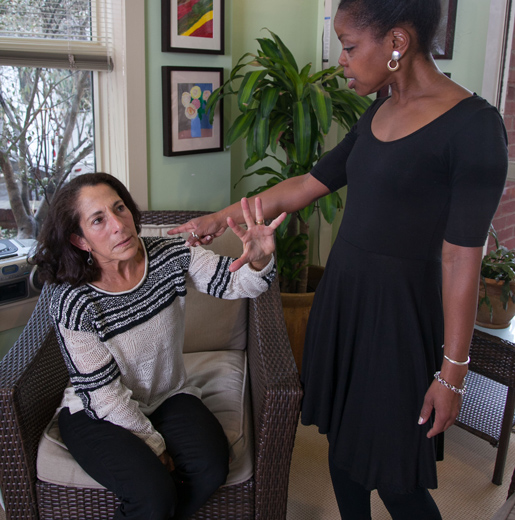
Caring for someone who has Alzheimer’s or another type of dementia can be challenging and can sometimes lead to anger in both the person who has dementia and the caregiver. Today, I’m going to focus on caregiver anger that may arise and how to deal with it.
 Dementia caregivers get impatient, annoyed, frustrated, and even angry for a variety of reasons, some of which include:
- Things may not be happening as you’d like or are out of your control
- You’re feeling overwhelmed in your role of caregiver, or feel like you do not have enough time for other aspects of your life
- Others aren’t helping out and/or are criticizing your efforts as a caregiver
- Unrealistic expectations of others, including the person who has dementia, and of yourself
- The care receiver may be doing things that are irritating or scary to you (such as the inability to do “easy” tasks that are no longer easy for them, wandering and getting lost, asking the same question over again, wanting to continue driving when it’s no longer safe for them to do so, paranoia)
- The care receiver may be angry about something, which can trigger an angry response from you, and the anger of both parties escalates from there
- Resentment of having to care for someone you may not have gotten along with in the past
- Role reversal resentment (such as having to do things that your spouse used to be in charge of, like managing the finances; or having to make sure your parent is safe and cared for if you’re an adult child)
- Inaccurate thinking (such as telling yourself “The person with dementia is doing it on purpose to make me angry” or “The person with dementia should do everything I tell her to do the way I want it done”)
It’s natural to get angry, but it’s important to mindfully manage what you do with it. One reason is that people who have dementia are sensitive to your moods. If they feel afraid of you, for instance, that could have a negative impact on the caregiving and care-receiving relationship that is ideally rooted in trust.
Another reason to mindfully manage your anger is that if left unchecked it can sometimes result in emotionally or physically harmful interactions with the person who has dementia or others — and you want to avoid that at all costs.
The following tips aren’t a guarantee you won’t get angry, but hopefully they’ll help you respond in an effective and healthy way.
First, it’s good to be aware of the signs of anger, such as:
- Shortness of breath
- Tense muscles, a tingly sensation in your body
- Clenching your fists and/or jaw
- Sweating, getting red in the face
- Speaking in a louder voice
- Maybe even wanting to hit the other person
If you notice some or all these arising in you, tell yourself, “I’m getting angry and I need to be careful about how I respond,” take several slow, deep breaths before responding, and even take a time out (see below for more tips).
Second, it’s good to be aware of the way(s) you usually express your anger:
- Aggressively — such as yelling, talking over the other person, arguing, bossing, criticizing, shoving, hitting
- Passive aggressively — such as taking longer to do things, abruptly hanging up the phone (though some may consider this aggressive behavior)
- Passively — such as not responding, withdrawing
- Assertively — stating your opinion, needs, or wishes while being respectful of the other person (this is considered the best way to respond)
When a caregiver loses their temper and becomes aggressive toward the person who has dementia or others, this is a warning sign that they have lost control, need help, and may need to take time off from caregiving responsibilities. And if the behavior becomes abusive or neglectful, then Adult Protective Services will need to get involved. On the other end of the spectrum, unexpressed anger can sometimes result in caregiver depression, which can also be dangerous and affect the health and wellbeing of the caregiver.
Again, you want to avoid these extremes. To do so, here are some healthy ways to deal with anger:
- Be mindful of situations that typically make you angry
- Educate yourself about the type of dementia the person has and caregiver tips. The Alzheimer’s Association website is an excellent resource
- Learn techniques for how to communicate with someone who has dementia. The Alzheimer’s Association has a helpful brochure about this, and the Alzheimer’s Association Colorado Chapter has a tips sheet that includes examples of what to say and what not to say in various situations
- Imagine what it must be like to have Alzheimer’s or another type of dementia and how you’d like to be treated
- Remember that what will happen during your interaction with the person who has dementia is not always predictable, so it’s best to limit your expectations
- Remind yourself that you can’t argue with a person who has dementia—you’ll never win; so pick your battles and maybe even agree with the person even if you disagree with what they’re saying
- Take a time out—brief (such as leaving the situation for 5-10 minutes if possible to let yourself and the person you’re caring for calm down) or longer (such as respite time of several hours, days, or weeks)
- Change the subject or activity if the current one is agitating
- Strike while the iron is cool; try to avoid talking about potentially upsetting topics (such as stopping driving) or doing something stressful (like taking a shower) when you and/or the person who has dementia is already upset
- Respond in an assertive way when appropriate (though not responding is sometimes the better response)
- Practice relaxation techniques (such as deep breathing, spiritual practices, closing your eyes and visualizing being in a calm place)
- Change your inaccurate thoughts; for example, “The person with dementia is doing it on purpose to make me angry” becomes “His brain is sick and he doesn’t realize what he’s doing; it hurts when he does that, but he’s not doing it on purpose;” or “The person with dementia should do everything I tell her to do the way I want it done” becomes “She’s sick and may not be able to do even ‘simple’ things the way she used to so I need to be patient”
- Know your limits and that it’s OK — and healthy — to ask for help from family, friends, and/or professionals
- Join a caregiver support group like those offered by Iona and the Alzheimer’s Association, and get individual counseling if needed
- And last, but certainly not least, remember to take care of yourself by doing such things as eating right, getting enough sleep, exercising regularly, keeping up with hobbies, getting together with or calling family and friends, and keeping a journal.
What are some healthy ways you deal with anger? Let us know in the comments.
By Bill Amt, LICSW
Bill Amt, LICSW, is a licensed clinical social worker and is the Mental Health Program Manager at Iona Senior Services. As a psychotherapist he works with older adults and caregivers who are coping with the emotional challenges of aging, and he also leads support groups for caregivers and people diagnosed with early-stage dementia. He has a Master of Social Work degree from The Catholic University of America.
Related Articles

The Stories of Dementia in the District
A Couple’s Vows Create Opportunities to Age Well
Can You Imagine Taking Three Buses to Get to Iona?
